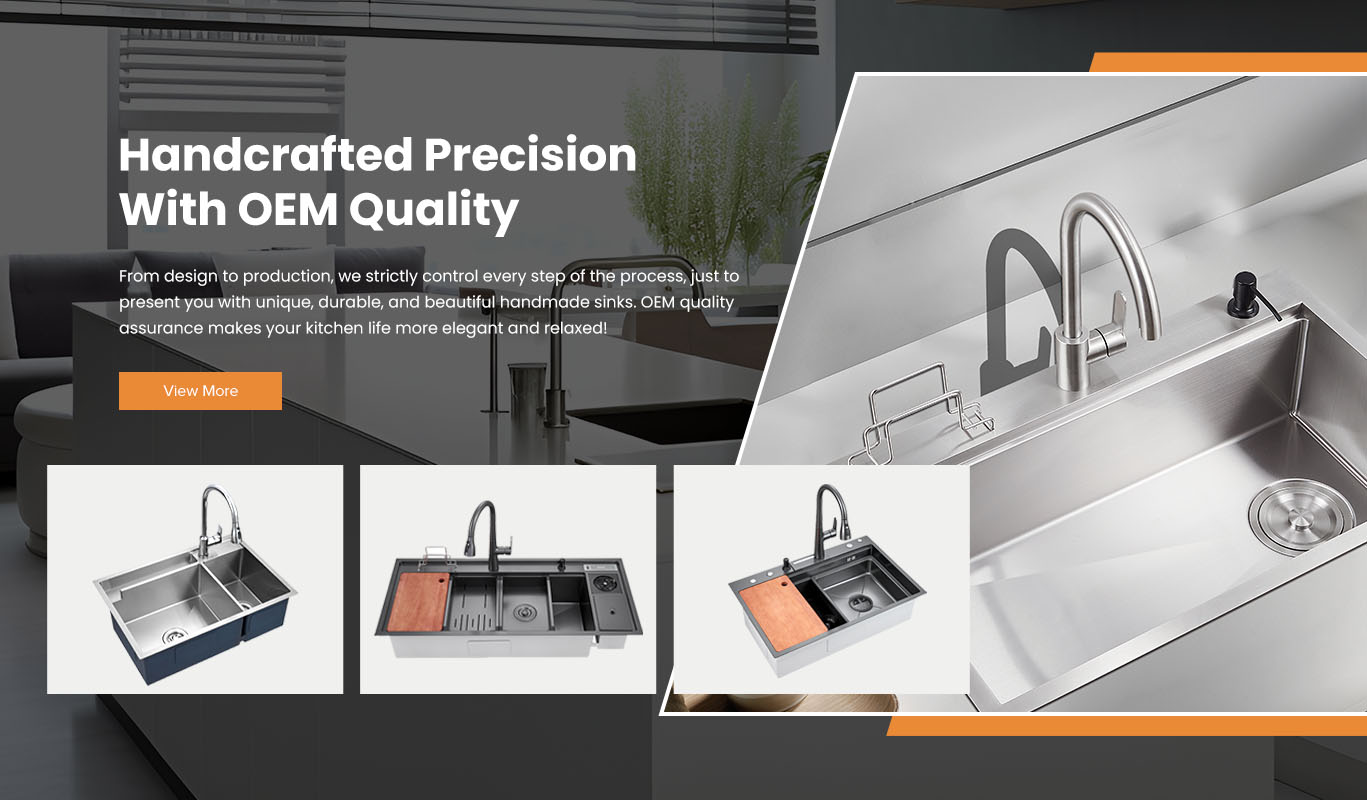
A single bowl stainless steel sink offers more open washing space, while a double bowl sink provides better task separation. The better choice depends on kitchen workflow and usage requirements.
The main difference between a single bowl stainless steel sink and a double bowl sink is how the washing space is organized.
A single bowl stainless steel sink uses one large basin without a divider, creating a continuous working area. This structure allows users to wash large cookware, kitchen tools, and food ingredients with fewer space limitations.
A double bowl sink separates the basin into two sections, allowing different tasks to happen at the same time. Users can wash dishes in one compartment while preparing food or rinsing items in another.
From a manufacturing and application perspective, the decision is not simply about choosing a larger or smaller sink. It is about matching the sink structure with real kitchen habits, installation conditions, and workflow requirements.
A single bowl stainless steel sink is designed around maximum usable space. Without the center divider found in double bowl models, the entire basin area can be used for larger cleaning tasks.
Key practical advantages include:
Larger internal washing area for oversized cookware
Easier cleaning of baking trays, stock pots, and kitchen equipment
More flexible placement of sink accessories
Simpler appearance for modern kitchen designs
This design is particularly suitable for kitchens where users frequently handle large items. A deep single bowl sink can also improve water containment and reduce splashing during heavy washing tasks.
For manufacturers, single bowl sink production focuses on optimizing bowl dimensions, depth, drainage performance, corner design, and sound reduction technology to improve daily usability.
A double bowl sink focuses on separation and organization rather than maximum open space.
Its divided structure allows users to create different working zones, such as:
Washing vegetables in one bowl and cleaning dishes in another
Separating food preparation from washing activities
Managing multiple kitchen tasks more efficiently
Supporting traditional kitchen workflows
Double bowl sinks are often preferred in households where several people use the kitchen together or where task organization is important.
However, the internal space of each bowl is smaller compared with a single bowl sink of the same external size. Large cookware may require more positioning adjustments during cleaning.
Modern kitchen design increasingly focuses on efficiency, simplicity, and space optimization.
Single bowl stainless steel sinks often match contemporary kitchen trends because they provide:
Clean visual appearance
Maximum countertop integration
Better compatibility with large accessories
Easier maintenance
Double bowl sinks remain practical for kitchens that require clear separation between different activities.
The choice depends on whether the kitchen prioritizes open working space or organized task zones.
Small kitchens require careful use of countertop space, making sink structure an important decision.
A single bowl stainless steel sink can be practical for compact kitchens because it provides a larger usable area within a limited footprint. Users can still clean large items without needing an oversized sink.
A double bowl sink can also work in smaller kitchens when users value separate washing areas. However, dividing limited space into two bowls may reduce the usable area for each task.
For apartments and urban kitchens, manufacturers often develop compact single bowl and double bowl models with optimized dimensions to balance functionality and installation requirements.
Commercial kitchens have different priorities compared with residential kitchens. High-frequency cleaning, workflow efficiency, and durability are major considerations.
Single bowl stainless steel sinks are commonly suitable for:
Restaurant preparation areas
Food processing stations
Heavy cookware cleaning
Large-scale kitchen operations
Double bowl sinks are useful for:
Separate preparation and cleaning zones
Kitchens requiring multiple washing processes
Smaller commercial workstations
For commercial projects, the ideal sink configuration depends on the kitchen workflow, available space, and cleaning procedures.
The practical performance of both single bowl and double bowl sinks depends heavily on manufacturing quality.
A professional stainless steel sink manufacturer evaluates multiple factors:
| Quality Element | Practical Impact |
|---|---|
| Stainless steel grade | Determines corrosion resistance and service life |
| Material thickness | Improves structural stability |
| Welding accuracy | Ensures strength and appearance consistency |
| Surface finishing | Affects cleaning convenience and appearance |
| Drainage design | Reduces standing water issues |
High-quality manufacturing processes help both sink types achieve better durability, easier maintenance, and more reliable performance.
Single bowl stainless steel sinks generally have a simpler structure with fewer dividing areas. This makes daily cleaning faster and reduces areas where food residue may collect.
Double bowl sinks provide better separation but have additional edges and connections that require regular cleaning.
For users who prefer low-maintenance kitchen solutions, a single bowl design often provides greater convenience.
For users who prioritize organized workflows, the functional separation of a double bowl sink may outweigh the additional cleaning requirements.
The right choice depends on the intended application rather than a universal preference.
A single bowl stainless steel sink is recommended when:
Large washing space is required
Oversized cookware is frequently used
Modern minimalist design is preferred
Flexible sink accessories are needed
A double bowl sink is recommended when:
Separate washing areas are important
Multiple tasks need to happen simultaneously
Kitchen organization is a priority
Traditional workflows are preferred
Manufacturers supporting OEM and customized sink solutions usually evaluate market preferences, installation standards, and application environments before recommending the most suitable configuration.
A single bowl stainless steel sink offers better practicality for users who need maximum washing space and flexible usage, while a double bowl sink provides better practicality for users who require task separation and organized workflows.
The most suitable design depends on kitchen size, cleaning habits, application environment, and expected performance requirements.