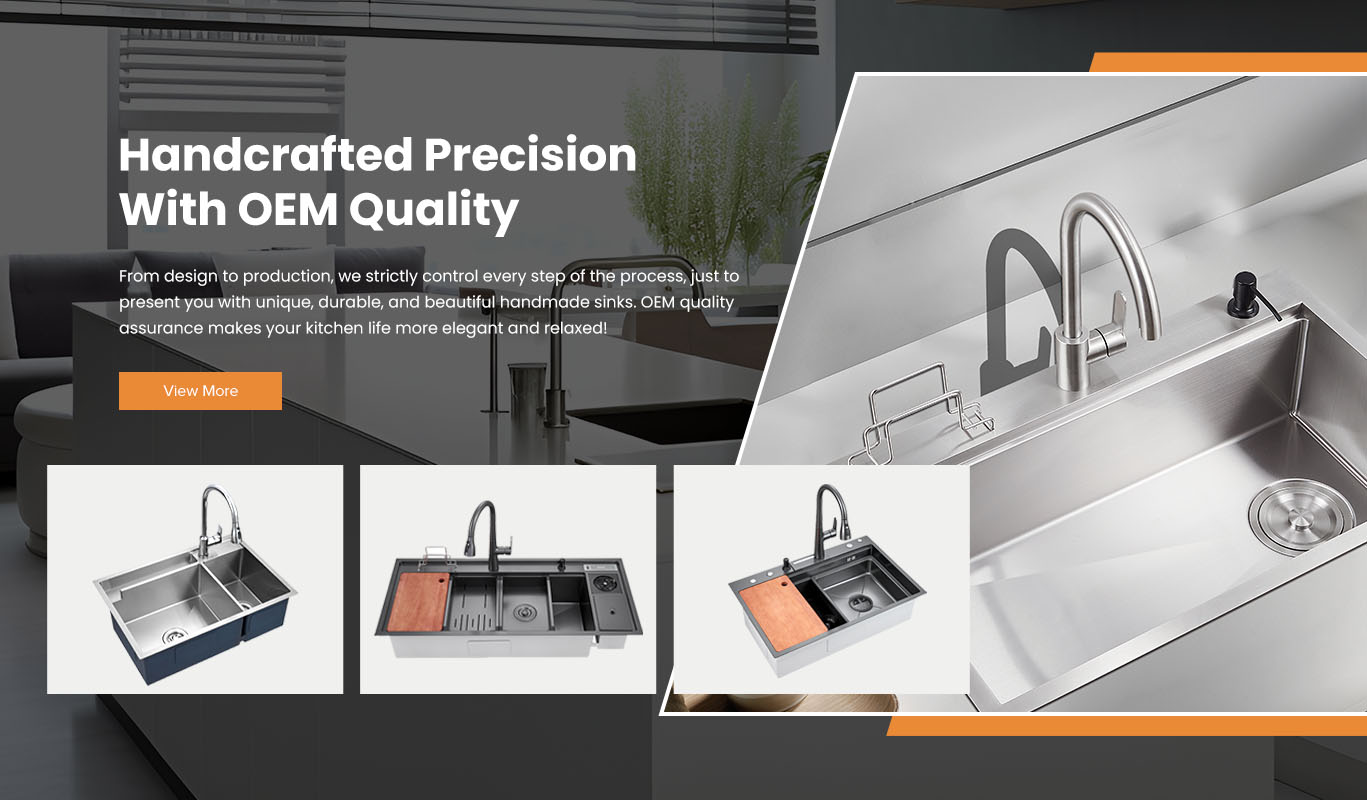
A single bowl sink suits users who need larger washing space, while a double bowl sink works better for kitchens requiring separate washing and preparation areas.
The primary difference between a single bowl sink and a double bowl sink is the internal basin configuration. A single bowl sink features one large uninterrupted washing area, while a double bowl sink divides the space into two separate compartments.
From a manufacturing perspective, the choice between these two sink structures is not only about appearance. It directly affects kitchen workflow, installation requirements, cleaning habits, and the type of users the product can serve.
Single bowl sinks are commonly selected for modern kitchens where large cookware, baking trays, and oversized pots require more open space. Double bowl sinks are preferred in kitchens where users need to perform multiple tasks at the same time, such as washing vegetables while soaking dishes.
A single bowl sink provides maximum usable space because there is no divider between two compartments. This structure allows users to handle large items more easily and creates a cleaner working area.
Typical advantages include:
Larger washing capacity for cookware, trays, and kitchen equipment
Easier cleaning of oversized items without angle restrictions
More flexible use of sink accessories such as cutting boards and colanders
Better suitability for minimalist kitchen designs
For apartments, modern residential kitchens, and premium kitchen projects, a large single bowl sink often provides better daily convenience because the entire basin can be used for one large task.
Manufacturers usually optimize single bowl sink designs by improving bowl depth, corner radius, drainage performance, and sound reduction features. These details influence both user experience and long-term product performance.
A double bowl sink creates two independent working areas, allowing users to separate different kitchen activities.
Common applications include:
Washing food in one bowl and cleaning dishes in another
Separating clean and dirty items during preparation
Supporting different workflow requirements in busy kitchens
Improving organization in family kitchens
The divided structure is especially useful for users who prefer traditional kitchen habits or need multiple washing zones.
However, because the basin space is divided, each bowl is usually smaller than a single bowl sink with the same overall dimensions. Large cookware may require more positioning adjustments during cleaning.
For small kitchens, the better choice depends on the user's working style rather than kitchen size alone.
A single bowl sink can be a strong option for compact kitchens because it provides a larger continuous washing area within a limited countertop space. It also creates a visually cleaner appearance, which matches many contemporary apartment designs.
A compact double bowl sink can work well when users need separation between tasks. For example, a smaller bowl can be used for rinsing while the main bowl handles regular washing.
The key consideration is whether the kitchen requires more open space or more functional separation.
Commercial kitchens usually have higher demands for efficiency, cleaning speed, and workflow control.
Single bowl sinks are often suitable for:
Large food preparation areas
Heavy cookware cleaning
Restaurants requiring wide washing space
Industrial kitchen environments
Double bowl sinks can be beneficial for:
Food preparation stations
Areas requiring separate washing processes
Kitchens with limited working zones
For commercial projects, sink selection should consider usage frequency, installation space, cleaning procedures, and local kitchen regulations.
The structure of the sink is only one factor affecting quality. Manufacturing processes, stainless steel selection, welding accuracy, surface finishing, and quality inspection all influence the final product performance.
A reliable stainless steel sink manufacturer evaluates:
| Quality Factor | Impact on Sink Performance |
|---|---|
| Stainless steel grade | Determines corrosion resistance and durability |
| Bowl depth design | Affects washing capacity and user comfort |
| Welding quality | Influences structural strength and appearance |
| Surface treatment | Improves scratch resistance and visual quality |
| Drainage design | Helps prevent water accumulation |
For OEM and customized sink projects, manufacturers also consider market preferences, countertop compatibility, packaging requirements, and installation standards.
Maintenance requirements are different between the two designs.
Single bowl sinks generally have fewer corners and joints, making daily cleaning easier. The open basin structure reduces areas where food particles may accumulate.
Double bowl sinks provide better separation but may require more attention around the divider area and drainage connections.
For markets focusing on simple maintenance and modern aesthetics, single bowl designs often have stronger appeal. For markets emphasizing traditional kitchen functionality, double bowl models remain highly competitive.
The right choice depends on the intended application, user habits, and project requirements.
A single bowl sink is usually the better choice when:
Large washing space is the priority
The kitchen uses oversized cookware frequently
A modern minimalist appearance is preferred
Flexible accessory combinations are required
A double bowl sink is usually the better choice when:
Separate washing zones are needed
Multiple kitchen tasks happen simultaneously
Traditional kitchen workflows are preferred
Organization and task separation are important
For sink manufacturers and project suppliers, offering both configurations allows better adaptation to different markets and customer requirements.
Neither design is universally better. A single bowl sink provides greater washing capacity and flexibility, while a double bowl sink offers better task separation and workflow organization.
For modern kitchens requiring maximum space efficiency, single bowl sinks are often the preferred solution. For kitchens that prioritize separate preparation and cleaning areas, double bowl sinks provide practical advantages.
Choosing the right sink layout requires balancing kitchen space, user habits, application scenarios, and product quality standards.