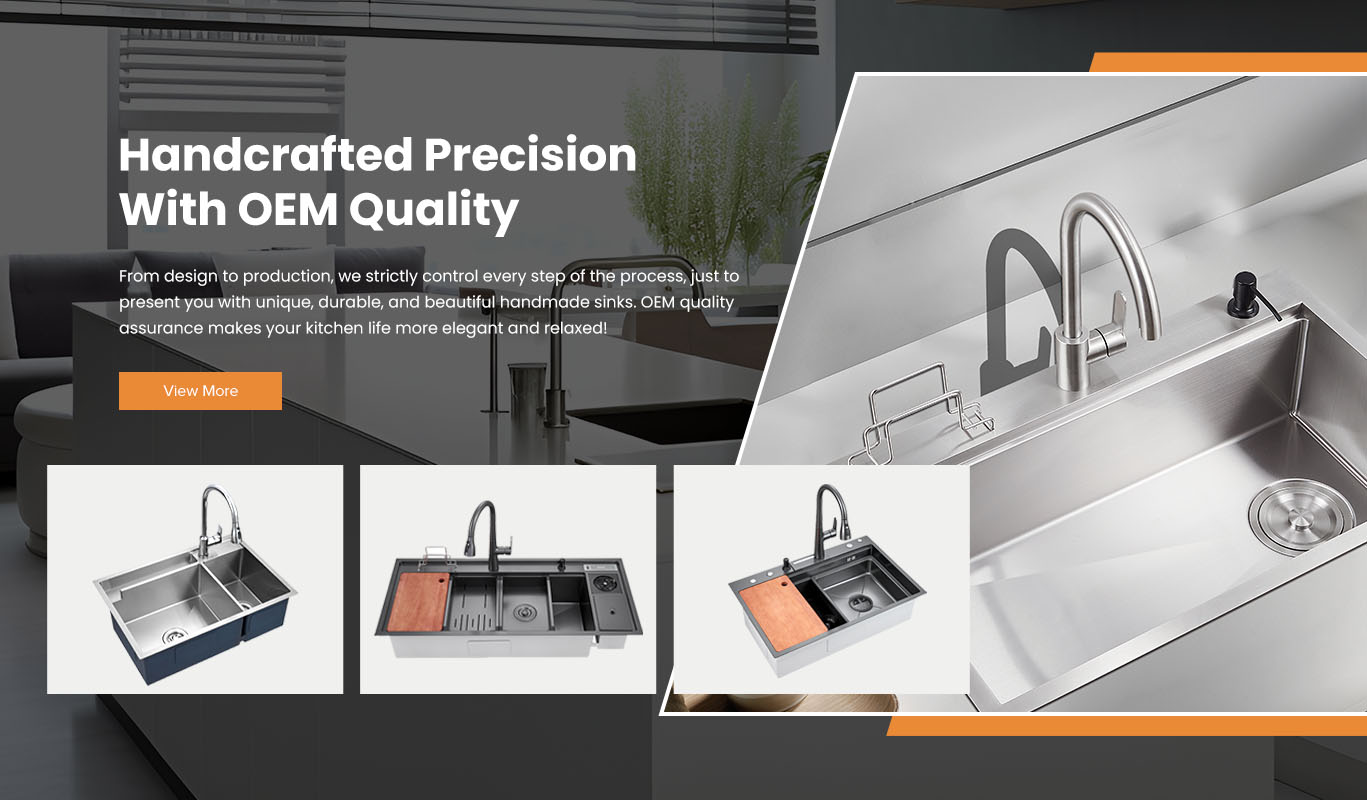
A good stainless steel sink is not defined only by appearance. A reliable sink combines the right stainless steel material, suitable thickness, accurate manufacturing, strong structure, and consistent quality control.
For kitchen applications, a good stainless steel sink should provide:
Long-term corrosion resistance
Easy cleaning and maintenance
Stable structure during daily use
Consistent surface appearance
Reliable performance after installation
As a professional stainless steel sink manufacturer, SHUNHAN focuses on material selection, precision production, OEM and ODM customization, and strict inspection processes to create stainless steel sinks suitable for residential, commercial, and project applications. (SHUNHAN)
A high-quality stainless steel sink depends on several key factors:
| Quality Factor | Why It Matters |
|---|---|
| Stainless steel grade | Determines corrosion resistance and durability |
| Material thickness | Influences strength and vibration control |
| Manufacturing process | Affects shape accuracy and reliability |
| Surface finishing | Impacts appearance and maintenance |
| Quality inspection | Ensures production consistency |
Many low-quality sinks focus only on appearance, but real performance comes from controlling every production stage from raw material to final packaging.
The stainless steel grade is one of the most important indicators of sink quality.
For kitchen sinks, 304 stainless steel is widely considered a preferred material because it provides:
Good corrosion resistance
Excellent forming performance
Stable surface quality
Easy cleaning characteristics
304 stainless steel typically contains around 18% chromium and 8% nickel, which helps improve corrosion resistance and durability. Industry references and material standards identify 304 stainless steel as a common choice for kitchen and food-related applications. (SHUNHAN)
A professional manufacturer should be able to provide clear material information and control stainless steel quality during production.
Thickness, often described by gauge, directly affects sink performance.
The gauge system works in reverse:
Lower gauge number = thicker stainless steel
Common options include:
| Gauge | Approximate Thickness | Application |
|---|---|---|
| 16 Gauge | About 1.5 mm | Premium and heavy-use kitchens |
| 18 Gauge | About 1.2 mm | Standard residential kitchens |
| 20 Gauge | About 1.0 mm | Lightweight applications |
A thicker stainless steel sink generally provides:
Better dent resistance
Less vibration
Lower operating noise
Stronger structural stability
For large workstation sinks or commercial applications, 16 gauge is often preferred because it provides additional strength. For standard kitchens, 18 gauge offers a practical balance between performance and cost.
Even high-quality stainless steel requires professional manufacturing technology.
A reliable stainless steel sink production process includes:
The factory checks:
Stainless steel grade
Sheet thickness
Surface condition
Material consistency
Precision forming ensures:
Correct bowl shape
Accurate dimensions
Stable structure
Professional welding prevents:
Leakage problems
Weak joints
Uneven appearance
Grinding and polishing create smooth edges and consistent finishes.
Common finishes include:
Brushed finish
Satin finish
Custom surface treatments
Before shipment, manufacturers should inspect:
Dimensions
Surface quality
Drainage performance
Leakage resistance
Packaging safety
When comparing a manufacturer and a trader, the biggest difference is production control.
A trader may provide available models, but a manufacturer can control:
Raw material sourcing
Production specifications
Gauge options
Sink structure
Surface finishing
Quality standards
For OEM and ODM projects, factory capability is especially important because customized products require continuous control from design approval to mass production.
SHUNHAN provides customized stainless steel sink solutions, supporting different sizes, designs, finishes, and packaging requirements according to project needs. (SHUNHAN)
A professional OEM and ODM process usually includes:
| Stage | Main Work |
|---|---|
| Requirement analysis | Confirm application and product specifications |
| Design development | Optimize structure and appearance |
| Material selection | Choose suitable stainless steel grade and thickness |
| Sample production | Verify design and performance |
| Mass production | Maintain consistent quality |
| Final inspection | Confirm shipment standards |
A strong manufacturing partner should be able to support:
Custom sink dimensions
Different bowl configurations
Surface finishes
Logo customization
Packaging solutions
Quality control is essential for stable bulk supply.
Important inspection points include:
| Checkpoint | Purpose |
|---|---|
| Material testing | Confirm stainless steel grade |
| Thickness measurement | Verify gauge accuracy |
| Forming inspection | Ensure structural precision |
| Welding inspection | Prevent leakage |
| Surface inspection | Maintain appearance consistency |
| Water testing | Confirm performance |
For large-volume projects, consistent quality between production batches is more important than a single approved sample.
A good stainless steel sink manufacturer should understand export requirements.
Important considerations include:
Material documentation
Product specifications
Packaging standards
Label requirements
Destination market regulations
Standards related to stainless steel materials, such as ASTM A240 for stainless steel sheet products, are commonly referenced when defining material specifications.
For international supply, manufacturers with export experience can reduce risks related to quality consistency and shipment preparation.
When purchasing stainless steel sinks for larger projects, quality evaluation should include:
| Evaluation Item | Importance |
|---|---|
| Material grade | Ensures corrosion resistance |
| Gauge selection | Matches usage requirements |
| Production capacity | Supports stable delivery |
| Quality system | Reduces product variation |
| Packaging design | Protects products during transportation |
A reliable supply chain requires stable manufacturing capability, not only competitive pricing.
Before selecting a stainless steel sink supplier, consider:
| Item | Questions To Confirm |
|---|---|
| Material | Is the stainless steel grade clearly defined? |
| Thickness | Is the gauge suitable for the application? |
| Manufacturing | Are forming and welding processes controlled? |
| Surface | Is the finish consistent? |
| Testing | Are quality inspections completed? |
| Customization | Can OEM and ODM requirements be supported? |
| Export | Are packaging and documents prepared? |