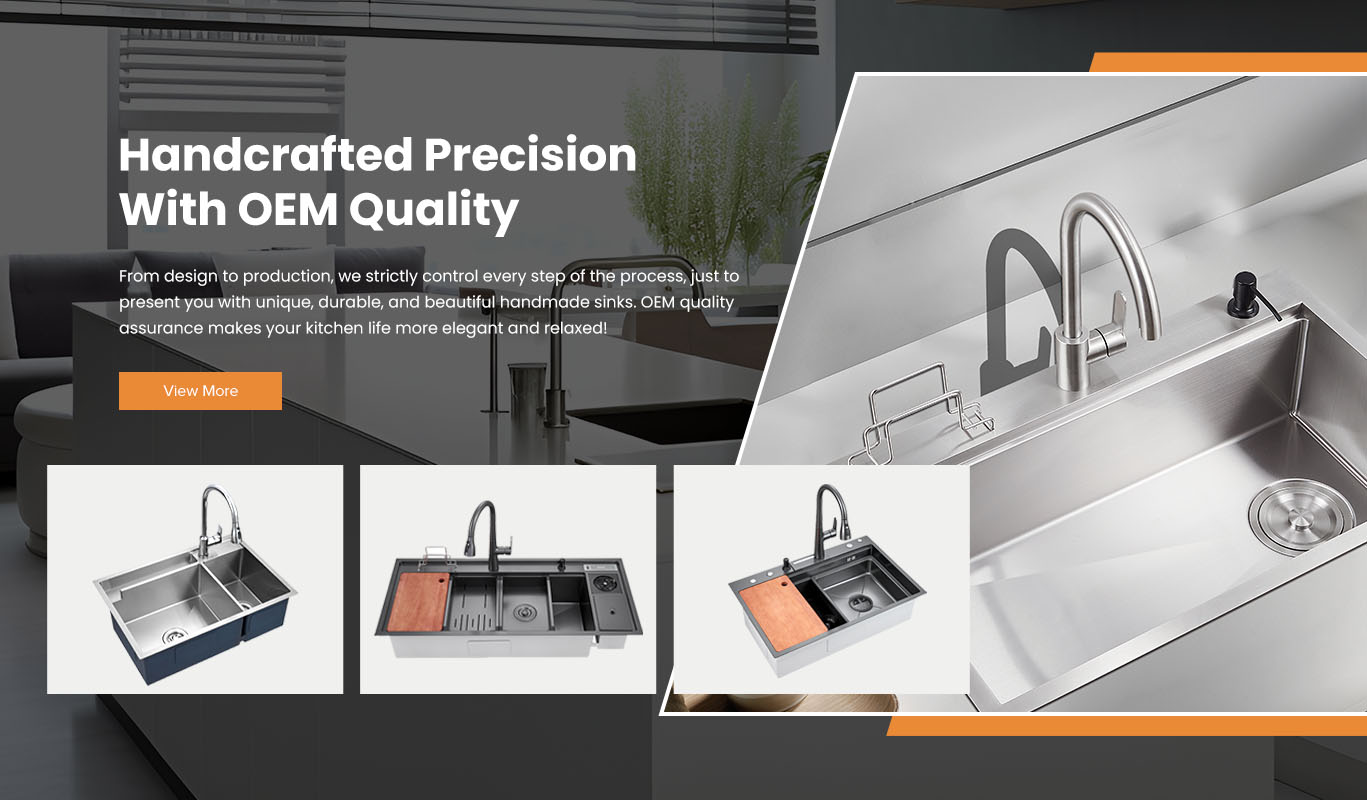
A stainless steel sink is designed for daily kitchen use, but maintaining its original appearance requires the correct cleaning method. Water spots, food residue, grease, fingerprints, mineral deposits, and metal particles can gradually affect the surface finish if they are not removed properly.
From a manufacturing perspective, stainless steel sink maintenance is closely related to material selection, surface treatment, and production quality. A well-made sink should be easy to clean, corrosion-resistant, and able to maintain its appearance after long-term use.
SHUNHAN specializes in stainless steel sink manufacturing, providing OEM and ODM solutions with 304 stainless steel materials, customized structures, professional surface finishing, and strict quality control processes. (shunhansink.com)
Stainless steel is popular in kitchens because it combines durability, hygiene, and corrosion resistance. The corrosion resistance comes from a thin chromium oxide passive layer that forms naturally on the surface when chromium reacts with oxygen. This protective layer can repair itself when slightly damaged, but contamination and improper cleaning may affect its performance. Common problems caused by incorrect maintenance include:
| Problem | Main Cause |
|---|---|
| Water spots | Mineral deposits from drying water |
| Dull surface | Grease and residue buildup |
| Rust-like marks | Iron contamination or chemical damage |
| Scratches | Abrasive cleaning tools |
| Odor | Food particles inside drain area |
Regular cleaning helps maintain both appearance and corrosion resistance.
For daily maintenance, simple cleaning is usually enough.
Recommended steps:
Clear:
Food particles
Coffee stains
Oil residue
Soap deposits
Leaving acidic food materials such as salt, citrus residue, or sauces on stainless steel surfaces for long periods may increase the risk of staining.
Use:
Warm water
Mild dish soap
Soft sponge or microfiber cloth
Avoid:
Steel wool
Metal brushes
Strong abrasive pads
Abrasive tools can damage the brushed surface texture and create areas where dirt accumulates.
After cleaning:
Rinse with clean water.
Remove detergent residue.
Dry with a microfiber cloth.
Drying is important because water minerals can remain on the surface and create white spots.
A deeper cleaning routine can restore the original shine of a stainless steel sink.
Recommended process:
| Step | Cleaning Action |
|---|---|
| 1 | Rinse the sink completely |
| 2 | Apply stainless steel cleaner or mild cleaning paste |
| 3 | Wipe along the grain direction |
| 4 | Rinse thoroughly |
| 5 | Dry and polish the surface |
For brushed stainless steel sinks, always clean in the direction of the grain. Random circular movement may create uneven marks.
Hard water can leave white or cloudy marks on stainless steel sinks.
Common causes:
Calcium deposits
Magnesium minerals
Water evaporation
A suitable cleaning method:
Apply a stainless steel-safe cleaner.
Wait according to product instructions.
Wipe gently with a soft cloth.
Rinse completely.
Dry the surface.
Avoid leaving acidic cleaners on stainless steel for extended periods because they may affect the protective surface layer.
Some common cleaning habits can damage stainless steel sinks.
| Method | Why Avoid |
|---|---|
| Steel wool | Creates scratches and may leave iron particles |
| Chlorine bleach | Can damage chromium oxide protection |
| Strong acids | May affect surface finish |
| Coarse powder cleaners | Remove brushed texture |
| Metal scrapers | Create permanent marks |
Stainless steel is corrosion-resistant because of its passive chromium oxide layer, but improper chemicals or contamination can interfere with this protection.
Different surface finishes require different maintenance approaches.
| Finish Type | Cleaning Characteristics |
|---|---|
| Brushed finish | Hides small scratches and daily marks |
| Satin finish | Soft appearance and easy maintenance |
| Mirror finish | Requires more careful cleaning |
| Nano coating finish | Needs suitable cleaning products |
Brushed stainless steel sinks are widely used because the surface texture provides a practical balance between appearance and daily maintenance.
SHUNHAN offers stainless steel sinks with different surface treatments to meet various kitchen design and usage requirements. (shunhansink.com)
Material selection directly affects cleaning performance and durability.
304 stainless steel is commonly used in kitchen sinks because it provides:
Strong corrosion resistance
Good forming performance
Long service life
Stable surface appearance
The chromium content in stainless steel helps create the protective oxide layer, while nickel improves corrosion resistance and processing properties.
| Material Factor | Impact On Sink Performance |
|---|---|
| Stainless steel grade | Determines corrosion resistance |
| Thickness | Improves strength |
| Surface treatment | Affects maintenance |
| Manufacturing accuracy | Influences durability |
SHUNHAN focuses on 304 stainless steel sink manufacturing with controlled material standards and professional processing technology. (shunhansink.com)
Easy maintenance starts during manufacturing.
A professional stainless steel sink production process includes:
Stainless steel material inspection
Cutting
Forming
Welding
Grinding
Surface brushing
Cleaning treatment
Leakage testing
Final inspection
Each process affects the final cleaning experience.
| Production Stage | Quality Control Purpose |
|---|---|
| Material inspection | Confirm stainless steel quality |
| Forming process | Maintain sink structure |
| Welding inspection | Prevent leakage |
| Surface finishing | Ensure consistent texture |
| Final testing | Verify performance |
SHUNHAN controls the complete production process to provide stable stainless steel sink quality for different applications.
For customized kitchen projects, cleaning requirements should be considered during product development.
A professional OEM and ODM process includes:
Manufacturers evaluate:
Sink size
Installation method
Surface finish
Usage environment
Testing includes:
Surface appearance
Drainage performance
Structural strength
Installation compatibility
Quality control focuses on:
Material consistency
Surface treatment stability
Product inspection
Packaging protection
SHUNHAN provides customized stainless steel sink solutions for residential kitchens, commercial applications, and export projects. (shunhansink.com)
A stainless steel sink is not only a finished product but also the result of material engineering and manufacturing control.
Working with a manufacturer provides better control over:
Stainless steel selection
Thickness specifications
Surface finishing
Production consistency
Quality inspection
Custom requirements
A trader usually supplies existing products, while a manufacturer can modify designs and production details according to project requirements.
Factory-controlled production helps maintain consistent quality for large-volume supply.
Before selecting a stainless steel sink supplier, consider:
| Item | Key Question |
|---|---|
| Material | Is 304 stainless steel suitable? |
| Finish | Is it easy to maintain? |
| Structure | Does it fit the application? |
| Quality control | Are inspection procedures available? |
| Production ability | Can the factory support volume demand? |
| Export requirements | Does it meet market standards? |
Important evaluation points include:
Material standards
Manufacturing capability
Surface quality
Packaging protection
Delivery reliability