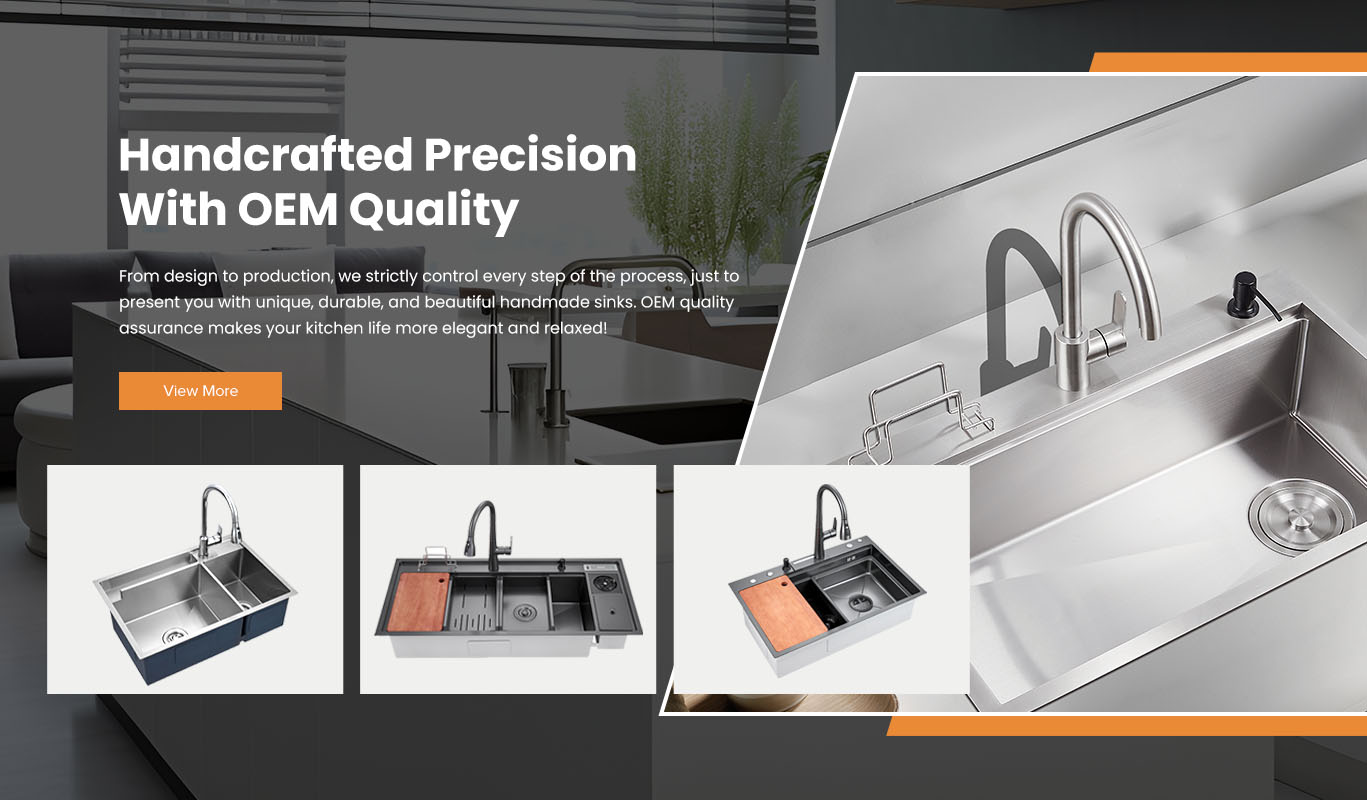
stainless steel sinks are designed for years of kitchen use, but scratches are almost unavoidable in daily environments. Contact with cookware, knives, cleaning tools, and metal accessories can gradually create visible marks on the surface. The good news is that most scratches on stainless steel sinks affect only the surface finish and can often be reduced with proper restoration methods.
From a manufacturing perspective, scratch resistance is not determined only by cleaning methods. Stainless steel grade, material thickness, surface treatment, brushing technology, and production control all influence how a sink performs over time.
SHUNHAN specializes in stainless steel sink manufacturing, providing OEM and ODM solutions with controlled material selection, customized designs, and professional surface finishing technology for global kitchen projects. (shunhansink.com)
Before removing scratches, it is important to identify the depth of the damage.
| Scratch Type | Appearance | Treatment Method |
|---|---|---|
| Light scratches | Fine surface lines | Grain polishing |
| Medium scratches | Visible marks under light | Fine abrasive restoration |
| Deep scratches | Grooves or damaged texture | Professional refinishing |
Most stainless steel kitchen sinks use brushed finishes because the directional texture helps hide small scratches and daily wear.
A brushed finish is created through controlled mechanical polishing, where the surface receives consistent lines that improve appearance and maintenance performance.
Before polishing scratches, remove all dirt and residue.
Recommended preparation:
Remove food particles and grease.
Wash with warm water and mild detergent.
Rinse completely.
Dry the sink with a microfiber cloth.
Cleaning is important because small particles left on the surface may create additional scratches during polishing.
Avoid using:
| Cleaning Tool | Why Avoid It |
|---|---|
| Steel wool | Creates new scratches |
| Metal brushes | Damages surface texture |
| Strong abrasive pads | Removes brushed finish |
| Chlorine-based cleaners | May affect corrosion protection |
Stainless steel relies on a chromium oxide passive layer that helps protect the surface from corrosion. Excessive damage or chemical exposure can reduce surface performance.
Light scratches are usually located within the surface texture and can often be improved at home.
The basic process:
Apply stainless steel polish.
Use a soft microfiber cloth.
Rub in the same direction as the grain.
Continue until the scratch becomes less visible.
Clean the remaining polish.
The most important rule is:
Always follow the original grain direction.
Random movements or circular polishing may create uneven patterns that are more noticeable than the original scratch.
Medium scratches require more attention because the surface texture may already be affected.
A controlled polishing process includes:
| Step | Purpose |
|---|---|
| Identify grain direction | Maintain original appearance |
| Use fine polishing material | Reduce surface marks |
| Apply consistent pressure | Avoid uneven texture |
| Clean and inspect | Check restoration result |
Professional stainless steel finishing uses progressive polishing methods to improve surface smoothness while maintaining material integrity.
Deep scratches may remove part of the brushed surface or create visible grooves.
Signs that professional repair may be needed:
Scratch catches your fingernail
Surface texture is broken
Metal deformation appears
Polishing creates uneven color
For premium stainless steel sinks, replacing the surface finish incorrectly may reduce appearance quality. Manufacturers use controlled grinding and polishing equipment to maintain consistent finishes.
The material itself plays an important role in long-term appearance.
304 stainless steel is widely used for kitchen sinks because it provides a strong balance of:
Corrosion resistance
Formability
Durability
Surface stability
304 stainless steel is commonly known as 18/8 stainless steel because it contains approximately 18% chromium and 8% nickel. These elements help create corrosion resistance and improve manufacturing performance.
| Material Factor | Influence |
|---|---|
| Stainless steel grade | Corrosion resistance |
| Thickness | Structural strength |
| Surface finish | Scratch visibility |
| Manufacturing accuracy | Long-term appearance |
SHUNHAN focuses on 304 stainless steel sink production with controlled materials and professional surface processing to ensure reliable product performance.
Different finishes show scratches differently.
| Surface Finish | Scratch Visibility |
|---|---|
| Brushed finish | Lower visibility |
| Satin finish | Moderate visibility |
| Mirror finish | Higher visibility |
| Colored finish | Requires special care |
For kitchen applications, brushed stainless steel is often preferred because small scratches can blend into the existing texture over time.
Scratch resistance starts during manufacturing.
A professional stainless steel sink production process includes:
Raw material inspection
Cutting
Forming
Welding
Grinding
Brushing and polishing
Cleaning
Water leakage testing
Final quality inspection
Each stage affects the final surface quality.
| Production Stage | Quality Control Focus |
|---|---|
| Material inspection | Confirm stainless steel grade |
| Thickness testing | Ensure specifications |
| Forming process | Prevent deformation |
| Welding inspection | Ensure smooth joints |
| Surface inspection | Maintain finish consistency |
SHUNHAN controls the entire production process, from stainless steel selection to final inspection, to provide consistent sink quality.
For customized stainless steel sink projects, scratch resistance should be considered during product development.
A professional OEM and ODM process includes:
Manufacturers evaluate:
Sink structure
Size requirements
Installation method
Surface finish
Application environment
Testing focuses on:
Surface appearance
Structural performance
Drainage efficiency
Installation compatibility
Production control includes:
Material consistency
Stable polishing process
Appearance inspection
Packaging protection
SHUNHAN provides customized stainless steel sink solutions, supporting different designs, sizes, finishes, and project requirements. (shunhansink.com)
Scratch performance is closely connected with manufacturing capability.
A professional stainless steel sink manufacturer can control:
Stainless steel sourcing
Material thickness
Surface treatment
Brushing technology
Production consistency
Quality inspection
A trader mainly supplies existing products, while a manufacturer can adjust specifications according to project needs.
Factory-controlled production helps maintain consistent appearance across large-volume orders.
Before supplying stainless steel sinks for projects, manufacturers should inspect:
| Inspection Item | Purpose |
|---|---|
| Material testing | Verify stainless steel grade |
| Thickness measurement | Confirm specifications |
| Surface inspection | Check finishing quality |
| Welding testing | Prevent leakage |
| Water testing | Ensure performance |
These inspections reduce quality differences between production batches.
Before selecting a stainless steel sink supplier, consider:
| Item | Question |
|---|---|
| Material | Is 304 stainless steel suitable? |
| Thickness | Does it meet usage requirements? |
| Finish | Is it easy to maintain? |
| Structure | Does it match installation needs? |
| Quality control | Are inspection standards available? |
| Supply ability | Can production meet demand? |
For export projects, additional factors include:
Material standards
Production capacity
Packaging protection
Delivery reliability
Market compliance