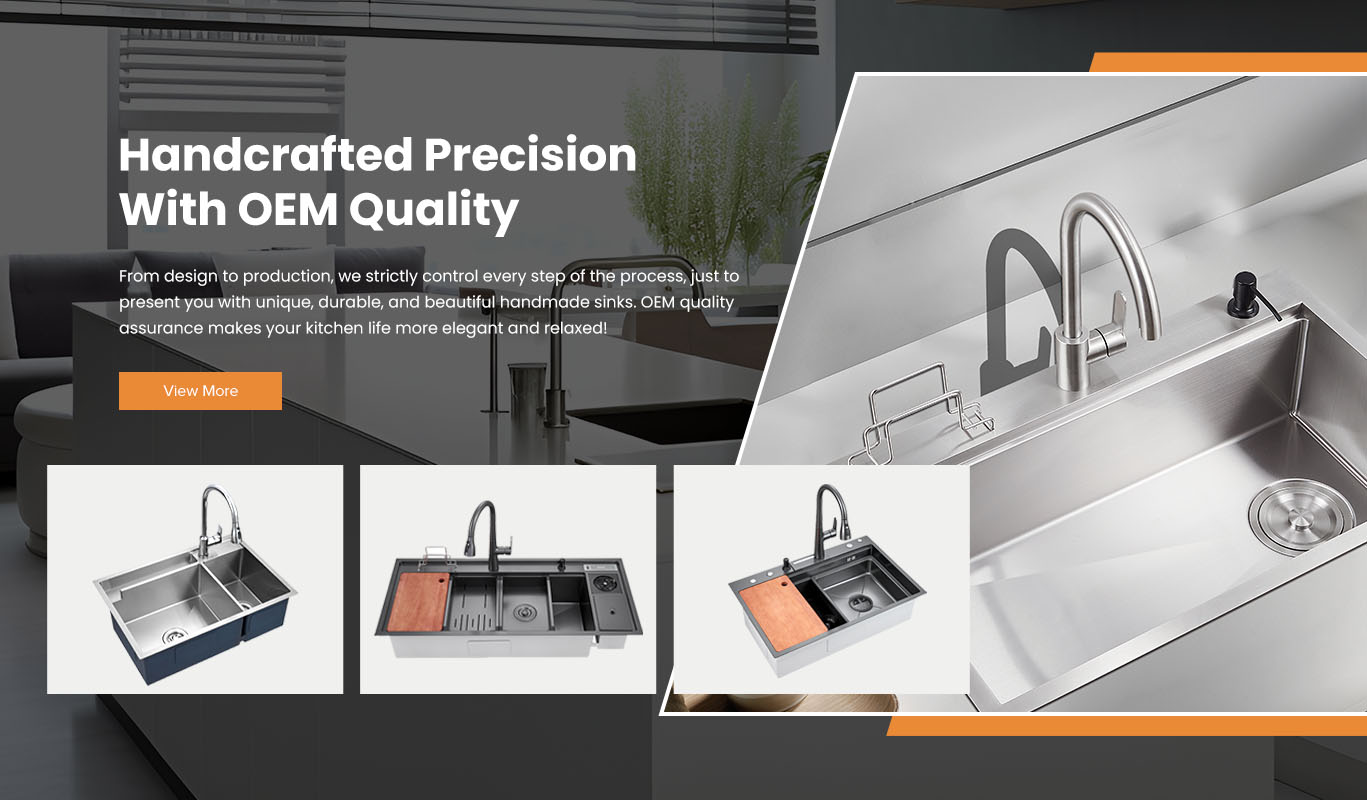
stainless steel sinks are designed for long-term kitchen use, but daily contact with cookware, knives, cleaning tools, and metal objects can gradually create visible scratches. These marks do not always mean the sink is damaged permanently. In many cases, light scratches only affect the surface texture and can be reduced through proper polishing and maintenance.
From a manufacturing perspective, scratch resistance depends on more than the stainless steel material itself. Sheet thickness, surface finishing technology, brushing direction, and production quality control all influence how a sink performs after years of use.
SHUNHAN specializes in stainless steel sink manufacturing, providing customized OEM and ODM solutions with controlled material selection, advanced surface treatment, and strict production inspection to ensure stable appearance and durability. (shunhansink.com)
Before removing scratches, it is important to identify the scratch depth and surface condition.
| Scratch Type | Appearance | Recommended Solution |
|---|---|---|
| Light scratches | Fine surface lines | Grain polishing |
| Medium scratches | Visible marks under light | Fine abrasive treatment |
| Deep scratches | Noticeable grooves | Professional refinishing |
Most stainless steel sinks use brushed finishes because the directional texture helps reduce the visibility of daily marks. Surface finishes are created through controlled mechanical polishing processes, and different finishes provide different appearance characteristics.
A correct repair method should always follow the original grain direction.
Cleaning is the first step because food residue, grease, and mineral deposits can make scratches appear deeper.
Recommended preparation:
Remove all items from the sink.
Wash the surface with warm water.
Use mild detergent to remove grease.
Dry the sink completely.
A clean surface allows you to clearly see whether the scratch is actually a mark on the steel or only a surface stain.
Professional cleaning recommendations also advise avoiding steel wool and harsh chemicals because abrasive tools can create additional scratches on stainless steel surfaces.
Light scratches are the easiest to improve because they usually affect only the surface finish.
Steps:
Apply stainless steel polish to a microfiber cloth.
Rub gently along the grain direction.
Continue polishing evenly.
Remove residue with clean water.
Dry with a soft cloth.
The key point is maintaining the same brushing direction as the original sink finish.
Avoid:
Circular rubbing
Excessive pressure
Random polishing movements
These methods may create uneven patterns that become more visible.
Medium scratches require more careful treatment because removing too much material may change the original surface appearance.
Recommended approach:
| Step | Process |
|---|---|
| 1 | Identify the grain direction |
| 2 | Use a fine polishing pad |
| 3 | Work gradually across the scratch |
| 4 | Blend the repaired area with surrounding texture |
| 5 | Clean and inspect the finish |
Fine abrasive polishing is commonly used in stainless steel restoration because progressively finer abrasives can reduce surface imperfections while creating a smoother finish.
For premium stainless steel sinks, uncontrolled polishing may affect the consistency of the brushed texture, so professional refinishing is recommended for deeper marks.
Some cleaning methods can permanently damage the surface appearance.
| Method | Problem |
|---|---|
| Steel wool | Creates new scratches |
| Hard abrasive pads | Removes brushed texture |
| Chlorine bleach | Can affect surface protection |
| Strong chemical cleaners | May damage finish |
| Metal brushes | Leaves visible marks |
Stainless steel depends on a chromium oxide passive layer for corrosion resistance. Aggressive treatment can disturb the surface protection and reduce appearance quality.
Not all stainless steel sinks perform the same after years of use.
304 stainless steel is widely used in kitchen sink manufacturing because it provides a balance of:
Corrosion resistance
Strength
Formability
Surface stability
Typical 304 stainless steel contains approximately:
| Element | Typical Content |
|---|---|
| Chromium | Around 18% |
| Nickel | Around 8% |
| Carbon | Low percentage |
Chromium helps create corrosion resistance, while nickel improves durability and processing performance.
SHUNHAN focuses on 304 stainless steel sink production, selecting suitable materials and controlling manufacturing processes to provide reliable kitchen sink solutions. (shunhansink.com)
The same scratch may look different depending on the sink surface.
| Surface Finish | Scratch Visibility |
|---|---|
| Brushed finish | Lower visibility |
| Satin finish | Moderate visibility |
| Mirror finish | Higher visibility |
| Colored finish | Requires special care |
Brushed stainless steel is popular for kitchen sinks because minor scratches can blend into the existing texture over time.
For customized projects, manufacturers need to control:
Brushing direction
Surface consistency
Polishing pressure
Final appearance inspection
Scratch resistance starts during production.
A professional manufacturing process includes:
Stainless steel material inspection
Sheet cutting
Forming and shaping
Welding
Grinding
Surface brushing
Cleaning
Water leakage testing
Final quality inspection
Each step influences the final surface quality.
| Production Stage | Quality Control Purpose |
|---|---|
| Material inspection | Confirm stainless steel grade |
| Thickness checking | Maintain structural strength |
| Forming control | Prevent deformation |
| Welding inspection | Avoid defects |
| Surface inspection | Ensure finish consistency |
SHUNHAN manages the complete manufacturing process from raw materials to finished products, supporting stable quality for different market requirements.
For customized sink projects, scratch resistance should be considered during product development.
A professional OEM and ODM process includes:
Manufacturers review:
Sink size
Installation method
Usage environment
Surface finish requirements
Testing includes:
Structural performance
Surface quality
Drainage performance
Installation compatibility
Production focuses on:
Material consistency
Process stability
Appearance inspection
Packaging protection
SHUNHAN provides customized stainless steel sink solutions, including different sizes, structures, finishes, and project-based requirements. (shunhansink.com)
Scratch resistance is closely connected with manufacturing capability.
A professional stainless steel sink manufacturer can control:
Raw material selection
Steel thickness
Surface treatment
Brushing technology
Quality inspection
Packaging standards
A trader usually supplies existing products, while a manufacturer can adjust specifications based on project requirements.
Factory-controlled production helps maintain consistent appearance across large-volume orders.
Before selecting a stainless steel sink supplier, consider:
| Item | Key Question |
|---|---|
| Material | Is 304 stainless steel required? |
| Thickness | Does it match usage needs? |
| Finish | Is it suitable for maintenance? |
| Structure | Does it fit installation requirements? |
| Quality control | Are inspection procedures available? |
| Supply ability | Can production support demand? |
For export projects, additional factors include:
Material standards
Production capacity
Packaging protection
Delivery reliability
Compliance requirements