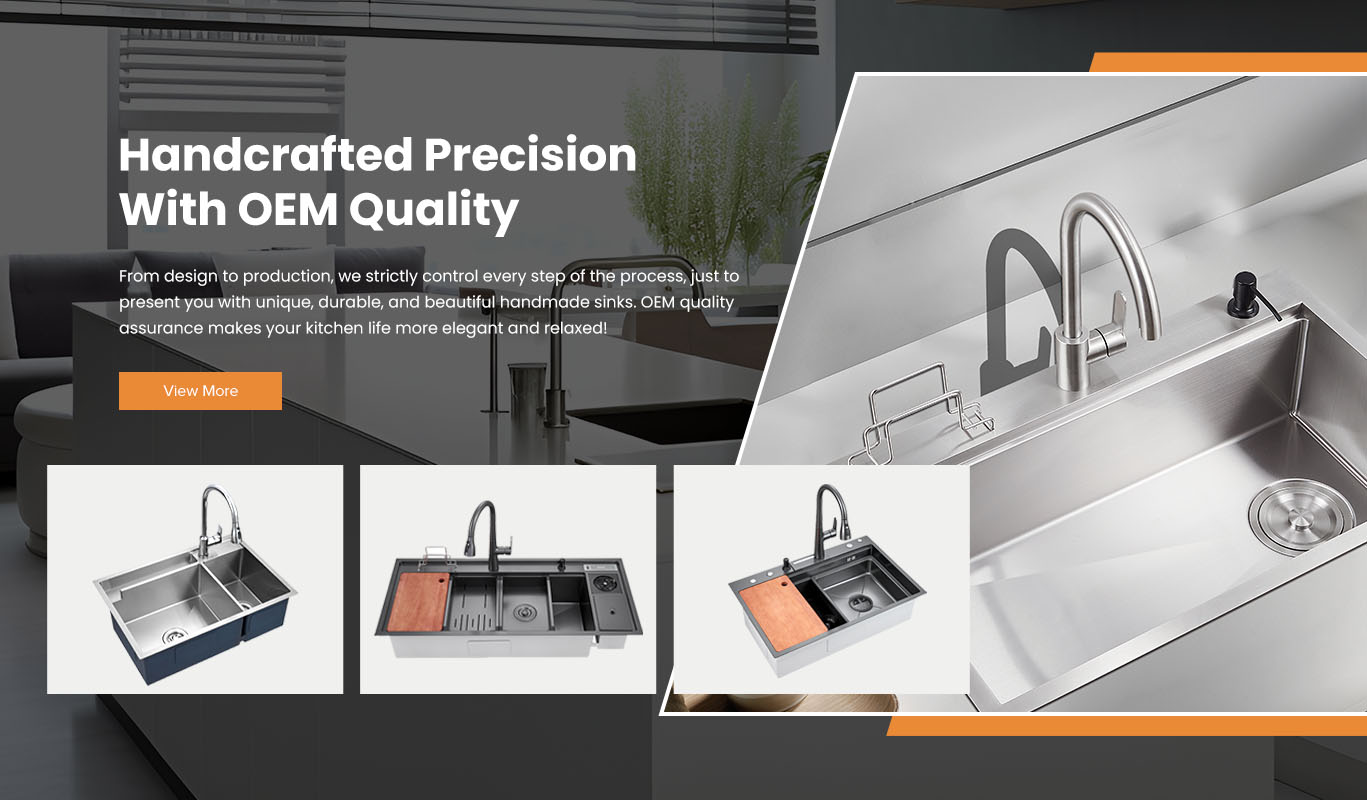
Although stainless steel sinks are known for corrosion resistance, rust spots can still appear under certain conditions. These marks are usually not caused by the stainless steel itself completely failing, but by external factors such as iron particles from cookware, metal tools, hard water deposits, harsh cleaning chemicals, or surface contamination.
Understanding how to remove rust from a stainless steel sink requires knowing the material structure and surface treatment. A professional stainless steel sink should combine suitable material selection, proper manufacturing processes, and quality control to reduce corrosion risks during long-term use.
SHUNHAN specializes in stainless steel sink manufacturing, using quality stainless steel materials, advanced forming technology, and customized OEM and ODM solutions for residential and commercial kitchen projects. (shunhansink.com)
The name "stainless steel" does not mean the material can never rust. Stainless steel is rust-resistant because chromium creates a passive protective oxide layer on the surface. When this layer is damaged or contaminated, localized rust spots may appear.
Common causes include:
| Cause | Effect |
|---|---|
| Iron particles from cookware | Surface rust spots |
| Steel wool cleaning | Damages protective layer |
| Salt residue | Accelerates corrosion |
| Hard water minerals | Creates stains |
| Chemical cleaners | Affects surface protection |
304 stainless steel, commonly used for kitchen sinks, contains approximately 18% chromium and 8% nickel. Chromium helps form the protective passive layer, while nickel improves corrosion resistance and forming performance.
Before removing rust, determine whether it is surface contamination or deeper corrosion.
| Rust Condition | Appearance | Treatment |
|---|---|---|
| Surface rust | Orange spots or stains | Mild cleaning |
| Mineral stains | White or brown marks | Acid-based mild solution |
| Deep corrosion | Pitting holes | Professional repair |
Most household stainless steel sink rust problems are surface contamination rather than structural damage.
For light rust spots, use gentle cleaning methods.
Recommended steps:
First remove:
Food residue
Oil
Soap deposits
Loose particles
Use:
Warm water
Mild detergent
Soft sponge
Dry the surface completely before rust treatment.
Baking soda is a mild abrasive that can help remove surface stains without heavily damaging stainless steel.
Process:
Mix baking soda with a small amount of water.
Apply the paste to the rust area.
Rub gently with a soft cloth.
Follow the grain direction.
Rinse completely.
Dry with microfiber cloth.
The key is avoiding aggressive scrubbing because stainless steel sink finishes often use directional brushing patterns.
For more visible rust marks, professional stainless steel cleaners can provide better results.
Choose cleaners designed for stainless steel surfaces.
Avoid:
| Cleaner | Reason |
|---|---|
| Chlorine bleach | May damage stainless steel surface |
| Steel wool | Creates scratches |
| Strong acid cleaners | Can affect surface finish |
| Abrasive powder | Removes brushed texture |
After cleaning:
Rinse thoroughly
Remove chemical residue
Dry the sink completely
Proper drying is important because remaining water minerals can create repeated staining.
Many stainless steel sinks use brushed finishes because they provide a practical balance between appearance and maintenance.
When removing rust:
Follow the original grain direction
Use a soft polishing pad
Avoid circular movements
Do not polish randomly
| Surface Finish | Maintenance Consideration |
|---|---|
| Brushed finish | Easier to hide small marks |
| Mirror finish | Requires careful maintenance |
| Nano coated finish | Needs suitable cleaners |
| Colored finish | Avoid abrasive treatment |
SHUNHAN provides stainless steel sinks with different surface treatments, including brushed finishes and customized options for different kitchen applications. (shunhansink.com)
Rust resistance starts during manufacturing, not after installation.
A professional stainless steel sink production process includes:
Raw material inspection
Cutting and forming
Welding
Grinding
Surface polishing
Cleaning treatment
Quality inspection
Each stage influences corrosion resistance.
| Manufacturing Stage | Quality Control Focus |
|---|---|
| Material selection | Confirm stainless steel grade |
| Thickness inspection | Ensure structural performance |
| Welding process | Prevent weak areas |
| Surface treatment | Maintain protective finish |
| Final inspection | Verify product quality |
SHUNHAN controls manufacturing procedures from material selection to final inspection to provide stable stainless steel sink quality.
Material grade is one of the most important factors affecting corrosion resistance.
304 stainless steel is widely used in kitchen sinks because of its balance of:
Corrosion resistance
Formability
Durability
Surface performance
Typical 304 stainless steel contains:
| Element | Approximate Content |
|---|---|
| Chromium | 18% to 20% |
| Nickel | 8% to 10.5% |
| Carbon | Maximum 0.08% |
However, even high-quality stainless steel requires proper maintenance because chloride exposure, salt residue, and surface contamination can still cause localized corrosion.
SHUNHAN focuses on stainless steel sink production using reliable materials and professional surface processing technology. (shunhansink.com)
For customized sink projects, rust resistance should be considered during product development.
Important factors include:
| Project Factor | Consideration |
|---|---|
| Stainless steel grade | Match usage environment |
| Thickness | Balance durability and cost |
| Surface finish | Improve appearance |
| Bowl structure | Prevent water accumulation |
| Installation method | Match application |
A professional OEM and ODM process includes:
Manufacturers evaluate:
Kitchen environment
Usage frequency
Sink structure
Surface requirements
Testing includes:
Surface quality
Water leakage
Structural strength
Finish consistency
Production focuses on:
Material consistency
Process stability
Quality inspection
SHUNHAN provides customized stainless steel sink manufacturing services, supporting different designs, finishes, and project requirements. (shunhansink.com)
A reliable stainless steel sink manufacturer should inspect:
| Inspection Item | Purpose |
|---|---|
| Material testing | Confirm stainless steel grade |
| Thickness measurement | Verify specifications |
| Surface inspection | Check finishing quality |
| Welding testing | Prevent leakage |
| Water testing | Ensure performance |
These controls help maintain consistent quality during bulk production.
For stainless steel sink projects, working with a manufacturer provides stronger control over rust prevention and product consistency.
A factory can manage:
Stainless steel sourcing
Surface treatment
Production processes
Quality inspections
Custom designs
Packaging requirements
A trader usually provides standard products, while a manufacturer can adjust materials and production processes according to project needs.
SHUNHAN focuses on stainless steel sink R&D, manufacturing, and customization, providing solutions for residential kitchens, commercial projects, and international markets. (shunhansink.com)
Before selecting a stainless steel sink supplier, consider:
| Item | Question |
|---|---|
| Material | Is 304 stainless steel suitable? |
| Surface | Is the finish easy to maintain? |
| Thickness | Does it match usage requirements? |
| Quality control | Are inspection standards available? |
| Production | Can the factory support volume supply? |
| Export | Does it meet market requirements? |
Important considerations include:
Material standards
Production capability
Packaging protection
Delivery reliability
Compliance requirements