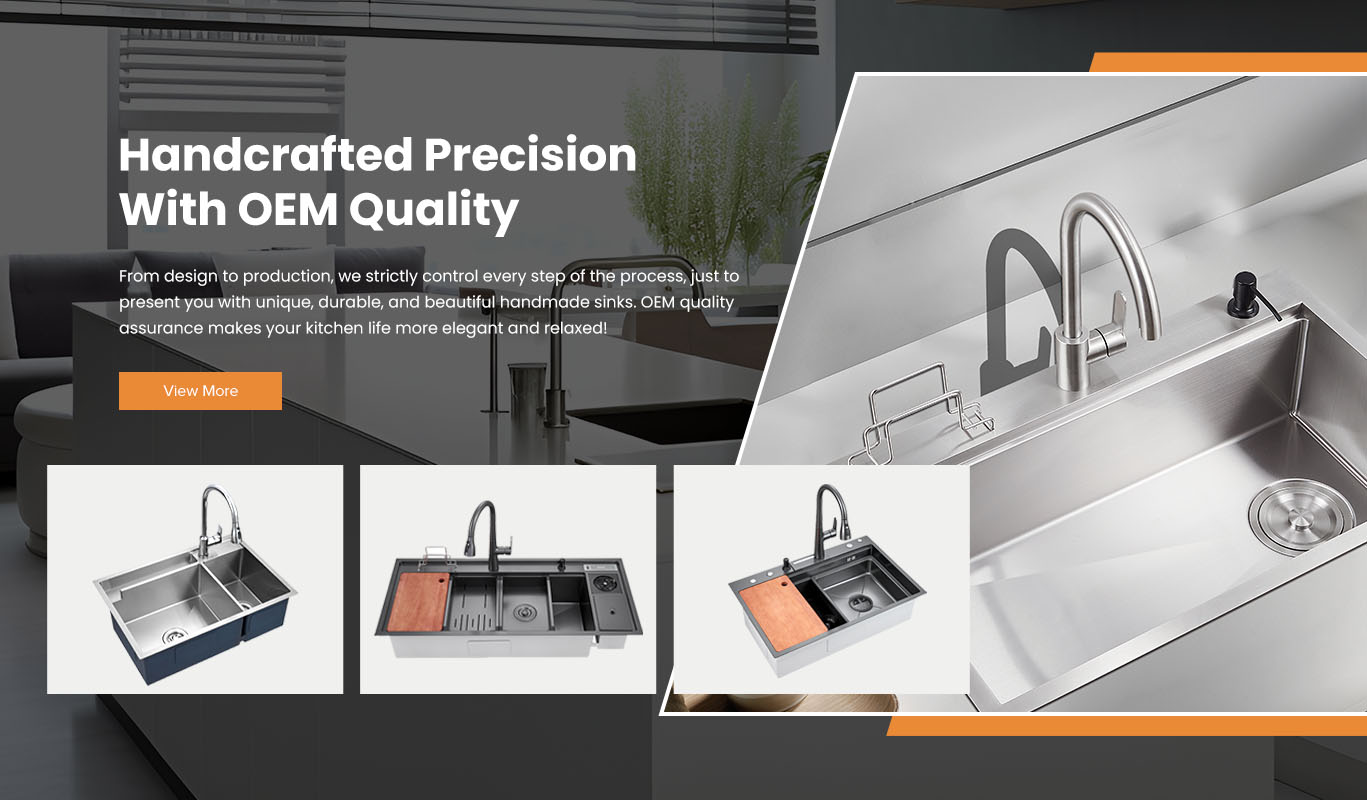
A 16 gauge stainless steel sink is widely considered a premium choice for kitchen applications because it provides excellent strength, durability, and noise control. However, whether it is the best option depends on the sink design, application environment, material quality, and manufacturing standards.
In stainless steel sink production, gauge refers to the thickness of the steel sheet, and the measurement system works in reverse:
Lower gauge number means thicker stainless steel.
A 16 gauge stainless steel sheet is approximately 1.5–1.6 mm thick, while an 18 gauge stainless steel sheet is around 1.2 mm thick. The thicker material generally provides better resistance against dents, vibration, and deformation.
As a professional stainless steel sink manufacturer, SHUNHAN combines material selection, precision forming, surface finishing, and strict quality control to provide customized OEM and ODM stainless steel sink solutions. (shunhansink.com)
A 16 gauge stainless steel sink is manufactured from thicker steel compared with common 18 gauge models.
Typical thickness comparison:
| Gauge | Approximate Thickness | Application |
|---|---|---|
| 16 Gauge | 1.5–1.6 mm | Premium residential and commercial kitchens |
| 18 Gauge | 1.2–1.3 mm | Standard residential kitchens |
| 20 Gauge | Around 1.0 mm | Lightweight applications |
The thicker structure of 16 gauge stainless steel provides:
Higher impact resistance
Better bowl stability
Reduced vibration
Lower operating noise
Longer structural lifespan
For large kitchen sinks, thicker material is especially valuable because wider sink surfaces experience more stress during daily use.
Kitchen sinks are exposed to heavy cookware, dishes, and daily impact.
A thicker 16 gauge stainless steel sheet provides greater rigidity, helping reduce:
Surface deformation
Bowl movement
Visible dents
This makes 16 gauge suitable for:
Large single bowl sinks
Workstation sinks
Commercial kitchens
High-use kitchens
One common concern with stainless steel sinks is noise caused by:
Running water
Dropped utensils
Metal cookware contact
The additional thickness of 16 gauge stainless steel helps absorb vibration more effectively.
A professional sink manufacturer may also combine thicker material with:
Sound insulation pads
Anti-condensation coatings
Structural reinforcement
Together, these treatments improve the overall user experience.
A 16 gauge stainless steel sink often creates a stronger quality impression because customers can feel the difference in:
Weight
Rigidity
Surface stability
For luxury residential projects and high-end kitchen applications, 16 gauge is frequently selected because it matches premium product expectations.
The answer depends on the project requirements.
| Application | Recommended Choice |
|---|---|
| Luxury kitchens | 16 Gauge |
| Large workstation sinks | 16 Gauge |
| Commercial kitchens | 16 Gauge |
| Standard residential kitchens | 18 Gauge |
| Cost-sensitive projects | 18 Gauge |
A 16 gauge sink is worth considering when the priority is:
Maximum durability
Premium quality perception
Long service life
Heavy daily usage
However, for standard residential applications, a well-produced 18 gauge sink can also provide reliable performance.
The difference between 16 gauge and 18 gauge is mainly material thickness.
| Comparison | 16 Gauge | 18 Gauge |
|---|---|---|
| Thickness | About 1.5 mm | About 1.2 mm |
| Strength | Higher | Very good |
| Dent resistance | Better | Good |
| Weight | Heavier | Lighter |
| Material cost | Higher | More competitive |
| Best use | Premium projects | Mainstream projects |
The correct choice depends on balancing performance and cost rather than simply selecting the thickest steel.
Although thickness is important, stainless steel grade also determines long-term performance.
A high-quality kitchen sink should consider:
| Factor | Influence |
|---|---|
| Stainless steel grade | Corrosion resistance |
| Gauge thickness | Structural strength |
| Surface finish | Appearance |
| Welding quality | Leakage prevention |
| Manufacturing accuracy | Product consistency |
304 stainless steel is commonly used in kitchen sinks because it provides:
Excellent corrosion resistance
Good forming performance
Stable surface quality
Long service life
The corrosion resistance of stainless steel comes from chromium, which creates a passive protective layer on the surface. Stainless steels typically require at least 10.5% chromium to develop corrosion-resistant properties.
SHUNHAN focuses on stainless steel sink manufacturing using controlled material standards and professional production processes.
A good 16 gauge stainless steel sink requires more than thick raw material. Manufacturing technology determines whether the material can deliver stable performance.
The production process includes:
Stainless steel material inspection
Sheet cutting
Deep drawing or forming
Welding
Grinding
Surface brushing
Cleaning treatment
Leakage testing
Final inspection
| Production Stage | Quality Control Focus |
|---|---|
| Material inspection | Verify stainless steel grade |
| Forming | Maintain bowl structure |
| Welding | Prevent leakage |
| Surface treatment | Ensure consistent finish |
| Final inspection | Confirm product quality |
During forming, manufacturers must carefully control material distribution because deep drawing can affect thickness consistency in different areas of the sink.
For customized kitchen sink projects, gauge selection should be decided during product development.
A professional OEM and ODM process includes:
Manufacturers evaluate:
Usage environment
Sink dimensions
Market positioning
Expected lifespan
The factory confirms:
Steel thickness
Bowl structure
Drainage design
Installation method
Quality checks include:
Material inspection
Surface inspection
Structural testing
Leakage testing
SHUNHAN provides customized stainless steel sink solutions with different sizes, structures, finishes, and specifications for global kitchen projects. (shunhansink.com)
A 16 gauge specification only creates value when the manufacturer can control the entire production process.
A professional stainless steel sink factory manages:
Raw material sourcing
Thickness accuracy
Forming technology
Welding quality
Surface finishing
Batch consistency
A trader usually supplies existing products, while a manufacturer can adjust:
Gauge requirements
Sink structure
Surface treatment
Packaging design
For customized and bulk supply projects, direct factory control helps maintain consistent product quality.
When selecting 16 gauge stainless steel sinks for large projects, consider:
| Evaluation Item | Importance |
|---|---|
| Material standard | Ensures durability |
| Thickness control | Maintains performance |
| Production capacity | Supports stable supply |
| Quality inspection | Reduces defects |
| Packaging | Protects products during transport |
The best supplier should provide consistent quality across every production batch.
Before choosing a stainless steel sink manufacturer, evaluate:
| Checkpoint | Key Question |
|---|---|
| Material | Is 304 stainless steel verified? |
| Gauge | Is thickness accurately controlled? |
| Structure | Is the design suitable for usage? |
| Surface | Is finishing consistent? |
| Testing | Are leakage tests completed? |
| Production | Can quality remain stable in bulk orders? |
For export projects, manufacturers should also consider:
Material documentation
Packaging requirements
Production standards
Delivery reliability
Market compliance