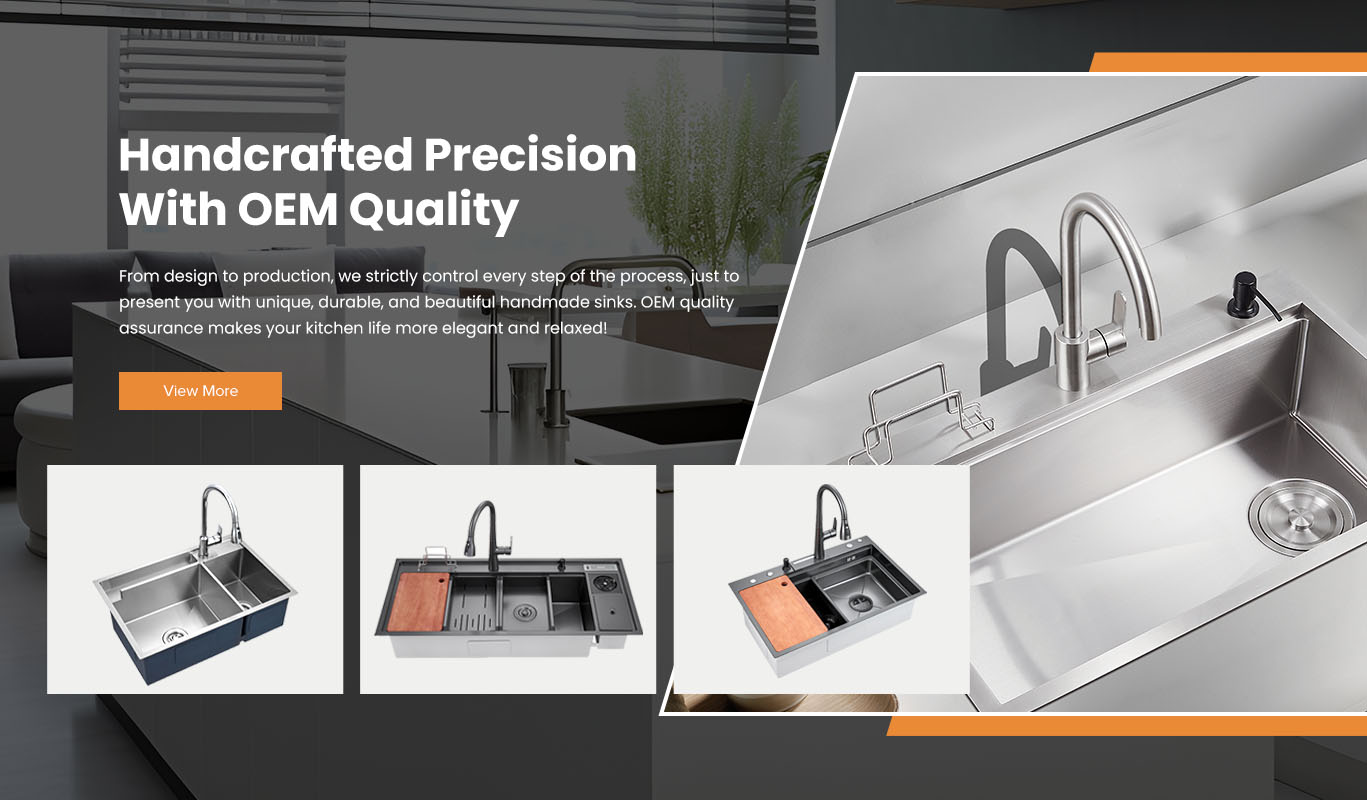
A stainless steel sink is designed to handle daily kitchen activities, but regular cleaning is still essential to maintain its appearance, hygiene, and long-term performance. Although stainless steel is known for corrosion resistance, it is not completely maintenance-free. Food residue, mineral deposits, grease, and improper cleaning methods can gradually affect the surface finish.
From a manufacturing perspective, cleaning performance starts before the sink reaches the kitchen. Stainless steel grade, material thickness, surface treatment, polishing technology, and production quality control all influence how easy a sink is to maintain.
SHUNHAN specializes in stainless steel sink manufacturing, providing OEM and ODM solutions with controlled materials, customized designs, professional surface finishing, and strict quality inspection processes. (shunhansink.com)
Stainless steel receives its corrosion resistance from a thin chromium oxide passive layer formed on the surface. This protective film blocks corrosion and can naturally rebuild when exposed to oxygen. However, dirt, salt deposits, chemicals, and metal contamination can affect this protective layer.
Regular cleaning helps:
Maintain the original surface appearance
Reduce water spots
Prevent residue buildup
Protect corrosion resistance
Extend product lifespan
| Common Problem | Main Cause |
|---|---|
| White water marks | Mineral deposits |
| Dull surface | Grease and residue buildup |
| Rust-like spots | Iron contamination |
| Scratches | Abrasive cleaning tools |
| Bad smell | Food particles in drain area |
Stainless steel surfaces are easy to maintain when cleaned correctly with suitable methods.
Daily maintenance does not require complicated cleaning products. A simple routine can keep the sink looking clean.
Clear:
Food particles
Oil residue
Coffee stains
Salt deposits
Leaving acidic or salty materials on stainless steel for extended periods may increase the possibility of surface staining.
Recommended:
Warm water
Mild dish soap
Soft sponge
Microfiber cloth
Cleaning process:
Wet the sink surface.
Apply mild detergent.
Wipe along the stainless steel grain.
Rinse with clean water.
Dry completely.
Following the grain direction helps protect the brushed finish and keeps the surface appearance consistent.
A deeper cleaning routine can restore brightness and remove accumulated residue.
Recommended weekly cleaning process:
| Step | Action |
|---|---|
| 1 | Rinse the sink with warm water |
| 2 | Apply stainless steel-safe cleaner |
| 3 | Scrub gently along the grain |
| 4 | Remove cleaner residue |
| 5 | Dry with microfiber cloth |
For stubborn stains, mild cleaning powders or baking soda-based methods can help remove residue without aggressively damaging the surface.
Avoid excessive force because aggressive scrubbing can change the brushed texture.
Water spots are one of the most common issues with stainless steel sinks.
They are usually caused by:
Calcium deposits
Hard water minerals
Water evaporation
A suitable cleaning method:
Apply a stainless steel cleaner.
Let it work briefly.
Wipe gently.
Rinse completely.
Dry the surface.
Drying after every use is one of the simplest ways to reduce mineral buildup.
| Maintenance Habit | Result |
|---|---|
| Rinse after use | Removes residue |
| Dry surface | Reduces water spots |
| Clean along grain | Protects finish |
| Regular maintenance | Preserves appearance |
Many surface problems are caused by incorrect cleaning tools or chemicals.
Avoid:
| Cleaning Method | Reason |
|---|---|
| Steel wool | Creates scratches and may leave iron particles |
| Metal brushes | Damages surface finish |
| Chlorine bleach | Can affect chromium oxide protection |
| Strong acids | May damage surface |
| Abrasive powders | Remove brushed texture |
Steel wool is especially unsuitable because small iron particles can remain on the stainless steel surface and create rust-like marks.
Cleaning results are connected to material quality.
304 stainless steel is widely used for kitchen sinks because it provides:
Strong corrosion resistance
Good forming performance
Stable surface appearance
Long service life
The protective properties come mainly from chromium content. Stainless steel generally requires at least 10.5% chromium to develop corrosion-resistant characteristics.
| Material Factor | Influence |
|---|---|
| Stainless steel grade | Corrosion resistance |
| Thickness | Structural strength |
| Surface finish | Maintenance difficulty |
| Manufacturing process | Surface consistency |
SHUNHAN uses controlled stainless steel materials and professional manufacturing technology to produce durable kitchen sink solutions. (shunhansink.com)
Most kitchen stainless steel sinks use brushed finishes because they are practical for daily environments.
Advantages include:
Better hiding of minor scratches
Easier maintenance
Modern appearance
Consistent texture
Different finishes require different cleaning methods.
| Surface Finish | Maintenance Level |
|---|---|
| Brushed finish | Easy |
| Satin finish | Moderate |
| Mirror finish | Higher care required |
When cleaning brushed stainless steel, always follow the existing polishing direction.
A sink that is easy to clean starts with professional manufacturing.
The production process includes:
Stainless steel material inspection
Cutting
Forming
Welding
Grinding
Surface brushing
Cleaning treatment
Water leakage testing
Final quality inspection
| Production Stage | Quality Control Focus |
|---|---|
| Material inspection | Verify stainless steel grade |
| Forming | Maintain sink structure |
| Welding | Prevent leakage |
| Surface finishing | Ensure smooth texture |
| Final inspection | Confirm product performance |
Surface quality depends heavily on polishing consistency and production accuracy.
For customized sink projects, cleaning requirements should be considered during product development.
A professional OEM and ODM process includes:
Manufacturers analyze:
Sink size
Bowl structure
Surface finish
Installation method
Usage environment
Testing focuses on:
Surface appearance
Drainage performance
Structural strength
Installation compatibility
Quality management includes:
Material inspection
Process monitoring
Surface inspection
Packaging protection
SHUNHAN provides customized stainless steel sink solutions with different sizes, structures, and finishes for global kitchen applications. (shunhansink.com)
Cleaning performance depends not only on the final product but also on how it is manufactured.
A professional stainless steel sink manufacturer controls:
Raw material selection
Stainless steel thickness
Surface processing
Welding quality
Production consistency
Quality inspection
A trader mainly supplies existing products, while a manufacturer can adjust:
Sink structure
Material specifications
Surface finish
Packaging requirements
Factory control helps maintain stable quality for bulk supply projects.
When planning stainless steel sink supply, consider:
| Evaluation Item | Importance |
|---|---|
| Material grade | Ensures durability |
| Surface finish | Affects maintenance |
| Thickness | Influences strength |
| Production capacity | Ensures supply stability |
| Quality control | Reduces batch differences |
A reliable supplier should provide consistent products across different production batches.
Before selecting a stainless steel sink manufacturer, evaluate:
| Checkpoint | Question |
|---|---|
| Material | Is stainless steel grade verified? |
| Surface | Is finishing consistent? |
| Structure | Is the design suitable? |
| Testing | Are leakage tests completed? |
| Production | Is quality stable during bulk orders? |
| Compliance | Does it meet export requirements? |
For international projects, manufacturers should also consider:
Material documentation
Packaging standards
Delivery requirements
Market regulations