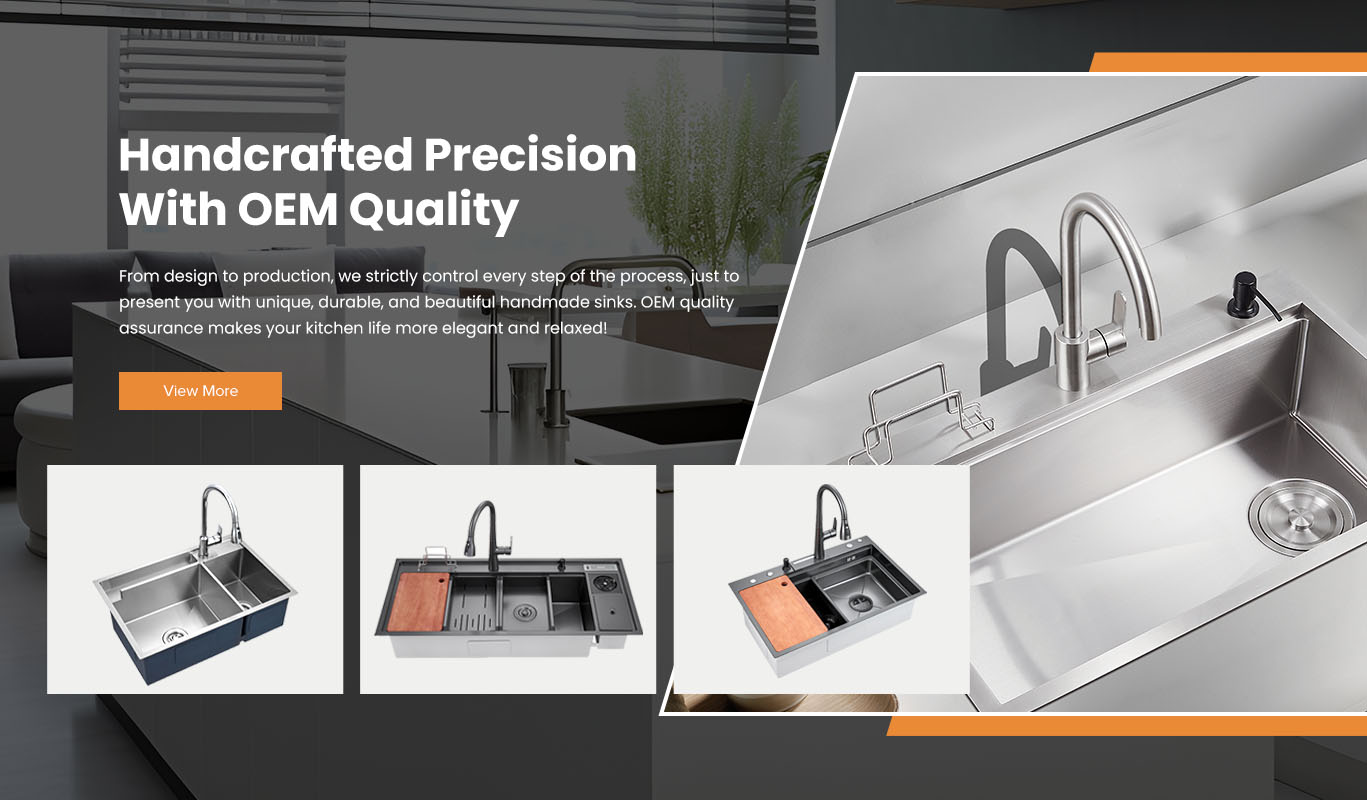
Water marks on a stainless steel sink usually come from minerals left behind after water evaporates. Water science references explain that hard water mainly contains dissolved calcium and magnesium. When these minerals stay on the sink surface, they can leave white spots, cloudy marks, or dull rings. For project kitchens, apartments, hospitality spaces, and commercial washing areas, water mark control is not only about cleaning. It also depends on material grade, surface finishing, drainage design, and production consistency.
A stainless steel sink manufacturer can control the full process from material selection to final packing. This is different from trader sourcing, where finished products may come from mixed batches. For bulk stainless steel sink supply, factory-side control helps keep surface finish, bowl shape, drain position, and packaging more consistent. This reduces the risk of visible water marks caused by uneven polishing, poor cleaning, or weak drainage design.
To stop water marks on stainless steel sink surfaces, rinse the sink after use and wipe it dry with a soft cloth. Do not let hard water, soap residue, salt water, or detergent stay on the surface for a long time. For existing marks, use mild detergent and warm water first. For mineral residue, a diluted food-safe acid cleaner can help, but it should be rinsed away quickly and the surface should be dried after cleaning. Avoid steel wool and rough abrasive pads because they may scratch the surface and make future marks more visible.
For OEM stainless steel sink and ODM stainless steel sink projects, water mark prevention should be considered before mass production. We confirm sink size, bowl depth, drainboard layout, surface finish, installation type, accessory matching, carton design, logo method, and export market requirements. For a practical structure reference, this Top Mount Stainless Steel Sink With Drainboard can help evaluate drainage space, working area, surface options, and project installation matching.
| Checkpoint | Purpose |
|---|---|
| Material standard | Supports corrosion resistance and stable appearance |
| Surface polishing | Helps reduce visible water stains |
| Drainage design | Reduces standing water after use |
| Cleaning process | Removes oil, dust, and polishing residue |
| Appearance inspection | Checks spots, scratches, and uneven finish |
| Export packing | Protects the sink surface during shipment |
A complete manufacturing process includes stainless steel sheet inspection, cutting, deep drawing, trimming, welding, grinding, polishing, surface cleaning, drainage testing, accessory checking, and final packing. Each step affects how easily a stainless steel sink shows water marks after installation. Smooth polishing, clean washing, and correct protective packing are especially important for Custom Stainless Steel Sinks used in repeat project orders.
Before placing repeat orders, sourcing teams should check material standards used, sample consistency, surface finish, drainage slope, accessory compatibility, carton strength, labeling, installation guide, cleaning instructions, and export market compliance. These details help reduce after-sales complaints and support stable long-term delivery.
SHUNHAN focuses on stainless steel sink manufacturing, custom stainless steel sinks, OEM and ODM support, and stable project supply. By controlling material, forming, polishing, cleaning, inspection, and packing, we help reduce water mark risks and provide more consistent stainless steel sink supplier support for long-term orders.