stainless steel sink rust is usually caused by surface contamination, chloride residue, harsh cleaning chemicals, or weak production control. Stainless steel is corrosion resistant because international stainless steel material standards require at least 10.5% chromium, which helps form a protective passive film on the surface. For kitchen sink production, 304 stainless steel is widely used because it normally contains about 18% chromium and 8% nickel, giving stronger resistance to daily water, food residue, and cleaning environments.
To stop a stainless steel sink from rusting, material selection must come first. A stainless steel sink manufacturer can control raw material grade, sheet thickness, forming accuracy, welding, polishing, washing, inspection, and packing. A trader usually works from finished stock, so it can be harder to trace the cause when bulk stainless steel sink supply has color difference, rough polishing, rust spots, or packaging damage.
After use, rinse away salt, sauce, detergent, hard water marks, and cleaning residue, then wipe the sink dry with a soft cloth. Do not leave bleach, steel wool, wet carbon steel tools, or strong acid cleaners on the surface. These materials can damage the passive film or leave iron particles that later become brown rust-like marks.
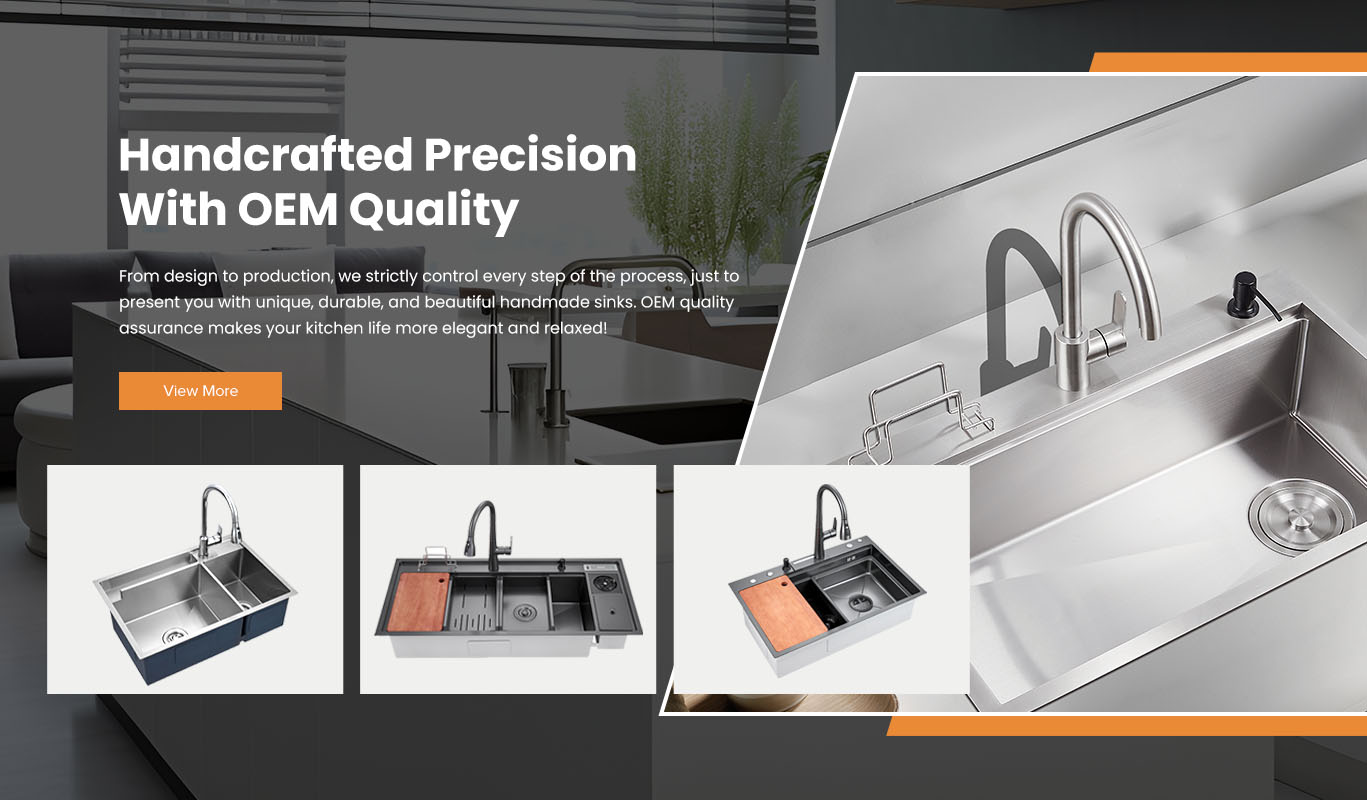
For OEM stainless steel sink and ODM stainless steel sink projects, rust prevention should begin before mass production. We confirm sink size, bowl depth, drain hole position, installation type, surface finish, logo method, accessories, carton design, and export market requirements. For project structure reference, this Top Mount Stainless Steel Sink With Drainboard can help evaluate drainage area, workspace layout, installation matching, and stainless steel surface options.
| Sourcing Checkpoint | Rust Prevention Value |
|---|---|
| Material standard | Confirms corrosion resistance base |
| Sheet thickness | Supports stable forming |
| Welding treatment | Reduces weak rust points |
| Surface polishing | Removes rough marks and iron dust |
| Cleaning process | Reduces chemical residue |
| Export packing | Protects sinks during shipment |
A complete manufacturing process includes sheet inspection, cutting, deep drawing, trimming, welding, grinding, polishing, cleaning, drainage testing, accessory matching, and final packing. Each step affects the final rust resistant stainless steel sink quality. For bulk orders, stable batch production and clear inspection records are important for repeat quality.
Before placing repeat orders, project sourcing teams should check material standards used, sample consistency, surface cleanliness, drainage design, accessory compatibility, carton strength, labeling, installation guidance, and export market compliance. These details help reduce rust complaints after installation and support more stable delivery.
SHUNHAN focuses on stainless steel sink manufacturing, Custom Stainless Steel Sinks, OEM and ODM support, and stable project supply. By controlling production from material selection to final packing, we help reduce rust-related risks and support more consistent long-term orders.