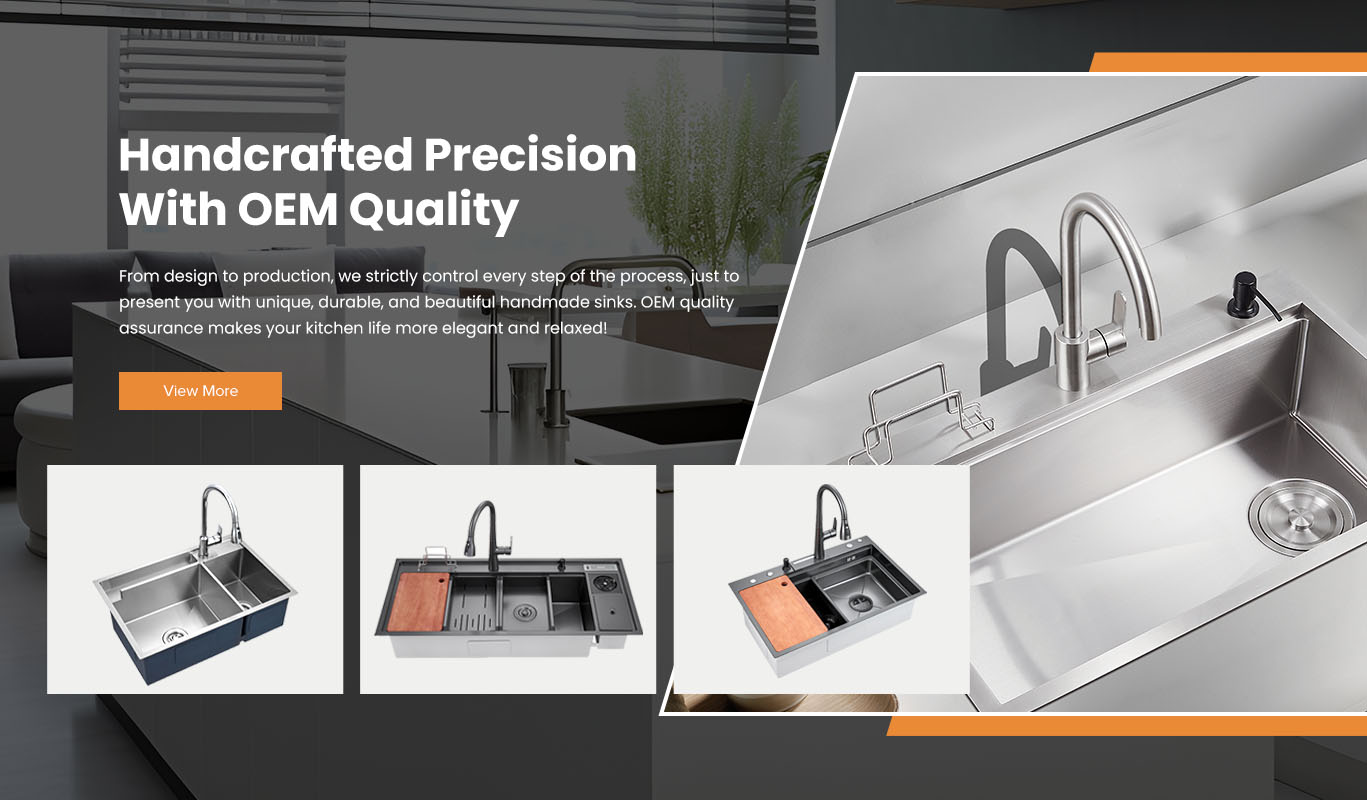
The best gauge for a stainless steel kitchen sink is usually 16 gauge or 18 gauge, and the right choice depends on product positioning, sink size, usage intensity, and price structure. A lower gauge number means thicker steel. In practical sourcing, 16 gauge is often chosen for a stronger and more premium feel, while 18 gauge remains a reliable option for balanced cost and daily durability. Commercial sink guidance commonly places heavier-duty use in the 14 to 16 gauge range, while 18 gauge is widely accepted for residential kitchen applications.
Gauge affects more than thickness. It also influences dent resistance, rigidity, sound performance, and how solid the sink feels after installation. A thicker sink usually performs better under repeated impact and heavy use, but gauge alone does not define quality. The real value comes from the match between thickness, material grade, and manufacturing control.
A good kitchen sink should combine the right gauge with the right steel grade. SHUNHAN states that its sink products use 304 stainless steel, and the company highlights OEM and ODM sink production with customized manufacturing support. Industry material references describe ASTM A240 grade 304 as a standard 18-8 stainless steel known for corrosion resistance, forming performance, and welding quality, which is why it remains a mainstream material for quality sink manufacturing.
This is where a manufacturer has a clear advantage over a trader. A trader may only quote 16 gauge or 18 gauge as a sales point, but a real factory can explain how gauge affects bowl depth, sink size, welding, edge treatment, packaging weight, and repeat production stability. SHUNHAN presents itself as a sink manufacturer with deep industry experience, customized production, and OEM service for larger orders, which gives buyers stronger support from drawing review to mass delivery.
Gauge selection should also be judged through the manufacturing process. Thicker stainless steel can improve sink strength, but it also requires stronger forming, welding, grinding, and brushing capability. If the factory cannot control these stages well, the advantage of a thicker sheet will not fully appear in the final product. SHUNHAN emphasizes detail, high quality, and continuous innovation in sink production, which is important when thickness and finish both need to stay consistent.
For bulk supply, strong quality control checkpoints are essential. Buyers should confirm raw material grade, sheet thickness consistency, weld quality, brushed finish uniformity, flatness, drainage slope, and final surface condition before shipment. A practical project sourcing checklist should also include packaging protection and accessory consistency, because small deviations in mass production can quickly become large after-sales issues.
In an OEM / ODM process, the best gauge should be selected after reviewing market needs, sink dimensions, finish style, packing method, and shipment targets. Export market compliance also matters. Suppliers serving hygiene-sensitive applications often need stronger awareness of material and finish suitability. SHUNHAN’s customized production model is useful here because factory-side control helps align structure, material, and packaging in one workflow.
| Checkpoint | What to confirm |
|---|---|
| Gauge choice | 16 gauge for stronger-duty positioning, 18 gauge for balanced supply |
| Material standard | 304 stainless steel |
| Manufacturing process | Forming, welding, grinding, brushing |
| Quality control checkpoints | Thickness, finish, weld seam, final inspection |
| OEM / ODM process | Drawing, logo, packaging, custom details |
| Bulk supply considerations | Carton strength, weight control, repeat consistency |
| Export market compliance | Material records and finish suitability |
SHUNHAN stands out because it combines 304 stainless steel material selection, OEM and ODM capability, customized production, and factory-side quality control. For most kitchen sink programs, 16 gauge and 18 gauge are both valid choices. The better answer is the one that matches the target market, product level, and supply plan with stable manufacturing execution.