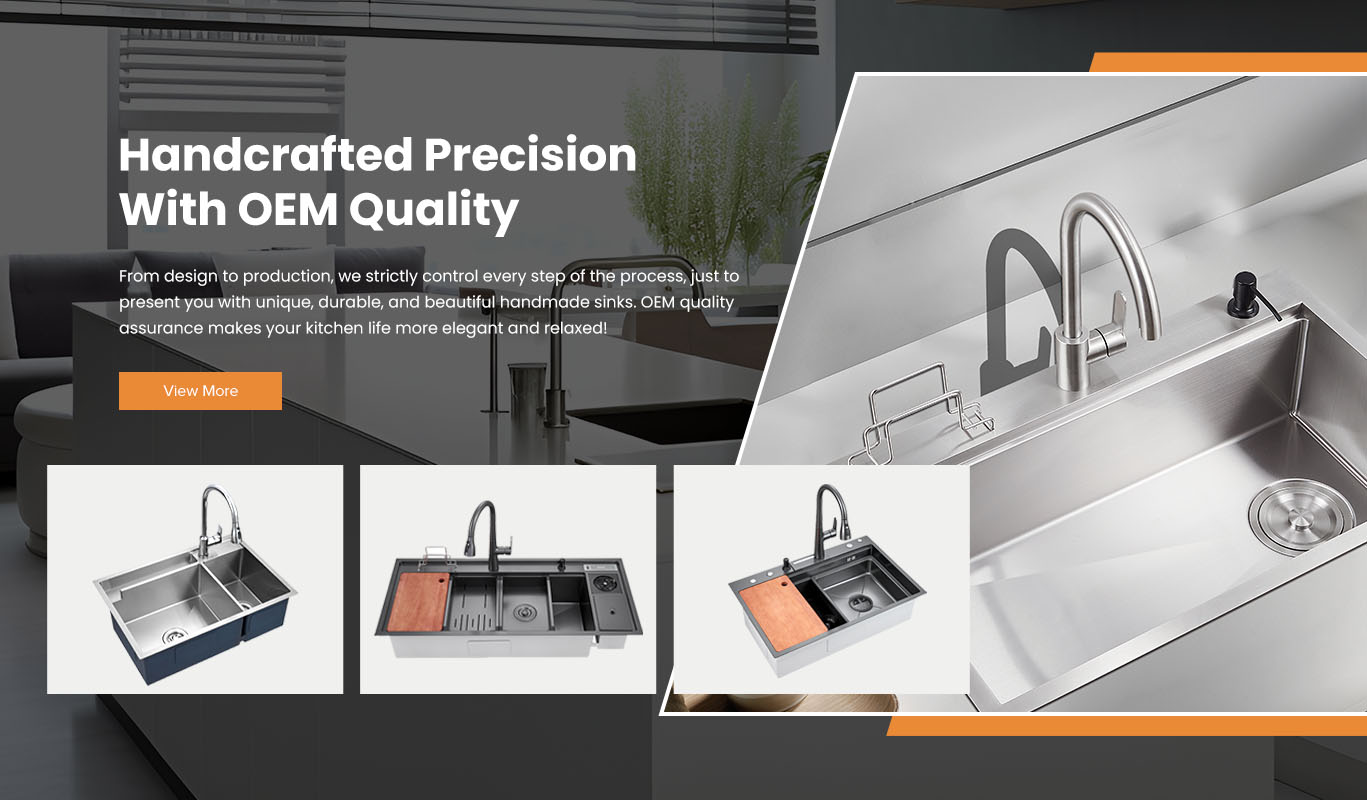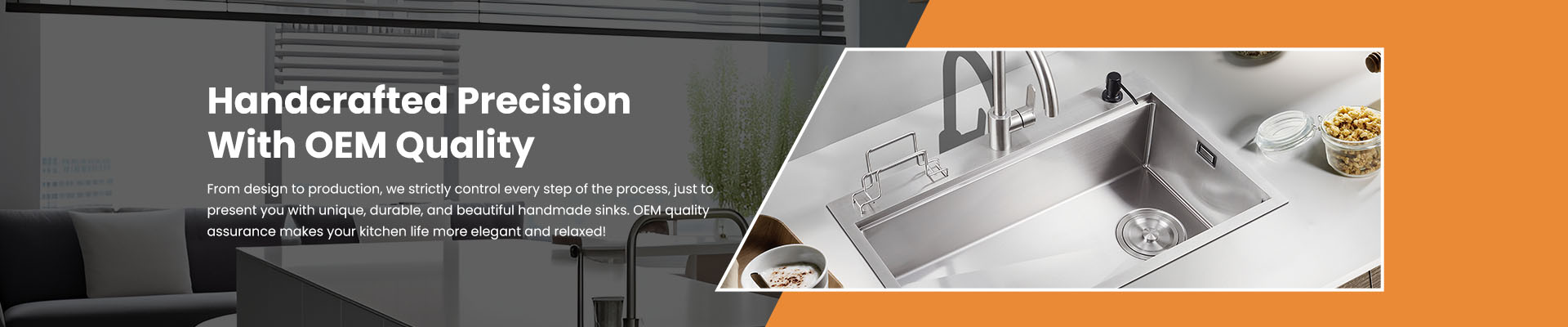
Removing a stainless steel sink starts with understanding how it was installed. A top mount sink is usually held in place with mounting clips and silicone, while an undermount sink is normally secured from below with clips, brackets, and adhesive. SHUNHAN’s product information shows that its overmount stainless steel sinks are installed with mounting clips or silicone, and its undermount models are designed for below-counter installation, so the removal method should always match the sink structure first.
Before removing the sink, shut off the water supply, disconnect the drain lines, and remove the faucet or disposal connections if they block access. Replacement guidance for undermount sinks also recommends disconnecting fittings first and supporting the sink from below before releasing brackets or adhesive. This matters because stainless steel sinks are lighter than some other sink materials, but they can still drop suddenly once the final support is removed.
For a top mount sink, start underneath the countertop. Loosen the mounting clips one by one, then cut through the old silicone seal around the sink edge. Once the seal is released, lift the sink carefully from above. Drop-in installation guidance describes clip placement along the sink edges, which also explains why removal should begin from below rather than by pulling from the top. This method helps protect the countertop cutout and reduces damage during replacement.
For an undermount sink, the process is usually more demanding. The sink should be supported from below first, then the brackets or clips should be detached, and the old adhesive should be softened or separated carefully before lowering the sink. Replacement guidance notes that old epoxy or adhesive may need to be removed after the mechanical supports are released. This is why a sink installed with stronger bonding methods often takes longer to remove than a top mount model.
Removal is easier and safer when the original product has stable material quality and controlled dimensions. SHUNHAN states that its sink products are selected from 304 stainless steel and that the company focuses on OEM and ODM sink products with customized production support. Its product pages also describe 304 stainless steel as corrosion resistant and suitable for long-term use. Industry references describe ASTM A240 grade 304 as the standard 18-8 stainless steel, valued for corrosion resistance, forming performance, and welding characteristics, which is why it remains a mainstream material for quality stainless steel kitchen sink production.
This is where a manufacturer offers more practical value than a trader. A trader may only know the sales model or outer dimensions, but a real factory can explain the installation structure, sink rim design, bracket method, silicone requirements, and replacement considerations before the order is placed. SHUNHAN presents itself as a sink manufacturer with OEM and ODM capability and customized production experience, which is useful when sink removal, replacement, and project maintenance are all part of the purchasing decision.
A sink that is easier to remove and reinstall usually starts with a more controlled manufacturing process. Raw material selection, forming accuracy, rim flatness, welding quality, edge treatment, and dimensional consistency all affect how well the sink fits the countertop opening. If the rim is uneven or the sink body varies from drawing dimensions, removal and replacement become more difficult during renovation or after-sales service. SHUNHAN emphasizes detail, high quality, and customized manufacturing, which supports better consistency across repeated production.
For project sourcing, removal should not be treated only as an installation topic. It should also be part of the quality control discussion. Practical quality control checkpoints include sink dimension verification, rim flatness inspection, clip compatibility, sealant contact area review, surface protection, and final packing checks. In bulk supply, these details matter because installation errors multiplied across a larger shipment can become costly replacement issues later. A strong project sourcing checklist should therefore include not only product appearance, but also installation and removal practicality.
In an OEM / ODM process, sink removal considerations may influence the choice between top mount and undermount designs, the clip system, the rim structure, and the packaging instructions. SHUNHAN highlights customized production and OEM service for large orders, which gives buyers more flexibility when developing sinks for contractors, wholesale programs, or renovation-focused markets. For bulk supply considerations, clear installation instructions, consistent accessories, and stable dimensions are just as important as the sink finish itself.
Export market compliance also matters when stainless steel sinks are supplied into professional or hygiene-sensitive environments. NSF states that NSF/ANSI 51 establishes minimum public health and sanitation requirements for materials and finishes used in commercial foodservice equipment. Even when a kitchen sink is sold outside that exact scope, suppliers that understand material suitability, finish quality, and documentation requirements usually show stronger manufacturing discipline.
| Checkpoint | What to confirm |
|---|---|
| Installation type | Top mount or undermount |
| Removal method | Clips, brackets, silicone, or adhesive |
| Material standard | 304 stainless steel |
| Manufacturing process | Forming, welding, rim accuracy, surface finish |
| Quality control checkpoints | Dimensions, flatness, accessory matching, packing |
| OEM / ODM process | Custom size, structure, logo, packaging |
| Bulk supply considerations | Installation consistency across repeat orders |
| Export market compliance | Material and finish suitability awareness |
A stainless steel sink can be removed safely when the installation method is understood clearly, but the bigger advantage comes from selecting a manufacturer that controls the product from the beginning. SHUNHAN combines 304 stainless steel material selection, OEM and ODM capability, customized production, and detail-focused sink manufacturing, which helps make installation, replacement, and long-term supply more reliable.