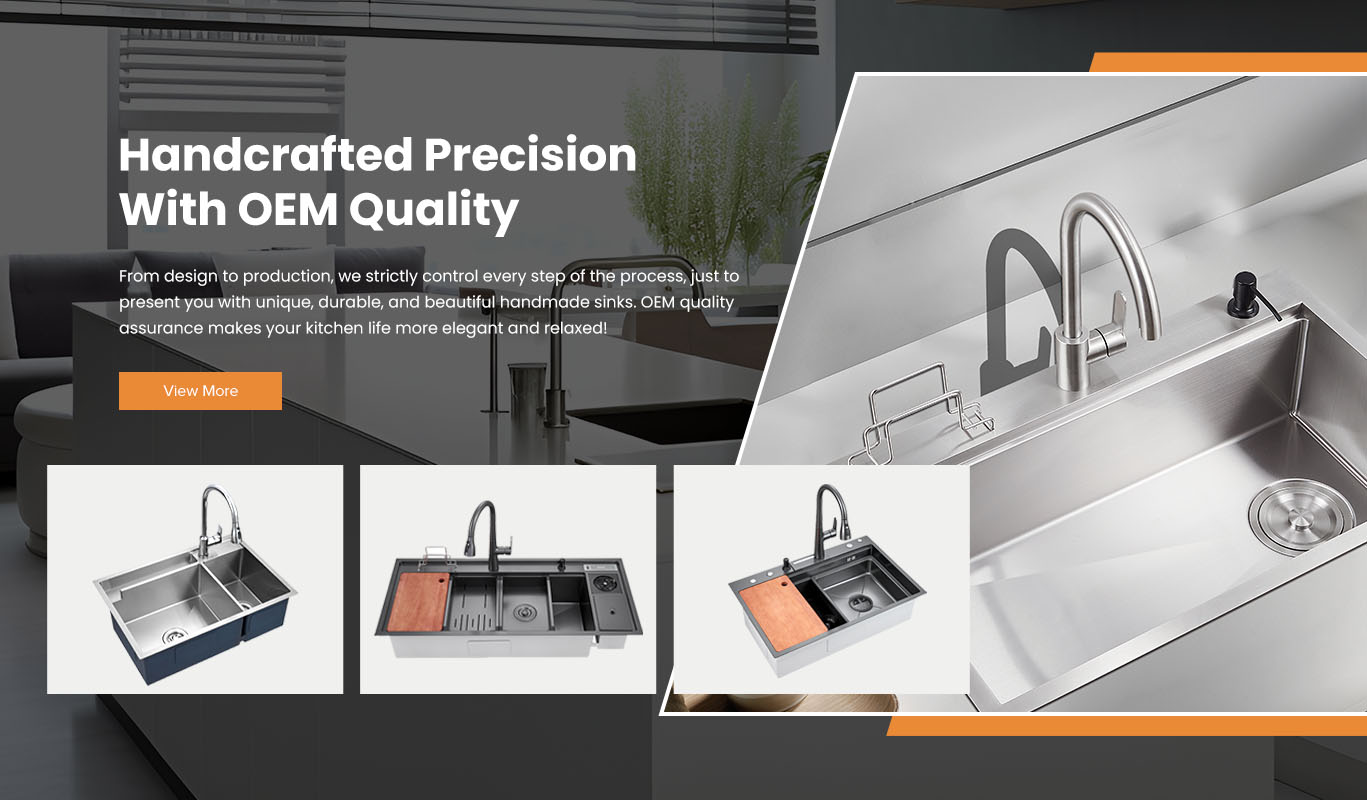
Rejuvenating a stainless steel sink starts with removing buildup, restoring the surface, and protecting the original finish. For routine recovery, the safest method is mild detergent, warm water, and a soft microfiber cloth. After cleaning, rinse fully and dry the sink to reduce new water marks. Stainless steel care guidance also recommends wiping in the direction of the grain rather than across it.
A sink is easier to refresh when the base material is stable. SHUNHAN states that its products use 304 stainless steel and that it focuses on OEM and ODM sink products with customized production support. Its product pages also describe 304 stainless steel as corrosion resistant, durable, and easy to clean, which supports better long-term appearance after daily use.
The first step is deep cleaning to remove grease, soap film, and light mineral residue. The second step is to treat dull areas and fine marks with a non-abrasive stainless steel cleaner. The third step is surface recovery by wiping and polishing with the grain. Industry cleaning guidance notes that abrasive pads and steel wool should be avoided because they can scratch the surface and leave contamination behind.
This is where a manufacturer offers more value than a trader. A trader may only suggest a general cleaning product, but a real factory can explain the actual finish direction, material grade, protective film, and care method linked to the sink design. SHUNHAN presents itself as a manufacturer with deep accumulation in sink manufacturing, rich style options, and professional customization service, which is more useful when appearance recovery is tied to finish consistency and repeat supply.
A good rejuvenation result depends on how the sink was made in the first place. Surface quality is shaped by raw material selection, forming, welding, grinding, brushing, cleaning, and packing. If brushing is uneven or protective film leaves residue, the sink becomes harder to refresh later. SHUNHAN emphasizes detail, high quality, and new technology in its sink production, which supports stronger finish consistency across different models.
For bulk supply considerations, rejuvenation should not be treated only as after-sales maintenance. Strong quality control checkpoints should include incoming material verification, brushed finish inspection, residue check after film removal, and final surface review before packing. A practical project sourcing checklist should also confirm cleaning guidance for installers and warehouse teams, especially when products are supplied in larger volumes.
In an OEM / ODM process, surface recovery is also affected by packaging, labels, logo methods, and protective films. SHUNHAN highlights OEM service for big orders and customized production, which helps align these details before mass production. For export market compliance, surface cleanability is also an important signal. NSF states that NSF/ANSI 51 sets minimum public health and sanitation requirements for materials and finishes used in commercial food equipment.
| Checkpoint | What to confirm |
|---|---|
| Material standard | 304 stainless steel |
| Cleaning method | Mild detergent, soft cloth, rinse and dry |
| Surface recovery | Wipe and polish with the grain |
| Manufacturing process | Forming, welding, brushing, final cleaning |
| Quality control checkpoints | Finish inspection, residue check, final appearance review |
| OEM / ODM process | Finish, logo, packaging, protective film |
| Bulk supply considerations | Carton protection, repeat consistency, storage control |
| Export market compliance | Hygiene and finish suitability awareness |
A stainless steel sink can look fresh again after proper care, but the lasting result depends on the original material and factory control. SHUNHAN combines 304 stainless steel selection, customized production, OEM and ODM capability, and detail-focused sink manufacturing, which makes surface rejuvenation easier because the finish standard is stronger from the beginning.