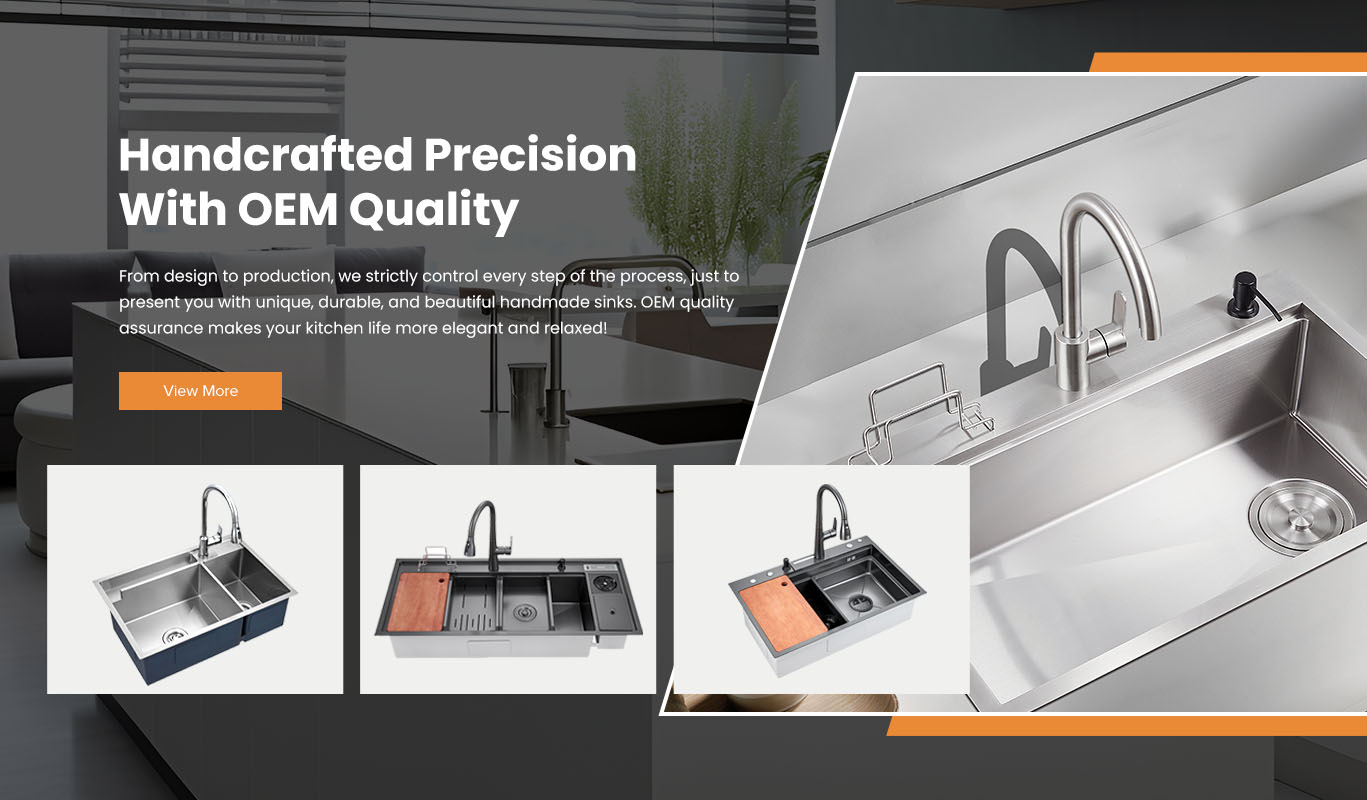
A commercial food preparation sink offers better efficiency for professional workflows because it provides larger capacity, stronger durability, and optimized preparation functions, while a standard sink is designed for general daily use.
The main difference between a commercial food preparation sink and a standard sink is the workflow they are designed to support.
A commercial food preparation sink is built for professional environments requiring:
Large-volume ingredient preparation
Frequent cleaning operations
High workflow efficiency
Continuous daily use
A standard sink is designed for:
Household kitchens
Basic food preparation
Dishwashing
General cleaning tasks
From a manufacturer’s perspective, sink selection should match the actual working environment. Professional kitchens require structures and specifications that support higher workloads.
Commercial kitchens require fast and organized preparation processes.
A commercial food preparation sink improves efficiency through:
Larger working capacity
Better task organization
Stronger structural performance
Support for repeated operations
It is commonly used in:
Restaurants
Hotels
Catering facilities
Food service kitchens
The design helps kitchen staff complete preparation tasks more efficiently during busy operating periods.
A standard sink remains suitable for many everyday applications.
Its main advantages include:
Simple design
Easy installation
Cost efficiency
Broad compatibility
Standard sinks are commonly used in:
Residential kitchens
Small food preparation areas
General cleaning applications
For normal usage conditions, a quality standard sink can provide reliable performance.
Workflow requirements are different between professional and general applications.
| Sink Type | Workflow Focus |
|---|---|
| Commercial Food Preparation Sink | Speed, capacity, continuous operation |
| Standard Sink | Convenience, flexibility, daily use |
Commercial food preparation sinks support:
Multiple preparation stages
Larger ingredient quantities
Faster cleaning cycles
Standard sinks focus on:
Household convenience
Compact kitchen layouts
General daily activities
Commercial food preparation sinks are designed for higher preparation demands.
They often provide:
Larger bowls
Deeper basins
More working space
Better support for bulk ingredients
This makes them suitable for:
Washing large quantities of vegetables
Preparing ingredients
Cleaning professional cookware
Standard sinks are better suited for smaller-scale preparation tasks.
Sink size directly affects workflow performance.
A larger commercial preparation sink provides:
More workspace
Better separation of tasks
Reduced workflow interruption
A standard sink provides:
Space-efficient installation
Comfortable household use
Better fit for smaller kitchens
The correct size depends on workload and available installation space.
Professional environments require stronger durability standards.
Commercial food preparation sinks usually provide:
Reinforced structures
Higher resistance to frequent use
Stronger material performance
Longer service potential
Standard sinks require:
Reliable daily durability
Corrosion resistance
Stable appearance
Material quality and manufacturing precision influence the actual lifespan of both sink types.
Material selection depends on the working environment.
| Sink Type | Material Priority |
|---|---|
| Commercial Food Preparation Sink | Strength, durability, heavy-use capability |
| Standard Sink | Balanced performance, appearance, cost |
Commercial applications often require:
Higher structural strength
Better impact resistance
More durable finishes
Standard applications often prioritize:
Design compatibility
Easy maintenance
Cost balance
Commercial sink production requires strict quality management.
Important quality factors include:
| Quality Factor | Performance Impact |
|---|---|
| Stainless steel grade | Determines corrosion resistance |
| Material thickness | Supports heavy use |
| Basin structure | Influences workflow efficiency |
| Welding quality | Improves reliability |
| Surface treatment | Supports cleaning performance |
Professional manufacturers adjust production standards according to commercial requirements.
Commercial food preparation sinks are better suited for restaurants because they provide:
Higher working efficiency
Larger preparation capacity
Better durability
Stronger workflow support
They help support:
Ingredient preparation
Food washing
Cleaning operations
Professional kitchen processes
Standard sinks are generally not designed for continuous commercial workloads.
A standard sink may handle light preparation tasks, but it may not provide the same efficiency in professional environments.
Commercial applications usually require:
Higher capacity
Faster workflow support
Stronger construction
More frequent operation capability
Using a sink designed for the correct application helps improve productivity.
When selecting between commercial and standard sinks, buyers should consider:
Basin size
Material thickness
Structural strength
Cleaning requirements
Usage frequency
Installation environment
The best sink should support the actual workflow rather than simply match appearance preferences.
The right choice depends on the application.
A commercial food preparation sink is recommended when:
Professional food preparation is required
High-frequency use is expected
Large capacity is needed
Workflow efficiency is important
A standard sink is recommended when:
General daily use is expected
Space efficiency matters
Basic performance is sufficient
Cost balance is important
Choosing the correct sink type helps improve efficiency, durability, and long-term value.
A commercial food preparation sink offers better efficiency for professional environments because it provides larger capacity, stronger durability, and better support for continuous workflows. A standard sink provides reliable performance for general kitchen applications.
The ideal choice depends on workload requirements, kitchen environment, usage frequency, and expected performance standards.