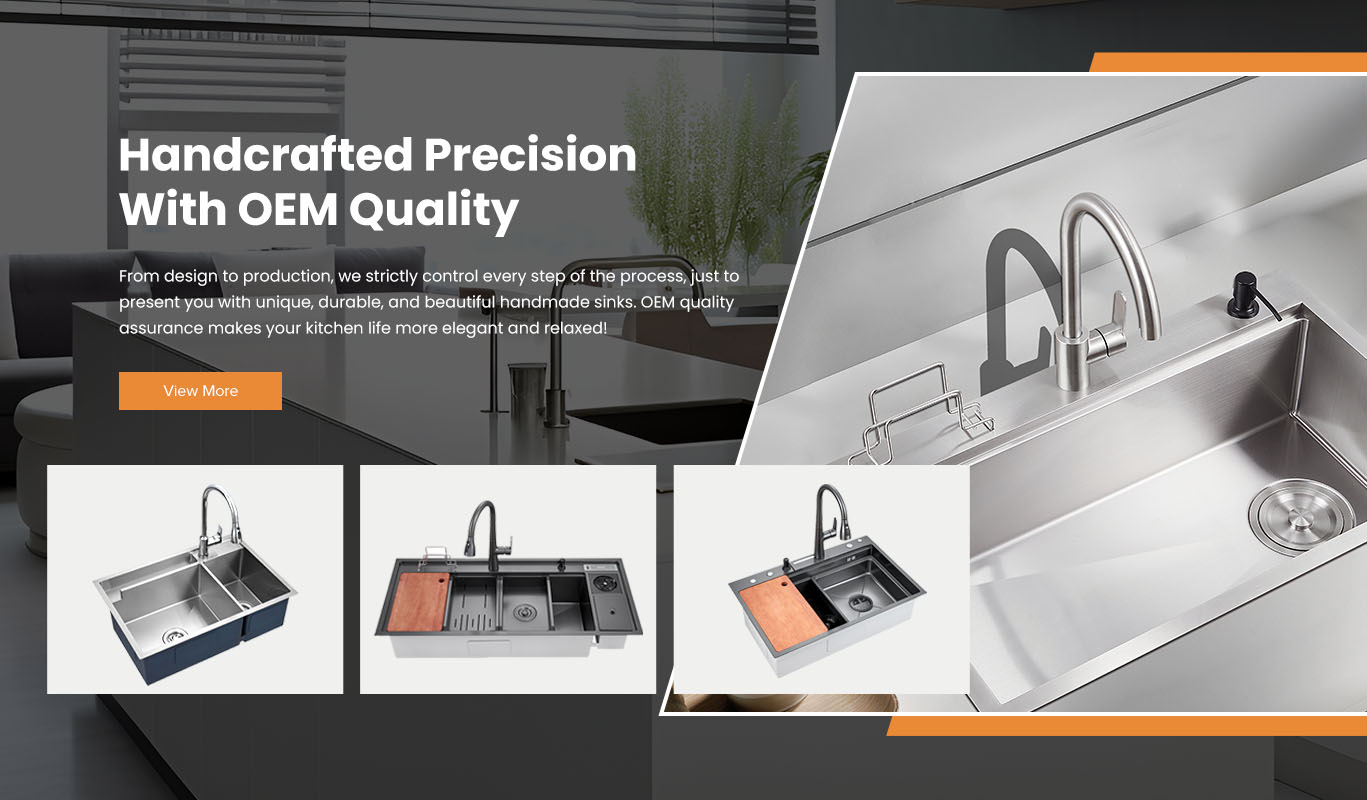
A laundry sink is designed for utility tasks with deeper capacity and stronger cleaning functions, while a kitchen sink focuses on food preparation and daily kitchen workflows. The right structure depends on the application environment and usage requirements.
The main difference between a laundry sink and a kitchen sink is the type of work they are designed to support.
A laundry sink is developed for utility tasks such as:
Washing clothes and fabrics
Cleaning household items
Handling large containers
Supporting maintenance activities
A kitchen sink is designed for:
Food preparation
Dishwashing
Ingredient cleaning
Daily cooking activities
From a manufacturer’s perspective, sink structure should match the working environment. Different applications require different basin designs, depths, materials, and performance standards.
Laundry areas often involve tasks that require more space and stronger performance.
A laundry sink usually features:
Deeper basin design
Larger working capacity
Stronger durability
Flexible cleaning functions
These features help support activities such as:
Washing bulky items
Cleaning tools
Soaking materials
Handling large amounts of water
The structure is designed for utility rather than decorative kitchen use.
Kitchen sinks are designed around food preparation and cooking workflows.
Their main advantages include:
Better countertop integration
More design options
Suitable dimensions for kitchens
Comfortable daily operation
They support activities such as:
Washing vegetables
Cleaning dishes
Preparing ingredients
Managing kitchen tasks
Kitchen sinks balance appearance, convenience, and practical performance.
The structure is influenced by the type of work performed.
| Sink Type | Structural Focus |
|---|---|
| Laundry Sink | Deep capacity, durability, utility performance |
| Kitchen Sink | Food preparation, design integration, daily convenience |
Laundry sinks often require:
Deeper bowls
Stronger construction
Larger washing areas
Kitchen sinks often require:
Suitable bowl sizes
Modern finishes
Flexible installation options
Laundry sinks generally provide better capacity for oversized items.
They are suitable for washing:
Large containers
Cleaning equipment
Household items
Bulky fabrics
The deeper basin helps control splashing and provides more working space.
Kitchen sinks are better suited for:
Plates
Pots and pans
Food ingredients
Everyday kitchen items
Sink depth plays an important role in usability.
A deeper laundry sink provides:
More vertical space
Better soaking capability
Easier handling of large objects
Reduced water overflow risk
Kitchen sinks usually balance depth with:
Counter height
User comfort
Kitchen design requirements
The ideal depth depends on the intended tasks.
Durability requirements vary between applications.
Laundry sinks often require:
Stronger structures
Better impact resistance
Higher tolerance for heavy cleaning
Kitchen sinks require:
Reliable daily performance
Corrosion resistance
Stable appearance
Material quality, stainless steel grade, thickness, and manufacturing precision influence both types of sinks.
Material selection should match usage conditions.
| Sink Type | Material Priority |
|---|---|
| Laundry Sink | Strength, durability, heavy-use capability |
| Kitchen Sink | Appearance, convenience, balanced performance |
Laundry applications often require resistance against:
Frequent impact
Heavy objects
Long cleaning sessions
Kitchen applications focus more on:
Surface appearance
Easy cleaning
Interior design matching
Different applications require different quality standards.
Important quality factors include:
| Quality Factor | Performance Impact |
|---|---|
| Stainless steel grade | Determines corrosion resistance |
| Material thickness | Supports structural strength |
| Basin design | Influences usability |
| Welding quality | Improves reliability |
| Surface finishing | Affects cleaning performance |
Manufacturers adjust product designs according to application requirements.
Laundry sinks are generally more suitable for laundry rooms because they provide:
Larger washing capacity
Better support for utility tasks
Stronger durability
Flexible usage options
They are commonly used for:
Laundry areas
Utility rooms
Garages
Maintenance spaces
Kitchen sinks are better suited for kitchen renovation projects because they provide:
Better design compatibility
More installation choices
Improved cooking workflow support
Modern appearance
They are designed to integrate with:
Countertops
Cabinets
Kitchen layouts
Interior styles
A kitchen sink can handle some light utility tasks, but it is not usually designed for heavy laundry applications.
Laundry sinks provide advantages when tasks involve:
Large items
Frequent soaking
Heavy cleaning
Higher water usage
Selecting the correct sink structure improves efficiency and long-term performance.
Commercial utility areas often require stronger performance.
Laundry-style utility sinks are suitable because they provide:
Higher durability
Larger capacity
Better cleaning support
Stronger operational reliability
They are commonly used in:
Service areas
Maintenance rooms
Commercial facilities
Industrial spaces
The correct choice depends on the application.
A laundry sink is recommended when:
Utility tasks are the main purpose
Large items need cleaning
Deep capacity is required
Heavy use is expected
A kitchen sink is recommended when:
Food preparation is the main purpose
Kitchen appearance matters
Daily cooking activities are expected
Design integration is important
Choosing the correct sink structure helps achieve better functionality, durability, and long-term value.
A laundry sink matches utility applications better because its deeper structure, larger capacity, and stronger design support heavy cleaning tasks. A kitchen sink matches cooking environments better through better countertop integration, daily convenience, and design flexibility.
The ideal choice depends on application type, workload, installation environment, and expected performance.