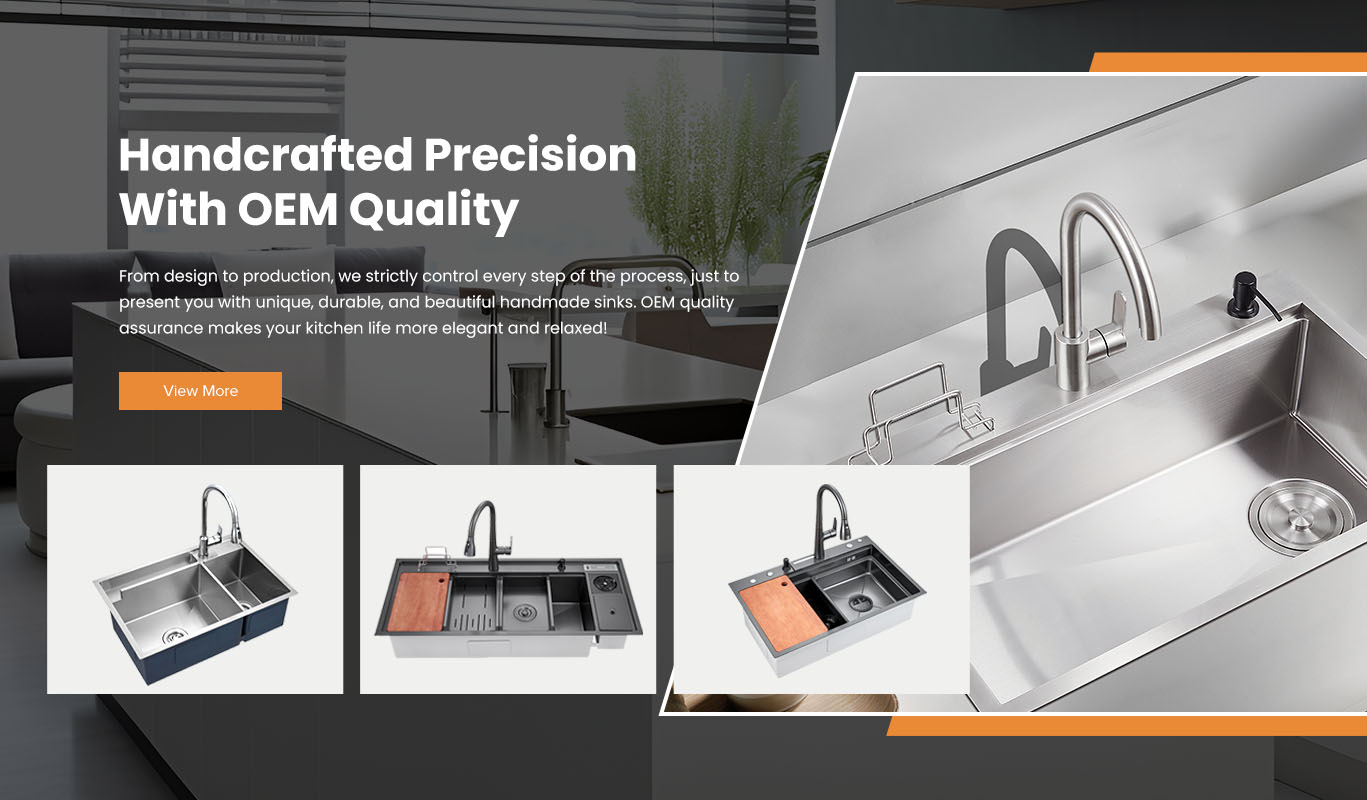
A bar sink is designed for compact beverage and preparation areas, while a kitchen sink is built for larger food preparation and daily cleaning tasks. The right design depends on space, workflow, and usage requirements.
The main difference between a bar sink and a kitchen sink is the application environment and workflow they are designed to support.
A bar sink is typically used for:
Beverage preparation
Small cleaning tasks
Entertainment areas
Compact workspaces
A kitchen sink is designed for:
Food preparation
Dishwashing
Large cookware cleaning
Daily kitchen operations
From a manufacturer’s perspective, these two sink types serve different purposes. Product size, structure, capacity, and features should match the intended application.
Bar sinks are designed for smaller and more specialized spaces.
Important design features include:
Compact dimensions
Efficient space usage
Easy installation
Modern appearance
They are commonly used in:
Home bars
Entertainment areas
Beverage stations
Outdoor bar areas
Because the workflow is different from a main kitchen, bar sinks prioritize convenience and space efficiency rather than large washing capacity.
Kitchen sinks are designed for more intensive daily tasks.
Their main advantages include:
Larger basin capacity
Better support for cookware cleaning
More preparation space
Stronger workflow capability
Kitchen sinks are commonly used in:
Residential kitchens
Restaurants
Hotels
Food preparation areas
They need to handle multiple activities, including washing ingredients, cleaning dishes, and preparing meals.
Size is one of the biggest differences between these two applications.
| Sink Type | Main Size Requirement |
|---|---|
| Bar Sink | Compact design and space efficiency |
| Kitchen Sink | Larger capacity and multifunctional use |
Bar sinks usually require:
Smaller bowl dimensions
Limited countertop space
Flexible installation
Kitchen sinks usually require:
Deeper basins
Larger washing areas
Greater working capacity
The correct size depends on the intended workflow.
Kitchen sinks are generally designed for more extensive preparation tasks.
They provide:
Larger working areas
More space for ingredients
Better support for cookware
Higher daily usability
Bar sinks are better suited for:
Washing glasses
Preparing drinks
Small ingredient preparation
Quick cleaning tasks
Choosing the correct sink prevents inefficient use of space and improves workflow.
Installation location strongly influences product selection.
Bar sinks are often installed in:
Beverage counters
Kitchen islands
Entertainment spaces
Outdoor bars
Kitchen sinks are commonly installed in:
Main kitchen countertops
Food preparation areas
Professional workspaces
Each location requires different considerations for:
Size
Plumbing arrangement
Countertop compatibility
User movement
Maintenance requirements depend on usage frequency and design.
Bar sinks provide advantages through:
Smaller cleaning areas
Simple maintenance
Compact structure
Kitchen sinks require features that support:
Frequent cleaning
Food residue removal
Heavy daily use
Important maintenance factors include:
Smooth stainless steel surfaces
Suitable corner design
Efficient drainage
Easy-access basin structure
Material selection depends on workload and environment.
| Sink Type | Material Focus |
|---|---|
| Bar Sink | Lightweight design, appearance, space efficiency |
| Kitchen Sink | Durability, strength, heavy-use performance |
Kitchen sinks often require:
Stronger structures
Higher durability
Better impact resistance
Bar sinks focus more on:
Design integration
Compact functionality
Visual appearance
Different applications require different production considerations.
Important quality factors include:
| Quality Factor | Performance Impact |
|---|---|
| Stainless steel grade | Determines durability |
| Material thickness | Supports structural strength |
| Size accuracy | Ensures installation compatibility |
| Surface finishing | Improves appearance and cleaning |
| Final inspection | Maintains consistency |
Manufacturers adjust product specifications according to application requirements.
Kitchen islands often require sinks that match the available space and workflow.
Bar sinks are suitable when:
Limited space is available
Beverage preparation is the main purpose
A secondary sink is needed
Kitchen sinks are suitable when:
Food preparation happens on the island
Larger washing capacity is required
The island serves as a main workstation
The correct choice depends on how the island will be used.
Outdoor applications often require different considerations.
Bar sinks are suitable for:
Outdoor beverage areas
Compact entertainment spaces
Small preparation zones
Kitchen sinks are suitable for:
Outdoor kitchens
Full cooking areas
Large food preparation spaces
Material protection and durability should be considered for both applications.
OEM projects should match products with target markets.
Bar sinks are suitable for OEM projects requiring:
Compact kitchen solutions
Entertainment-focused products
Space-saving designs
Design differentiation
Kitchen sinks are suitable for OEM projects requiring:
Main kitchen solutions
Larger product ranges
Higher durability
Broader applications
Manufacturers can customize sizes, finishes, and structures based on market needs.
The correct choice depends on application requirements.
A bar sink is recommended when:
Space is limited
Beverage preparation is the main task
A secondary sink is needed
Compact design is preferred
A kitchen sink is recommended when:
Food preparation is required
Larger capacity is needed
Daily heavy use is expected
Multifunctional performance is important
Selecting the correct sink design helps improve workflow efficiency and long-term usability.
Bar sinks require compact designs focused on space efficiency, beverage preparation, and convenience. Kitchen sinks require larger and stronger designs focused on food preparation, cleaning capacity, and daily workflow support.
The ideal choice depends on application environment, available space, usage frequency, and required performance.