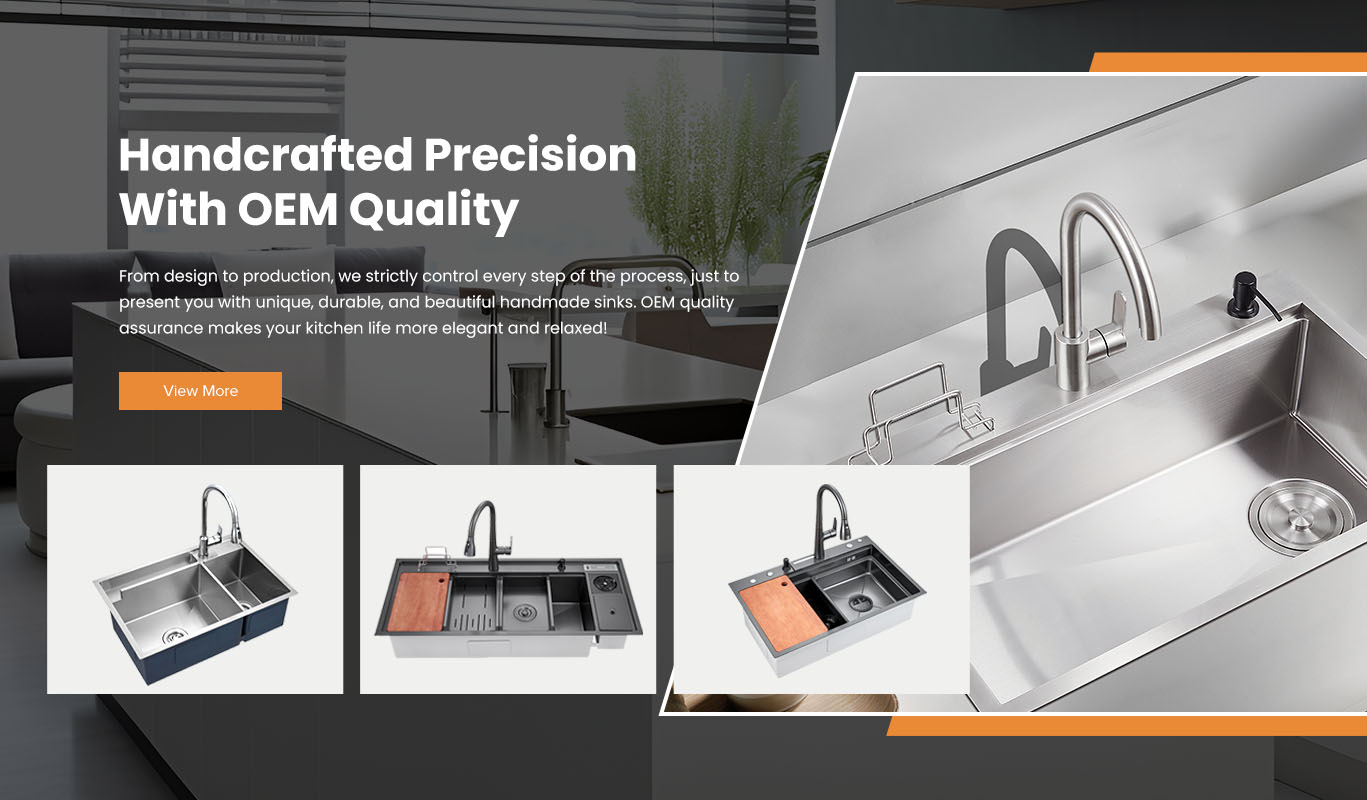
A home kitchen sink focuses on design, comfort, and daily convenience, while a restaurant sink focuses on durability, capacity, and intensive operation. The right choice depends on usage environment and performance requirements.
The main difference between a home kitchen sink and a restaurant sink is the workload and application environment they are designed for.
A home kitchen sink is developed for household activities such as:
Food preparation
Dishwashing
Daily cleaning
Kitchen organization
A restaurant sink is designed for professional environments requiring:
Continuous operation
Large-volume washing
Heavy cookware handling
Frequent sanitation
From a manufacturer’s perspective, sink selection should match actual usage conditions. A sink designed for home applications may not provide the same performance level required in a professional kitchen.
Restaurants operate at a much higher frequency than residential kitchens.
Restaurant sinks are designed to handle:
Repeated washing cycles
Large pots and pans
Heavy kitchen equipment
Constant cleaning requirements
Important performance features include:
Strong structural design
Larger bowl capacity
Higher impact resistance
Easy cleaning surfaces
These features help improve workflow efficiency in:
Restaurants
Hotels
Catering facilities
Commercial food service areas
Home kitchen sinks should balance appearance, convenience, and practical performance.
Important considerations include:
Sink size and kitchen layout compatibility
Installation style
Surface finish
Cleaning convenience
Design matching
Common residential features include:
Single bowl or double bowl configurations
Brushed stainless steel finishes
Modern corner designs
Space-saving structures
For home users, the sink should integrate well with the overall kitchen design while supporting daily activities.
Size is one of the biggest differences between residential and restaurant sinks.
| Sink Type | Main Size Requirement |
|---|---|
| Home Kitchen Sink | Space efficiency and comfortable daily use |
| Restaurant Sink | Large capacity and workflow support |
Restaurant sinks usually require:
Deeper bowls
Wider washing areas
More working space
Multiple sections
Home sinks usually prioritize:
Countertop compatibility
Kitchen appearance
Efficient use of available space
Durability requirements depend on the working environment.
Restaurant sinks generally require:
Stronger materials
Reinforced structures
Higher resistance to frequent impact
Long-term heavy-use capability
Home kitchen sinks require:
Reliable daily performance
Good corrosion resistance
Easy maintenance
Stable appearance
Both types can provide long service life when manufactured with proper stainless steel grades and quality standards.
Material thickness influences strength and performance.
| Feature | Home Kitchen Sink | Restaurant Sink |
|---|---|---|
| Material Thickness | Balanced for daily use | Often selected for heavier workloads |
| Structural Design | Comfort-focused | Durability-focused |
| Usage Frequency | Moderate | High |
A thicker structure can improve:
Impact resistance
Stability
Vibration control
However, the correct thickness depends on the actual application rather than simply selecting the thickest option.
Maintenance requirements are different between home and restaurant environments.
Home kitchen sinks often focus on:
Appearance retention
Easy cleaning
Design compatibility
Restaurant sinks focus on:
Fast cleaning processes
Hygiene requirements
Frequent operation
Features that improve maintenance include:
Smooth surface finishing
Proper drainage design
Suitable corner radius
Easy-access basin structure
Installation requirements vary depending on the project.
Home kitchen sinks may focus on:
Undermount installation
Topmount installation
Countertop matching
Kitchen style integration
Restaurant sinks often focus on:
Stable installation
Workflow arrangement
Space efficiency
Functional placement
Professional installation helps maximize sink performance and service life.
Different applications require different manufacturing standards.
Important quality factors include:
| Quality Factor | Performance Impact |
|---|---|
| Stainless steel grade | Determines corrosion resistance |
| Material thickness | Supports durability |
| Welding quality | Improves structural strength |
| Surface treatment | Affects cleaning and appearance |
| Final inspection | Ensures consistency |
Manufacturers adjust production methods based on whether the sink is intended for residential or commercial use.
Restaurant buyers usually prioritize performance-related features.
Important features include:
Large capacity
Heavy-duty construction
Easy sanitation
Strong durability
Efficient workflow support
A restaurant sink should help improve productivity and withstand continuous operation.
Home buyers often focus on comfort and design value.
Important features include:
Appearance
Kitchen style compatibility
Cleaning convenience
Suitable size
User comfort
A well-designed home kitchen sink improves both kitchen functionality and overall interior appearance.
The right choice depends on the intended application.
A home kitchen sink is recommended when:
Residential use is expected
Design flexibility is important
Daily convenience is the priority
Space optimization matters
A restaurant sink is recommended when:
Professional use is required
Heavy workloads are expected
Large capacity is needed
Long-term durability is important
Selecting the correct sink type helps ensure better performance, efficiency, and product value.
Home kitchen sinks should focus on design, comfort, cleaning convenience, and kitchen integration. Restaurant sinks should focus on durability, capacity, workflow efficiency, and heavy-use performance.
The best choice depends on usage environment, workload requirements, installation conditions, and expected service performance.