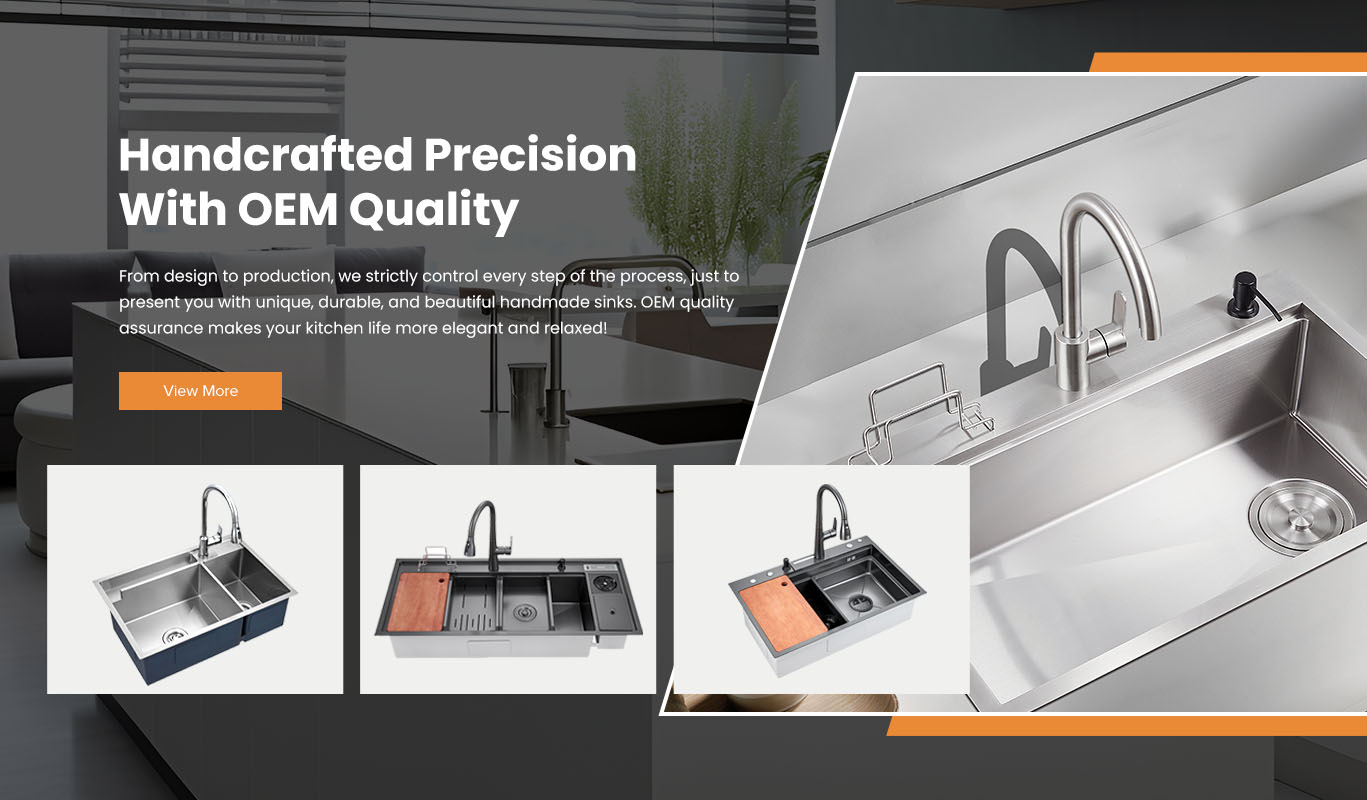
A residential kitchen sink is designed for household comfort and daily use, while a commercial kitchen sink is built for higher workloads, larger capacity, and intensive operation. The main differences are structure, durability, size, and application requirements.
The main difference between a residential kitchen sink and a commercial kitchen sink is the level of performance required for different working environments.
A residential kitchen sink focuses on:
Home kitchen design
Daily cleaning tasks
Space efficiency
Appearance integration
A commercial kitchen sink focuses on:
High-frequency operation
Heavy-duty performance
Larger working capacity
Professional kitchen workflows
From a manufacturer’s perspective, these two sink categories serve different purposes. The right design depends on usage intensity, installation environment, and customer expectations.
Commercial kitchens operate continuously and require stronger performance standards.
Commercial kitchen sinks are designed with features such as:
Larger basin capacity
Stronger structural support
Higher durability
Better workflow efficiency
They are commonly used in:
Restaurants
Hotels
Catering facilities
Food processing areas
Professional kitchens
These environments require sinks that can handle frequent washing, large cookware, and constant daily operation.
Residential kitchen sinks are designed around household needs and user comfort.
Their main advantages include:
Flexible design options
Better integration with home interiors
Suitable sizes for residential layouts
Wide range of styles and finishes
They are commonly used in:
Private homes
Apartments
Renovation projects
Modern kitchen designs
For household users, appearance, convenience, and space utilization are often important considerations.
Size is one of the most noticeable differences between residential and commercial sinks.
| Sink Type | Typical Design Focus |
|---|---|
| Residential Kitchen Sink | Space efficiency and daily convenience |
| Commercial Kitchen Sink | Large capacity and workflow efficiency |
Commercial sinks often provide:
Deeper bowls
Larger working areas
Multiple compartments
More space for large cookware
Residential sinks are designed to fit different kitchen layouts while maintaining comfortable daily use.
Durability requirements vary depending on the application.
Commercial kitchen sinks generally provide advantages through:
Thicker materials
Reinforced structures
Heavy-duty designs
Resistance to frequent use
Residential sinks provide sufficient durability for:
Household washing
Food preparation
Normal kitchen activities
Material quality, stainless steel grade, production technology, and maintenance practices all influence actual service life.
Material selection depends on expected workload.
Commercial kitchen sinks often require:
Higher structural strength
Better impact resistance
Long-term performance under intensive use
Residential kitchen sinks usually focus on:
Balanced durability
Design appearance
Cost efficiency
Both types can achieve excellent performance when manufactured with suitable stainless steel materials and quality standards.
Maintenance requirements depend on usage conditions.
Residential kitchen sinks often provide:
Easier integration with home cleaning routines
More design-focused surfaces
Flexible maintenance options
Commercial kitchen sinks focus on:
Fast cleaning processes
Frequent sanitation requirements
Efficient workflow management
For professional kitchens, easy cleaning and operational efficiency are usually more important than decorative features.
Different applications require different production standards.
Important quality factors include:
| Quality Factor | Performance Impact |
|---|---|
| Stainless steel grade | Determines corrosion resistance |
| Material thickness | Supports durability |
| Welding quality | Improves structural reliability |
| Surface finishing | Affects cleaning and appearance |
| Final inspection | Ensures product consistency |
Professional manufacturers adjust production processes based on the intended application.
Commercial projects usually require products designed for intensive operation.
Commercial kitchen sinks are suitable for:
Restaurants
Hotels
Catering businesses
Large food service facilities
They provide:
Higher durability
Larger working capacity
Better workflow support
Stronger operational reliability
Residential sinks are generally not designed for continuous professional use.
Residential kitchen sinks are suitable for projects requiring:
Home-friendly designs
Space optimization
Style compatibility
Comfortable daily use
They provide flexibility in:
Size selection
Installation methods
Surface finishes
Kitchen design matching
For home kitchens, selecting the right balance between appearance and functionality is usually the priority.
The correct choice depends on the intended application.
A commercial kitchen sink is recommended when:
Heavy usage is expected
Professional environments are involved
Large capacity is required
Long-term durability is important
A residential kitchen sink is recommended when:
Home use is the main purpose
Design flexibility matters
Space efficiency is needed
Standard performance is sufficient
Choosing the correct sink type helps ensure better performance and long-term value.
The main differences between residential kitchen sinks and commercial kitchen sinks are their structure, capacity, durability, and intended applications. Residential sinks focus on home comfort and design flexibility, while commercial sinks focus on heavy-duty performance and professional workflows.
The ideal choice depends on usage environment, workload requirements, installation conditions, and expected product performance.