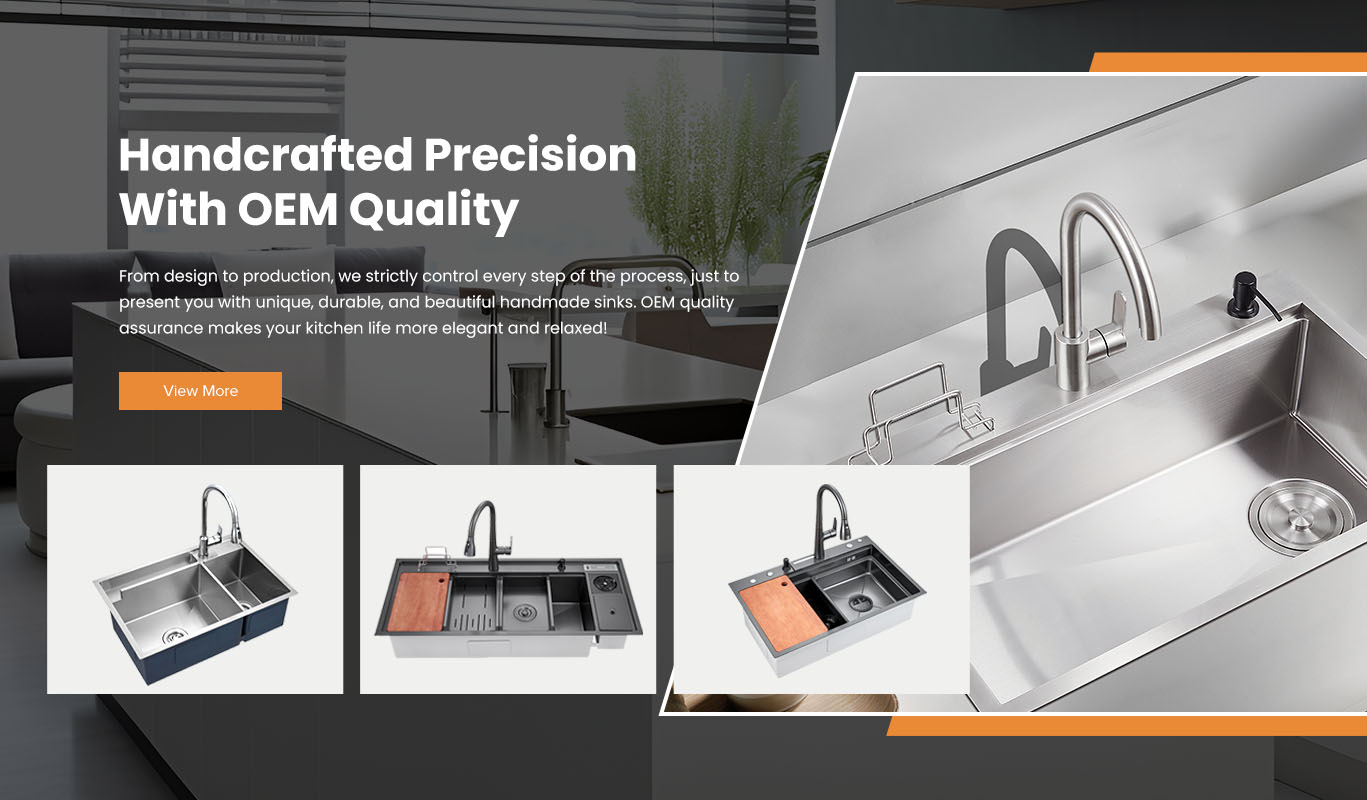
A reinforced sink structure handles heavy usage better because it provides stronger support, improved impact resistance, and higher durability, while a standard structure offers reliable performance for normal kitchen applications.
The main difference between a reinforced sink structure and a standard structure is the additional support design used to improve strength and stability.
A reinforced sink structure uses enhanced construction methods such as thicker materials, additional support areas, reinforced corners, or strengthened components to improve performance under heavy workloads.
A standard sink structure uses a conventional design focused on everyday functionality, production efficiency, and general kitchen applications.
From a manufacturer’s perspective, structural design is a key factor affecting sink reliability. The correct structure should match the expected usage intensity, installation environment, and customer requirements.
Heavy-use environments place greater stress on sink structures.
A reinforced sink structure provides advantages including:
Higher resistance to impact
Improved structural stability
Reduced deformation risk
Better support for heavy cookware
The reinforced design helps the sink withstand frequent activities such as:
Washing large pots and pans
Handling heavy kitchen equipment
Continuous cleaning operations
High-frequency commercial use
This makes reinforced sinks suitable for:
Restaurants
Hotels
Commercial kitchens
Premium residential kitchens
A standard sink structure remains a practical solution for many applications.
Its main advantages include:
Reliable daily performance
Simple construction
Easier production
Cost efficiency
Standard sinks are commonly used in:
Residential kitchens
Apartment projects
General renovation projects
Standard product collections
For normal household usage, a well-designed standard sink can provide long-term reliability.
Impact resistance is an important factor for heavy-use environments.
A reinforced sink structure provides better protection against:
Heavy cookware impact
Accidental drops
Long-term pressure
Frequent operational stress
A standard structure can handle regular kitchen activities but may not be designed for continuous heavy workloads.
The actual impact resistance also depends on:
Stainless steel grade
Material thickness
Manufacturing precision
Installation quality
Reinforced structures improve durability by increasing overall stability.
Common reinforcement methods include:
Increased material thickness
Strengthened basin areas
Improved corner support
Additional structural components
These improvements help maintain:
Basin shape
Product stability
Long-term performance
For professional applications, reinforcement can significantly extend product service potential.
Structural design can influence how a sink responds during use.
A reinforced sink structure can provide:
Reduced vibration
More stable operation
Improved sound performance
A standard sink may require additional solutions such as:
Soundproof pads
Anti-vibration coatings
Additional insulation materials
Combining structural reinforcement with noise reduction technology can further improve user experience.
Commercial kitchens require sinks that can handle intensive workflows.
Reinforced sink structures provide benefits through:
Stronger durability
Better workload capacity
Higher operational reliability
Longer service expectations
They are commonly selected for:
Food service facilities
Catering operations
Restaurant kitchens
Industrial kitchen environments
Standard structures are more suitable for applications where usage intensity is moderate.
Producing reinforced sinks requires strict manufacturing control.
Important quality factors include:
| Quality Factor | Performance Impact |
|---|---|
| Stainless steel grade | Determines corrosion resistance |
| Material thickness | Supports structural strength |
| Reinforcement design | Improves load resistance |
| Welding quality | Ensures structural reliability |
| Final inspection | Maintains consistency |
Professional manufacturers evaluate both materials and structural design to ensure reliable performance.
OEM requirements depend on the target market and application.
Reinforced sink structures are suitable for OEM projects requiring:
Commercial-grade performance
Heavy-duty applications
Premium product positioning
Long-term reliability
Standard sink structures are suitable for OEM projects requiring:
Cost-efficient solutions
Standard kitchen products
Large production volumes
General applications
Manufacturers can adjust structural designs according to market requirements.
Not every application requires reinforced construction.
A standard structure may be sufficient when:
Kitchen usage is normal
Heavy loads are uncommon
Cost efficiency is important
Basic durability meets requirements
A reinforced structure is more suitable when:
Frequent heavy use is expected
Commercial environments are involved
Long-term durability is a priority
The correct structure depends on actual usage conditions.
The selection should consider workload, environment, and expected service life.
A reinforced sink structure is recommended when:
Heavy usage is expected
Higher durability is required
Commercial applications are involved
Premium performance is important
A standard sink structure is recommended when:
Normal kitchen use is expected
Cost balance is important
Standard performance is sufficient
Efficient production is needed
Choosing the correct structure helps achieve the right balance between strength, cost, and application value.
A reinforced sink structure handles heavy usage better because it provides stronger support, improved impact resistance, and better long-term durability. A standard sink structure provides reliable performance for normal kitchen applications with a simpler design.
The ideal choice depends on usage intensity, project requirements, installation environment, and expected product lifespan.