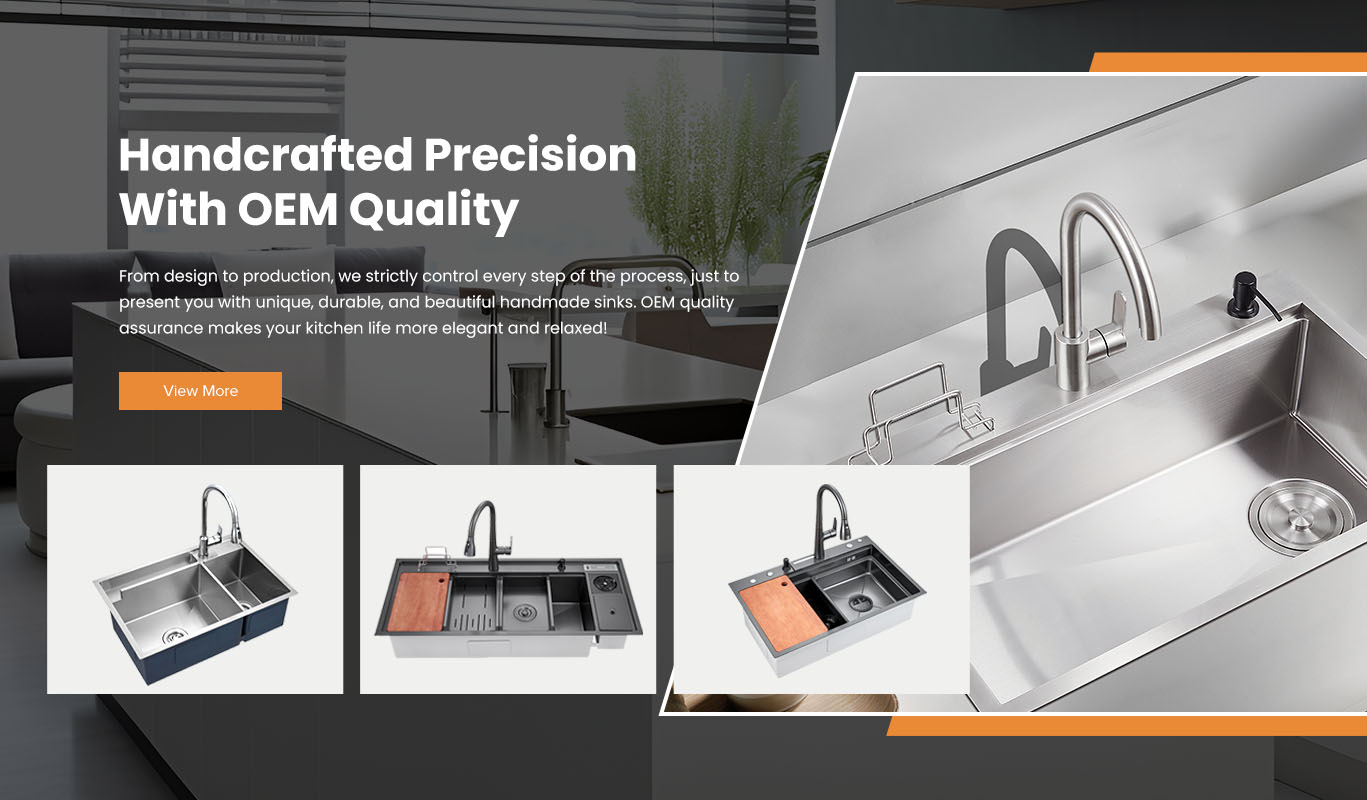
A brushed stainless steel sink offers better daily practicality with easier maintenance and stronger resistance to visible marks, while a polished stainless steel sink provides a brighter premium appearance. The better choice depends on usage needs and design preferences.
The main difference between a brushed stainless steel sink and a polished stainless steel sink is the surface finishing process applied after stainless steel forming.
A brushed stainless steel sink uses a directional finishing process that creates a fine textured surface. This finish reduces the visibility of fingerprints, minor scratches, and daily marks.
A polished stainless steel sink uses a smoothing and polishing process to create a bright reflective surface with a mirror-like appearance.
From a manufacturer’s perspective, surface finish affects more than appearance. It influences maintenance requirements, cleaning experience, product positioning, and suitability for different kitchen environments.
A brushed stainless steel sink is widely used because it provides a balance between appearance and maintenance convenience.
Key advantages include:
Better resistance to visible fingerprints
Less noticeable minor scratches
Easier daily maintenance
More consistent appearance during long-term use
The textured surface helps hide small marks caused by:
Daily washing
Kitchen tools
Water spots
Frequent cleaning
This makes brushed stainless steel sinks suitable for:
Residential kitchens
Commercial kitchens
High-use kitchen environments
Projects requiring easy maintenance
A polished stainless steel sink focuses on visual impact and premium appearance.
Its main advantages include:
Bright reflective surface
Modern and luxurious appearance
Smooth visual texture
Strong decorative appeal
Polished finishes are often selected for projects where appearance is a major design element.
They are commonly used in:
Premium kitchen designs
Contemporary interiors
Luxury residential projects
Decorative kitchen applications
The reflective surface can enhance the overall visual effect of a kitchen space.
Maintenance requirements are one of the biggest differences between these two finishes.
A brushed stainless steel sink is generally easier to maintain because:
Fingerprints are less visible
Minor scratches blend into the texture
Daily cleaning marks are less noticeable
A polished stainless steel sink requires more attention because:
Fingerprints are easier to see
Water spots may appear more clearly
Surface marks can affect the mirror effect
However, both finishes can maintain excellent performance when cleaned properly.
Surface texture affects how scratches appear.
A brushed stainless steel sink provides advantages because:
Small scratches are less visually obvious
The directional texture helps hide daily wear
The surface maintains a consistent appearance over time
A polished stainless steel sink has a smoother surface, meaning scratches may become more visible and affect the reflective appearance.
For high-frequency use environments, brushed finishes are often preferred because they maintain a cleaner appearance longer.
The choice of finish can influence the overall kitchen atmosphere.
| Finish Type | Design Characteristics | Suitable Applications |
|---|---|---|
| Brushed Stainless Steel Sink | Modern, practical, understated | Residential and commercial kitchens |
| Polished Stainless Steel Sink | Bright, luxurious, decorative | Premium design projects |
Brushed finishes are often selected for minimalist and functional designs.
Polished finishes are often selected when visual impact and premium appearance are the main priorities.
Commercial kitchens usually require surfaces that can handle frequent use and cleaning.
Brushed stainless steel sinks are commonly preferred because they provide:
Easier maintenance
Better appearance retention
Reduced visibility of daily marks
Practical long-term performance
Polished stainless steel sinks can be used in commercial environments where appearance is important, such as display kitchens or premium hospitality projects.
The right choice depends on whether the application prioritizes practicality or visual presentation.
Surface finishing requires precise manufacturing control.
Important quality factors include:
| Quality Factor | Performance Impact |
|---|---|
| Stainless steel grade | Determines durability |
| Brushing consistency | Maintains uniform texture |
| Polishing accuracy | Creates smooth reflective surfaces |
| Surface inspection | Ensures appearance quality |
| Manufacturing precision | Improves final product consistency |
Professional manufacturers carefully control finishing processes to ensure stable appearance and performance.
OEM requirements depend on market positioning and customer expectations.
Brushed stainless steel sinks are suitable for OEM projects requiring:
Practical product positioning
Easy maintenance features
Broad market applications
Long-term appearance stability
Polished stainless steel sinks are suitable for OEM projects requiring:
Premium appearance
Luxury product positioning
Decorative design features
High visual impact
Manufacturers can provide different finishing options based on target markets and brand strategies.
A polished finish is not always better. The best choice depends on the intended application.
A polished stainless steel sink is more suitable when:
Appearance is the top priority
A premium visual effect is required
The kitchen design emphasizes decoration
A brushed stainless steel sink is more suitable when:
Easy maintenance is important
Daily usage frequency is high
Long-term appearance stability matters
The ideal finish should match the balance between aesthetics and practical use.
The right choice depends on usage environment, design goals, and maintenance expectations.
A brushed stainless steel sink is recommended when:
Practicality is important
Frequent use is expected
Easy cleaning is required
Long-term appearance matters
A polished stainless steel sink is recommended when:
Premium appearance is required
Decorative value is important
Luxury design is the priority
Visual impact is needed
Choosing the right surface finish helps achieve the best combination of appearance, maintenance, and product value.
A brushed stainless steel sink is generally more practical because it provides easier maintenance, better resistance to visible marks, and stable appearance during daily use. A polished stainless steel sink offers stronger visual appeal and a premium decorative effect.
The best finish depends on application requirements, kitchen design style, maintenance expectations, and customer preferences.