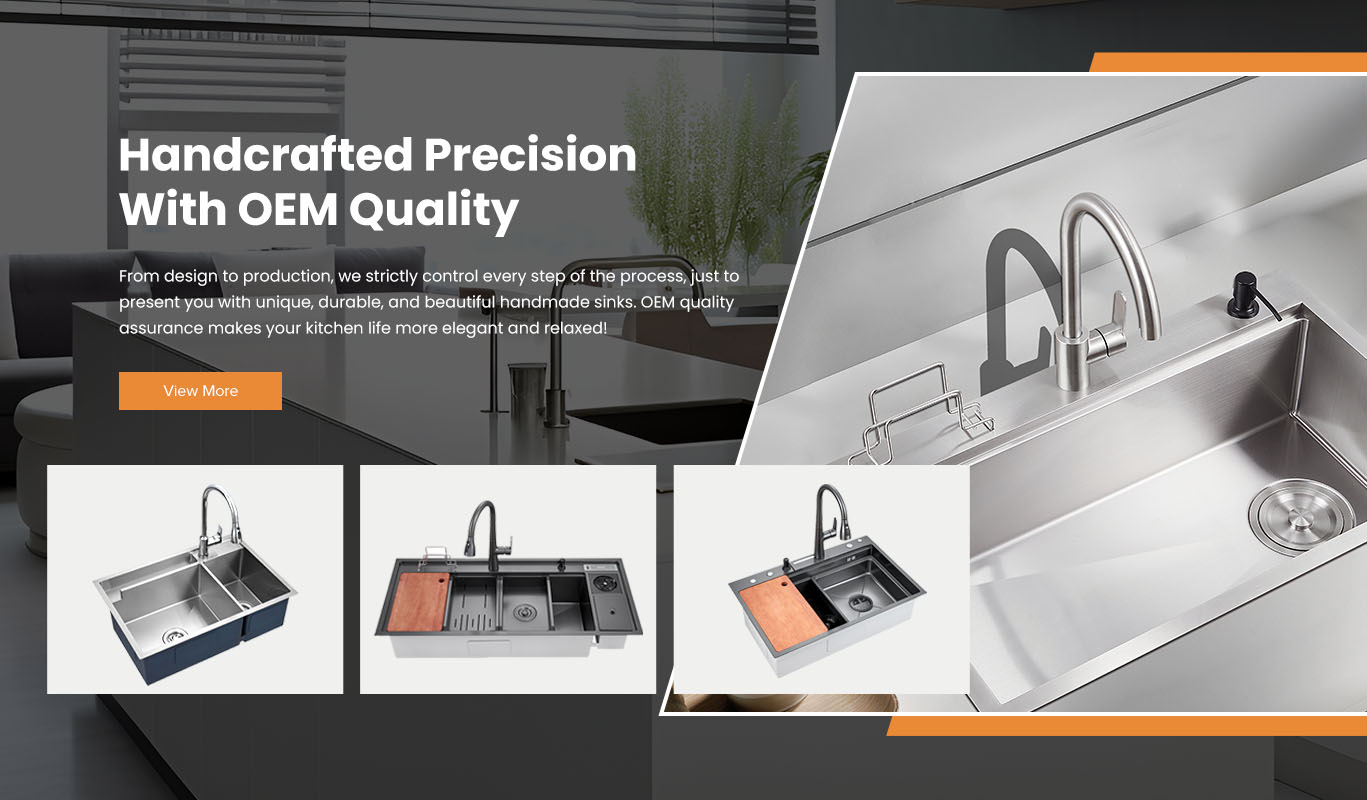
A 304 stainless steel sink fits most residential and general commercial applications, while a 316 stainless steel sink provides higher corrosion resistance for demanding environments. The right grade depends on usage conditions and performance requirements.
The main difference between a 304 stainless steel sink and a 316 stainless steel sink is the material composition and corrosion resistance performance.
A 304 stainless steel sink is made from a widely used stainless steel grade containing chromium and nickel. It provides reliable corrosion resistance, durability, and good surface performance for everyday kitchen applications.
A 316 stainless steel sink contains additional molybdenum, which improves resistance to chloride corrosion and harsh chemical environments.
From a manufacturing perspective, stainless steel grade selection should be based on the actual application environment rather than simply choosing the highest-grade material.
A 304 stainless steel sink is one of the most widely used options because it provides a strong balance between performance and cost.
Key advantages include:
Good corrosion resistance
Stable surface appearance
Strong durability for daily use
Suitable performance in most indoor environments
304 stainless steel sinks are commonly used in:
Residential kitchens
Apartments
Restaurants
Standard commercial kitchens
For most household applications, 304 stainless steel provides sufficient protection against water exposure, food contact, and regular cleaning.
Manufacturers widely use 304 stainless steel because it offers reliable performance while maintaining reasonable production efficiency.
A 316 stainless steel sink is designed for environments requiring higher corrosion resistance.
Its main advantages include:
Improved resistance to chloride corrosion
Better performance in harsh environments
Stronger protection against chemical exposure
Longer service potential in demanding applications
316 stainless steel sinks are suitable for:
Coastal areas with high salt exposure
Marine-related applications
Professional environments with stronger cleaning chemicals
Specialized commercial applications
The additional molybdenum content helps improve corrosion resistance where standard stainless steel grades may face greater challenges.
316 stainless steel generally provides higher corrosion resistance than 304 stainless steel.
The difference becomes more noticeable in environments involving:
Salt exposure
High humidity
Chemical contact
Continuous moisture
304 stainless steel performs well in normal kitchen conditions, while 316 stainless steel is designed for more demanding environments.
However, the actual service performance also depends on:
Material thickness
Manufacturing quality
Surface treatment
Installation environment
Maintenance practices
For most residential kitchens, a 304 stainless steel sink is usually sufficient.
304 stainless steel provides reliable performance for:
Daily washing
Food preparation
Household cleaning
Normal indoor conditions
A 316 stainless steel sink may be considered when:
The home is located near the ocean
Salt exposure is frequent
Special durability requirements exist
Long-term corrosion protection is a priority
Selecting the correct material grade helps avoid unnecessary cost while meeting actual performance needs.
Commercial applications vary significantly depending on the working environment.
304 stainless steel sinks are commonly suitable for:
Restaurants
Hotels
Catering kitchens
General food service areas
316 stainless steel sinks are more suitable for:
Marine-related facilities
Chemical-sensitive environments
High-corrosion locations
Specialized industrial applications
Commercial buyers should evaluate operating conditions before selecting the material grade.
Material grade can influence how the sink maintains its appearance over time.
| Material Grade | Appearance Performance |
|---|---|
| 304 Stainless Steel | Stable appearance for general kitchen environments |
| 316 Stainless Steel | Better surface protection in harsh conditions |
Both grades can achieve excellent appearance when combined with proper:
Surface finishing
Manufacturing precision
Cleaning procedures
Quality control
The difference becomes more visible in environments where corrosion risks are higher.
Material grade is only one part of overall sink performance.
Professional manufacturers control:
| Quality Factor | Performance Impact |
|---|---|
| Stainless steel composition | Determines corrosion resistance |
| Material thickness | Supports structural durability |
| Welding quality | Improves product strength |
| Surface treatment | Enhances appearance and maintenance |
| Final inspection | Ensures product reliability |
Manufacturing experience and quality management are essential for achieving consistent results with both 304 and 316 stainless steel sinks.
OEM projects should select materials based on target markets and applications.
304 stainless steel sinks are suitable for OEM projects requiring:
Broad market applications
Competitive pricing
Reliable daily performance
Large-scale production
316 stainless steel sinks are suitable for OEM projects requiring:
Premium positioning
Specialized applications
Higher corrosion resistance
Long-term performance in demanding environments
Manufacturers can help evaluate material selection according to customer requirements and application conditions.
The correct choice depends on the installation environment and expected performance.
A 304 stainless steel sink is recommended when:
Standard kitchen use is expected
Balanced performance and cost are important
General corrosion resistance is sufficient
Large-scale applications are involved
A 316 stainless steel sink is recommended when:
High corrosion resistance is required
Salt or chemical exposure exists
Harsh environments are involved
Maximum material performance is needed
Choosing the appropriate stainless steel grade ensures better balance between durability, cost, and application requirements.
A 304 stainless steel sink fits most residential and general commercial applications because it provides reliable durability and corrosion resistance. A 316 stainless steel sink is better suited for harsh environments requiring higher corrosion protection.
The ideal stainless steel grade depends on application conditions, environmental exposure, performance expectations, and project requirements.