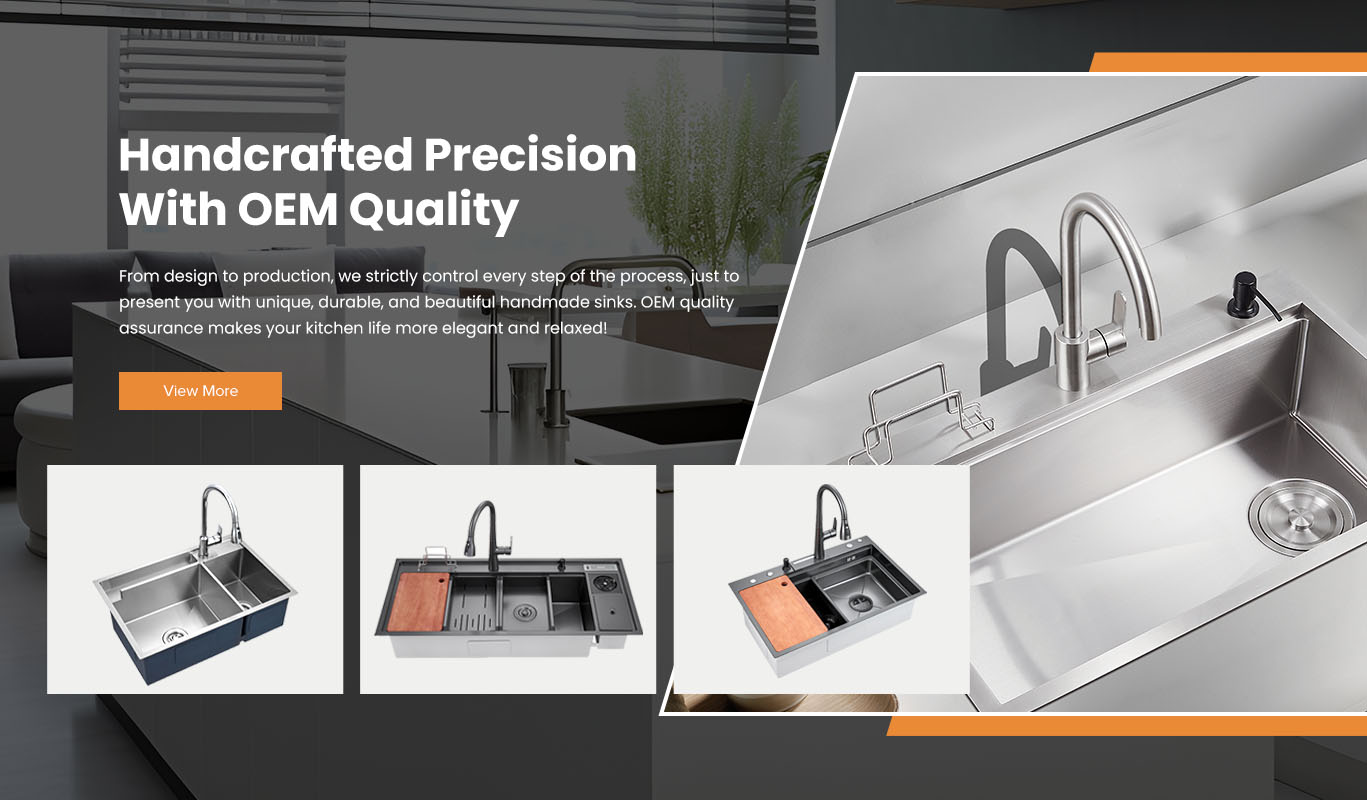
A multi bowl sink improves task separation, while a single bowl sink provides larger continuous washing space. The better configuration depends on kitchen workflow, application needs, and space conditions.
The main difference between a multi bowl sink and a single bowl sink is how the washing area is organized.
A single bowl sink uses one large basin without internal divisions. This structure provides maximum open space for washing large cookware, preparing food, and handling multiple items together.
A multi bowl sink divides the washing area into two or more compartments. This design allows users to separate different activities, such as washing, rinsing, soaking, and food preparation.
From a manufacturing perspective, sink configuration is not only a matter of appearance. It affects workflow efficiency, product dimensions, installation requirements, and how users interact with the kitchen environment.
A single bowl sink improves workflow by providing a large uninterrupted working area.
Its main advantages include:
More space for oversized cookware and kitchen equipment
Flexible use of sink accessories
Easier handling of large washing tasks
Simple structure for daily cleaning
This configuration is especially suitable for kitchens where users often clean large items or prefer a flexible workspace.
For example, washing a large baking tray or stock pot is usually easier in a single bowl sink because there is no center divider limiting movement.
Manufacturers optimize single bowl designs through bowl depth, corner radius, drainage positioning, and sound insulation to improve practical performance.
A multi bowl sink focuses on separating different kitchen activities.
Its main benefits include:
Creating dedicated washing zones
Allowing multiple tasks at the same time
Separating clean and dirty processes
Improving organization in busy kitchens
A multi bowl sink allows users to wash vegetables in one section while cleaning dishes or soaking items in another section.
This separation can improve efficiency for households with complex cooking routines or commercial environments where different processes need to be controlled.
When multiple activities happen simultaneously, a multi bowl sink often provides better workflow management.
Typical examples include:
Preparing food while cleaning dishes
Separating rinsing and washing processes
Managing different ingredients during cooking
Creating organized kitchen zones
The additional compartments reduce the need to repeatedly empty and reuse the same washing area.
However, each bowl usually has less individual space compared with a single bowl sink of the same external dimensions.
For large cleaning tasks, a single bowl sink usually provides better flexibility.
It is suitable for:
Large cooking pots
Baking equipment
Oversized kitchen tools
Bulk washing activities
The open basin allows users to position items freely without being restricted by dividers.
This makes single bowl sinks popular in modern kitchens where large cookware and flexible workspace are important considerations.
Commercial kitchens require efficient workflow organization, but the ideal sink configuration depends on the specific process.
Single bowl sinks are commonly used for:
Large equipment cleaning
Food preparation areas
High-volume washing tasks
Multi bowl sinks are suitable for:
Separate preparation processes
Washing stations requiring different zones
Kitchens where task organization is important
In professional environments, manufacturers often develop different sink configurations according to workflow requirements rather than applying one universal design.
Kitchen space is an important factor when selecting between multi bowl and single bowl designs.
| Configuration | Space Advantage | Best Application |
|---|---|---|
| Single Bowl Sink | Maximum open washing area | Large cookware cleaning and flexible use |
| Multi Bowl Sink | Better task separation | Multiple simultaneous kitchen activities |
A single bowl sink may use space more efficiently when large washing capacity is needed.
A multi bowl sink may use space more efficiently when organization and separation are more important.
Professional sink manufacturers consider multiple factors when developing single bowl and multi bowl products.
Important design factors include:
| Design Factor | Impact on Performance |
|---|---|
| Bowl layout | Determines workflow efficiency |
| Stainless steel grade | Improves durability and corrosion resistance |
| Material thickness | Supports structural stability |
| Drainage system | Controls water flow |
| Installation size | Ensures compatibility with cabinets |
Multi bowl sink production requires precise positioning of compartments, while single bowl sink production focuses on maximizing basin strength and usable space.
Maintenance requirements vary depending on the structure.
Single bowl sinks usually have fewer internal sections, making cleaning simpler and reducing areas where residue may collect.
Multi bowl sinks include additional edges and dividers, which require more attention during cleaning but provide better organization.
For users who value simple maintenance, single bowl designs may be preferred. For users who need better workflow control, multi bowl designs provide practical advantages.
The correct choice depends on how the sink will be used.
A single bowl sink is recommended when:
Large washing space is required
Oversized cookware is frequently cleaned
Flexible usage is preferred
A minimalist design is needed
A multi bowl sink is recommended when:
Different tasks need separate areas
Multiple activities happen at the same time
Kitchen organization is important
Workflow management is a priority
For OEM and customized sink projects, manufacturers evaluate application scenarios, market preferences, and installation requirements before selecting the ideal configuration.
A multi bowl sink provides better workflow management when task separation and organization are important, while a single bowl sink offers better flexibility for large washing tasks.
The most suitable configuration depends on kitchen workflow, available space, cleaning habits, and the specific application requirements.