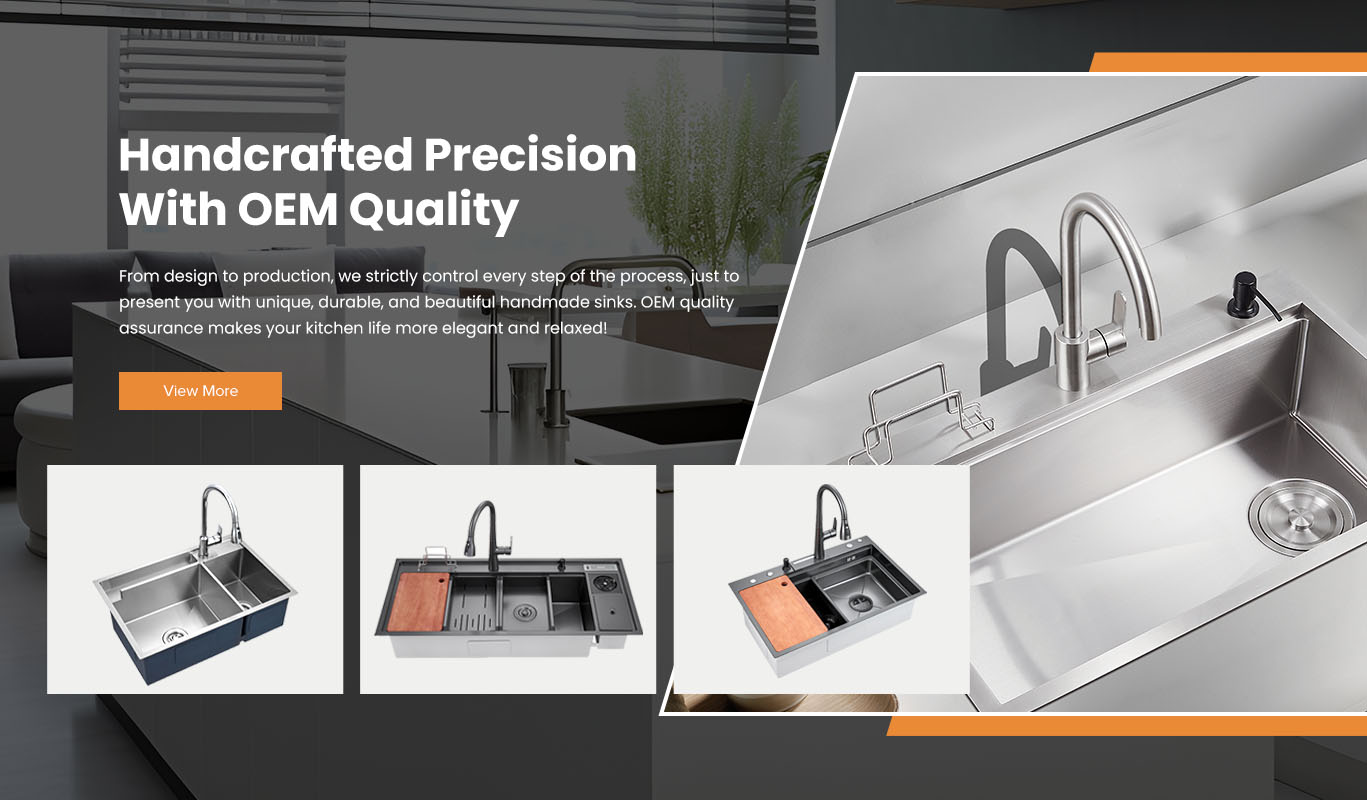
A wide sink bowl provides more washing capacity for large cookware, while a narrow sink bowl offers better space efficiency for compact kitchens. The right choice depends on layout and usage requirements.
The main difference between a wide sink bowl and a narrow sink bowl is the available horizontal washing space and how the sink integrates with different kitchen layouts.
A wide sink bowl provides greater internal width, allowing users to place larger cookware, trays, and multiple items inside the basin. This design focuses on improving washing flexibility and handling capacity.
A narrow sink bowl uses a smaller width to reduce the required countertop area. It is designed for kitchens where space optimization is more important than maximum washing capacity.
From a manufacturing perspective, sink width is not simply a size adjustment. It affects bowl structure, cabinet compatibility, drainage design, installation requirements, and the overall user experience.
A wide sink bowl creates more horizontal working space, which is valuable for kitchens with frequent washing tasks.
Key advantages include:
Easier cleaning of large pots, pans, and baking trays
More space for washing multiple items together
Greater flexibility when using sink accessories
Improved comfort during food preparation
Wide bowl designs are commonly selected for modern kitchens, premium residential projects, and applications where cooking activities involve larger equipment.
For manufacturers, developing wide sink bowls requires precise control of stainless steel forming, structural reinforcement, surface quality, and drainage efficiency to ensure the larger dimensions maintain long-term performance.
A narrow sink bowl focuses on efficient space utilization rather than maximum basin capacity.
Its main advantages include:
Requires less countertop space
Fits compact kitchen layouts more easily
Leaves more room for food preparation areas
Supports flexible cabinet planning
Narrow sink bowls are suitable for:
Apartments with limited kitchen space
Small residential projects
Compact office kitchens
Kitchens with multiple functional zones
Although the washing area is smaller, a properly designed narrow sink can still provide reliable performance for everyday cleaning tasks.
Small kitchens require a careful balance between washing capacity and available workspace.
A narrow sink bowl often performs better in compact kitchens because it preserves countertop space for food preparation, appliances, and storage.
A wide sink bowl can still be suitable when the kitchen has enough countertop length and users frequently handle large cookware.
The decision should consider not only kitchen size but also how the sink will be used daily.
A smaller kitchen with intensive cooking habits may still benefit from a wider basin, while a larger kitchen with light usage may not require maximum sink width.
Large cookware is one of the main reasons users choose wider sink designs.
A wide sink bowl provides advantages when cleaning:
Large cooking pots
Wide frying pans
Baking equipment
Food preparation containers
The additional width allows these items to sit more naturally inside the basin without tilting or repeated adjustment.
For households, restaurants, and food-related applications with frequent cooking activities, wider bowls can improve workflow efficiency.
A narrow sink bowl becomes more practical when kitchen space needs to support multiple functions.
It is especially useful when:
Countertop space is limited
The kitchen requires additional preparation areas
Cabinet dimensions are restricted
A compact installation is required
In many urban housing projects, efficient use of space is a major design consideration. Narrow sink bowls allow designers to maintain essential washing functions while preserving valuable workspace.
Commercial applications require careful evaluation of workflow and equipment requirements.
Wide sink bowls are often suitable for:
Food preparation areas
Restaurants handling large cookware
Commercial kitchens with high washing volume
Narrow sink bowls can be useful for:
Beverage stations
Secondary washing areas
Compact commercial layouts
Additional workstation sinks
The most efficient commercial solution is not always the widest sink. It should match the specific role of the washing station.
Professional sink manufacturers consider multiple factors when developing different bowl dimensions.
| Design Factor | Influence on Product Performance |
|---|---|
| Bowl width | Determines available washing space |
| Material thickness | Supports structural stability |
| Bowl depth | Affects capacity and comfort |
| Drainage position | Improves water flow |
| Cabinet compatibility | Ensures installation suitability |
A wide sink bowl requires careful structural design because larger dimensions increase demands on material strength and manufacturing accuracy.
A narrow sink bowl requires precision optimization to maximize usability within limited space.
Maintenance depends on the overall sink design rather than width alone.
Wide sink bowls provide more open space, making it easier to clean large items and manage washing activities. However, they require proper surface finishing and drainage design.
Narrow sink bowls have smaller surfaces and may be easier to manage in compact kitchens.
Both designs can achieve excellent durability when manufactured with quality stainless steel materials, smooth surfaces, and effective drainage systems.
The correct sink width depends on application requirements.
A wide sink bowl is recommended when:
Large cookware is frequently used
Maximum washing flexibility is needed
Kitchen space allows larger installation
Premium kitchen functionality is required
A narrow sink bowl is recommended when:
Countertop space is limited
Compact design is important
More preparation space is needed
Efficient installation is a priority
For OEM and customized sink projects, manufacturers evaluate target markets, kitchen layouts, and user requirements before selecting the appropriate sink dimensions.
A wide sink bowl is better suited for kitchens requiring larger washing capacity and flexible handling of cookware, while a narrow sink bowl is more suitable for compact layouts that prioritize space efficiency.
The ideal sink dimension depends on kitchen size, cooking habits, installation conditions, and the specific application requirements.