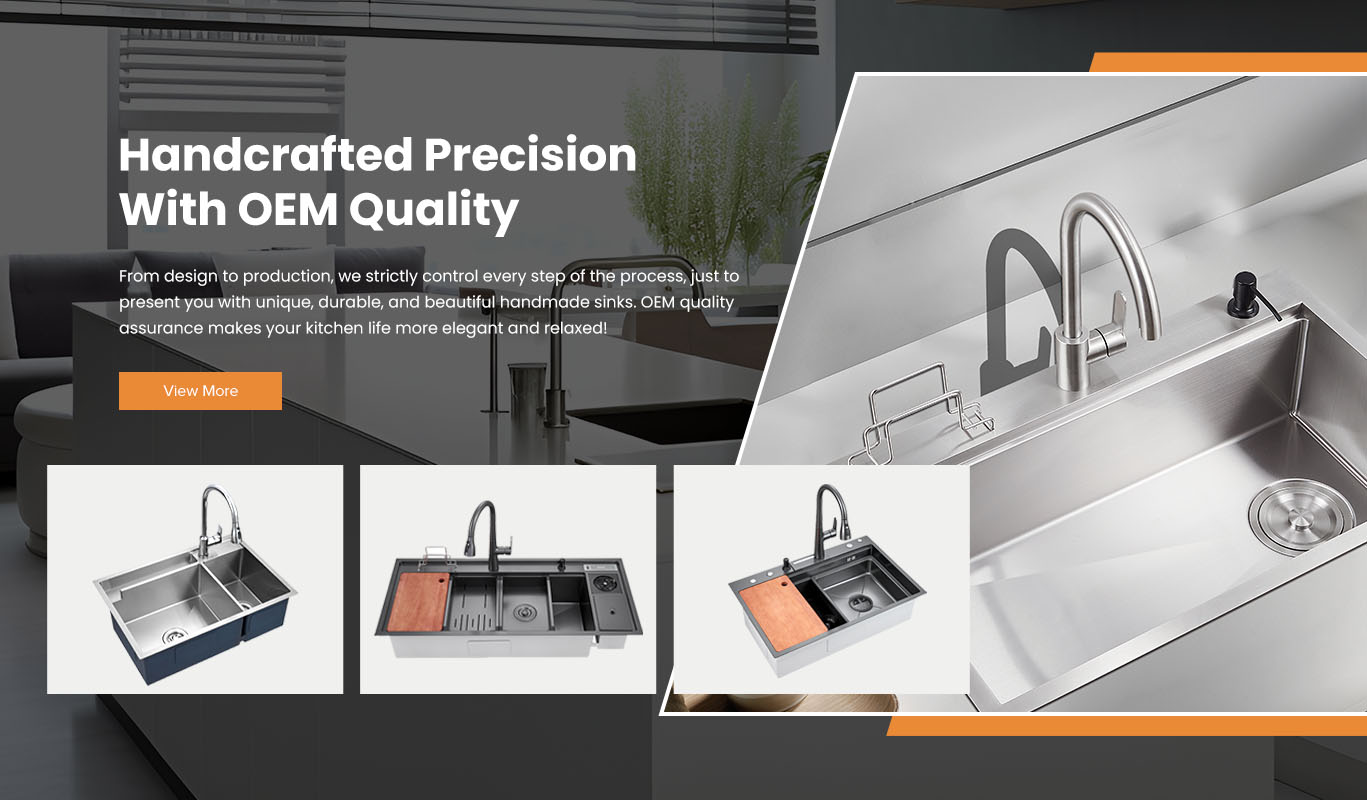
A double bowl kitchen sink offers balanced workflow efficiency, while a triple bowl sink provides more task separation for complex kitchen operations. The better choice depends on usage needs and available space.
The main difference between a double bowl kitchen sink and a triple bowl sink is the number of washing zones and how kitchen tasks are separated.
A double bowl kitchen sink includes two independent compartments, allowing users to divide activities such as washing, rinsing, and food preparation. It is one of the most common sink configurations because it provides a practical balance between functionality and installation requirements.
A triple bowl sink adds a third compartment, creating more dedicated working areas. This design is often developed for users who need more organized workflows or require separate spaces for different cleaning processes.
From a manufacturing perspective, increasing the number of bowls is not simply an upgrade in design. It requires careful consideration of product dimensions, countertop compatibility, drainage structure, and actual application requirements.
A double bowl kitchen sink improves efficiency by allowing users to separate different kitchen activities within one unit.
Typical advantages include:
Separating washing and rinsing tasks
Supporting food preparation and cleaning at the same time
Providing better organization than a single bowl design
Maintaining a practical balance between capacity and installation space
For residential kitchens, double bowl sinks are widely preferred because they fit common countertop layouts while providing enough flexibility for daily cooking routines.
Manufacturers usually optimize double bowl designs by adjusting bowl size ratios, divider height, drainage positioning, and sound insulation features to improve user experience.
A triple bowl sink creates three separate working zones, making it suitable for kitchens that require more detailed task organization.
Possible uses include:
One bowl for food preparation
One bowl for washing dishes
One bowl for rinsing or temporary storage
This configuration can improve workflow efficiency in kitchens where multiple activities happen simultaneously.
However, adding an extra bowl also requires more installation space. The individual compartments may become smaller compared with a double bowl sink of the same overall width.
Therefore, a triple bowl sink provides higher efficiency only when the additional separation matches the user's actual workflow.
For most residential kitchens, a double bowl kitchen sink provides a strong balance between convenience and practicality.
It works well for:
Family kitchens
Apartment kitchens
Modern residential projects
Everyday cooking environments
The two-bowl structure is usually enough for common household activities without requiring excessive countertop space.
A triple bowl sink may be suitable for larger homes, luxury kitchen projects, or households with complex cooking habits. However, it requires sufficient cabinet width and countertop area.
Commercial kitchens often require faster workflows and clearer task separation.
Triple bowl sinks can provide advantages in:
Food preparation areas
Catering kitchens
Restaurants with multiple cleaning processes
Professional cooking environments
The additional compartment allows different tasks to be organized more efficiently, reducing the need to reuse the same washing area.
However, commercial sink selection should also consider cleaning volume, installation standards, drainage capacity, and workflow design. In some professional kitchens, a well-designed double bowl kitchen sink may still provide better efficiency because of its larger individual basin size.
Configuration alone does not determine performance. Sink dimensions play an important role.
| Configuration | Main Advantage | Space Requirement |
|---|---|---|
| Double Bowl Kitchen Sink | Balanced task separation and larger individual bowls | Medium installation space |
| Triple Bowl Sink | Maximum workflow separation | Larger countertop and cabinet space |
A triple bowl sink may provide more working zones, but a double bowl sink may offer larger usable areas within each compartment.
Professional manufacturers evaluate bowl width, depth, divider structure, and drainage design to ensure the sink remains practical rather than simply adding more sections.
Maintenance requirements vary depending on the sink structure and usage habits.
A double bowl kitchen sink is generally easier to maintain because it has fewer internal divisions and a simpler overall structure.
A triple bowl sink provides more organization but includes additional corners, edges, and drainage areas that require regular cleaning.
For users who prioritize simple maintenance, a double bowl design often provides better convenience. For users who value maximum separation, the additional maintenance may be acceptable.
Professional sink manufacturers consider multiple factors before developing different configurations.
Important evaluation points include:
| Consideration | Why It Matters |
|---|---|
| Target application | Determines required workflow efficiency |
| Kitchen size | Affects installation feasibility |
| User habits | Defines the need for separate areas |
| Market preference | Influences product design direction |
| Cabinet compatibility | Ensures proper installation |
For OEM and customized sink projects, manufacturers often adjust bowl dimensions, material thickness, surface finishes, and accessory combinations based on regional requirements and customer applications.
The better choice depends on how the sink will be used.
A double bowl kitchen sink is recommended when:
A practical residential solution is needed
Balanced washing space is important
Installation space is limited
Simple maintenance is preferred
A triple bowl sink is recommended when:
Multiple tasks require separate areas
Large kitchen spaces are available
Professional workflow organization is required
More customized kitchen solutions are needed
The most efficient sink configuration is the one that matches the actual workflow instead of simply providing more compartments.
A double bowl kitchen sink provides better overall efficiency for most residential kitchens because it balances working space, installation requirements, and daily convenience. A triple bowl sink provides higher efficiency only for applications that require advanced task separation and have enough space available.
The right configuration depends on kitchen size, workflow complexity, user habits, and product design quality.