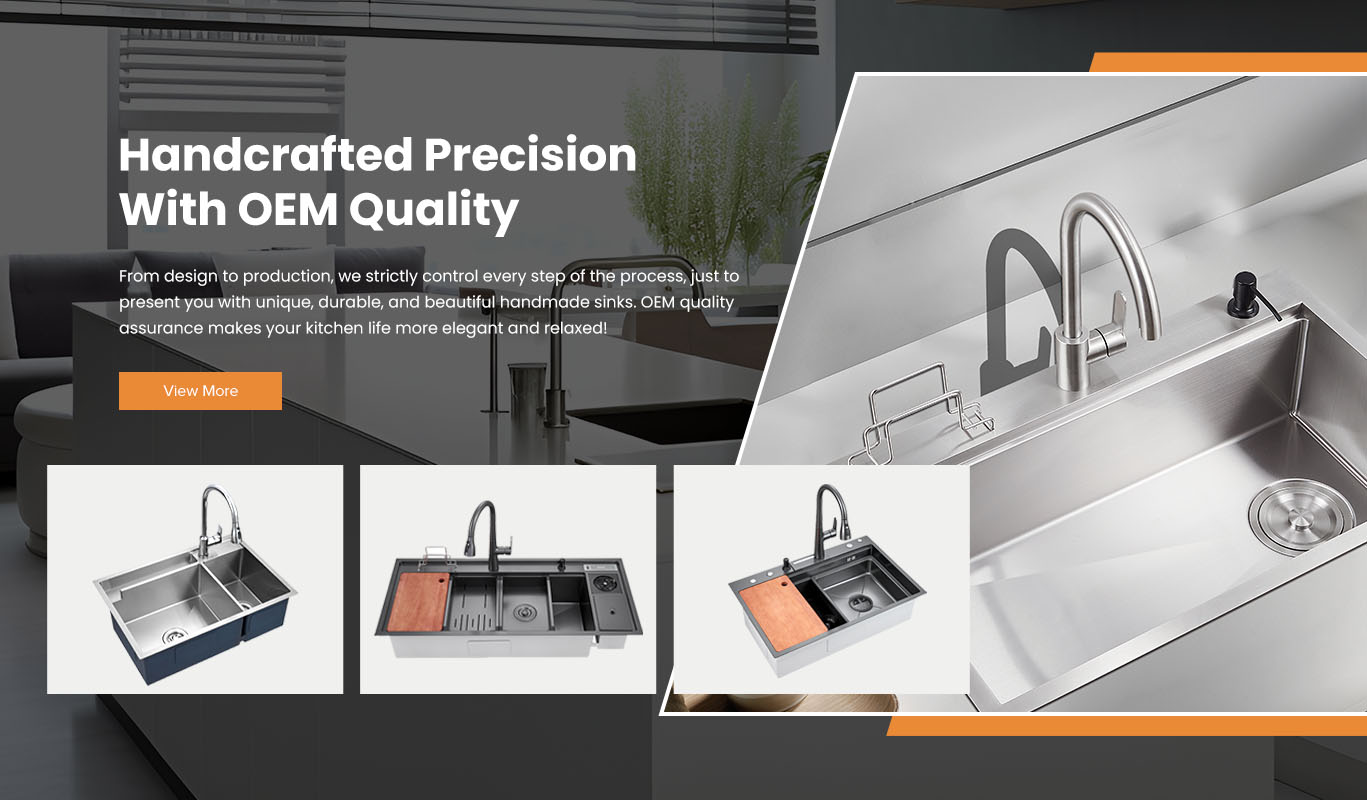
Resurfacing a stainless steel sink means improving the visible finish by cleaning, polishing, and restoring the original grain direction. Stainless steel contains at least 10.5% chromium, which helps form a protective passive layer. 304 stainless steel is widely used for drawn sink products because its nominal 18% chromium and 8% nickel composition supports forming, welding, and corrosion resistance in daily kitchen environments.
Before resurfacing, wash the sink with mild detergent and warm water, then dry it fully. Remove oil film, water marks, food residue, and chemical residue first. For light scratches or dull areas, use a fine non-abrasive polishing pad and move along the original brushed grain. Do not rub in circles, use steel wool, or apply strong acid cleaners, because these may create uneven marks or leave iron particles on the surface.
Resurfacing quality is closely related to the original production standard. A stainless steel sink manufacturer can control raw material grade, sheet thickness, forming accuracy, welding, polishing, washing, protective film, inspection, and export packing. A trader usually works with finished stock, so surface consistency and batch traceability may be weaker. For bulk stainless steel sink supply, manufacturer-side control helps reduce uneven brushing, dull finish, scratches, and shipment friction.
For OEM stainless steel sink and ODM stainless steel sink projects, resurfacing and long-term appearance should be considered before mass production. We confirm sink size, bowl depth, installation type, drain position, surface finish, logo method, accessory packing, carton strength, care label, and export market compliance. For structure and finish reference, this Top Mount Stainless Steel Sink With Drainboard can help evaluate drainboard space, surface treatment options, installation matching, and project kitchen workflow.
| Checkpoint | Control Value |
|---|---|
| Surface stain | Confirms cleaning method |
| Scratch depth | Decides polishing suitability |
| Grain direction | Keeps finish consistent |
| Drainage area | Reduces standing water marks |
| Protective film | Prevents shipping scratches |
| Final inspection | Checks visible surface defects |
A complete manufacturing process includes sheet inspection, cutting, deep drawing, trimming, welding, grinding, polishing, cleaning, drainage testing, accessory checking, and final packing. Each step affects how well a custom stainless steel sink can maintain or recover its surface after installation.
Before repeat orders, check material standards used, sample finish, brushing consistency, drainage slope, accessory separation, carton strength, labeling, cleaning instructions, installation guide, and export documents. SHUNHAN focuses on stainless steel sink manufacturing, Custom Stainless Steel Sinks, OEM and ODM support, and stable project supply. With controlled polishing, protective packing, and clear surface standards, we help reduce resurfacing risks and support consistent long-term delivery.