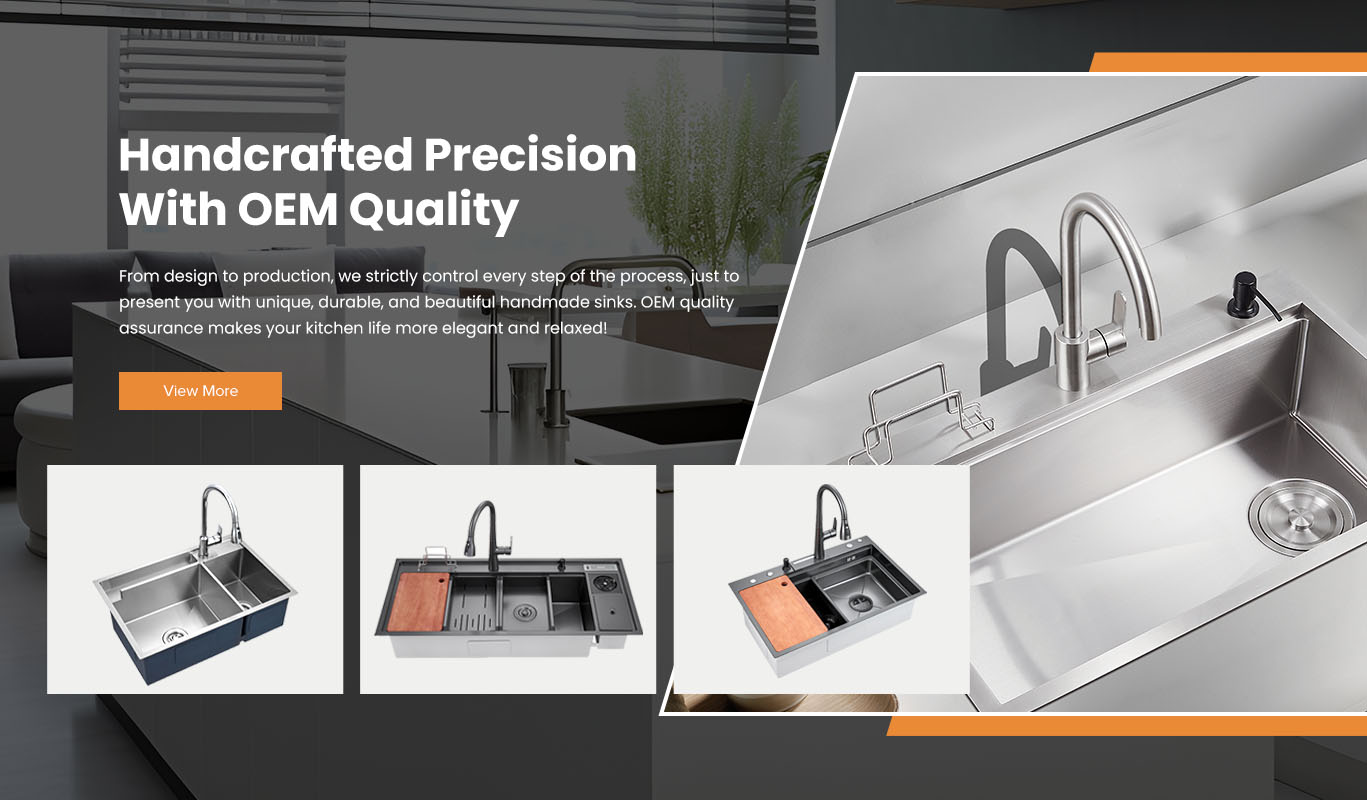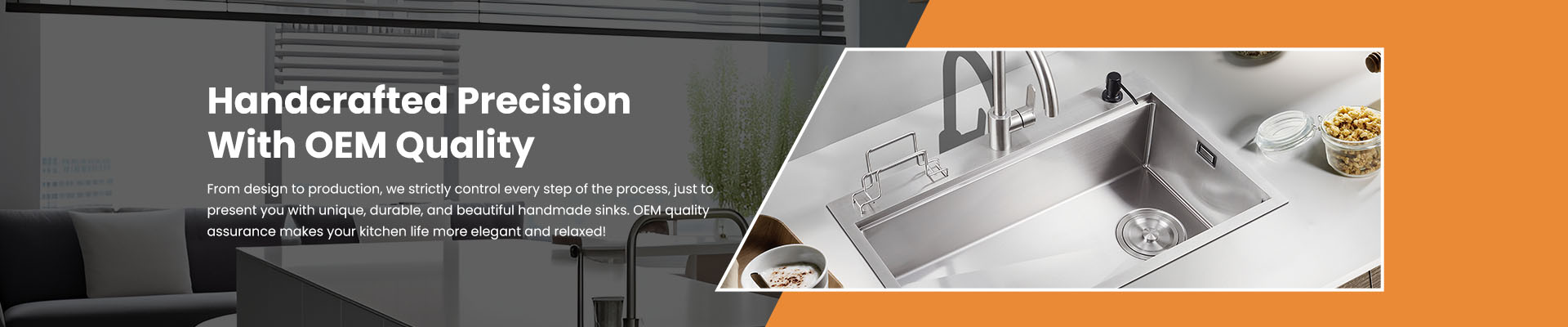
Water marks on stainless steel sinks are caused by mineral residues left after evaporation. According to environmental water quality datasets used in municipal engineering studies, water above 120 mg/L calcium carbonate hardness significantly increases visible spotting on metal surfaces, especially in kitchen environments with frequent wet-dry cycles.
Water marks are not corrosion at the early stage. They are deposits of calcium, magnesium, and trace minerals. When water evaporates, these elements remain on the surface and form visible rings or cloudy films. Studies in surface contamination behavior show that repeated drying without wiping can increase deposit accumulation by more than 65 percent in hard water regions.
Stainless steel grade 304 defined in ASTM A240 provides a stable chromium oxide layer, but this layer does not prevent mineral adhesion. Surface design and maintenance both influence final appearance.
Water mark resistance begins in production. A stainless steel sink manufacturer controls sheet selection, polishing uniformity, and drainage geometry. Smooth transitions, consistent grain direction, and controlled surface roughness reduce areas where water can stagnate.
During OEM and ODM development, bowl slope, corner radius, and outlet position are optimized to improve drainage speed. Faster water removal directly reduces mineral deposition time.
Key production checkpoints include:
Material verification based on EN 10088-2 stainless steel standard
Surface roughness inspection after polishing
Water flow and drainage simulation testing
Weld seam consistency inspection
Final drying and protective film verification
These controls are critical for bulk supply consistency and export compliance.
Daily usage habits strongly influence water mark formation. Drying the surface after use reduces mineral residue formation significantly. Keeping water from standing in the bowl is more effective than chemical cleaning.
| Condition | Mineral Build Up Risk | Cleaning Frequency | Surface Appearance |
|---|---|---|---|
| Hard water no drying | High | Daily cleaning | Visible spotting |
| Basic rinse only | Medium | Regular wiping | Occasional marks |
| Rinse + dry routine | Low | Minimal effort | Stable finish |
For engineering projects, procurement teams evaluate material grade, thickness tolerance, surface finish consistency, drainage design, packaging protection, and inspection standards. These factors directly affect long term appearance stability.
A complete OEM and ODM process includes design input, structural engineering, prototype sampling, production validation, mass manufacturing, and final inspection. This ensures consistent output across different project batches.
Shunhan Sink integrates product design, structural development, controlled manufacturing, and bulk production systems to ensure stable quality and reduced water mark risk across global applications.