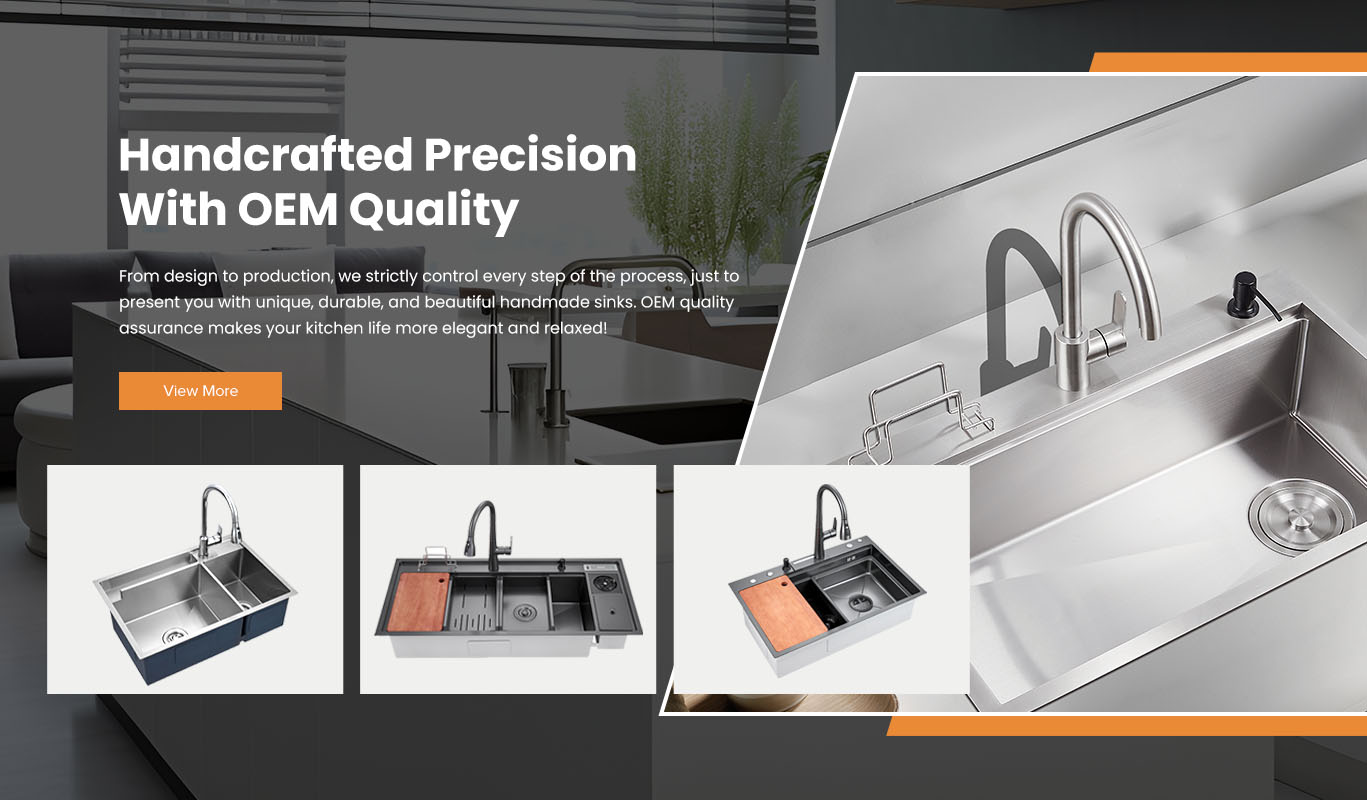
Refreshing a stainless steel sink starts with the right daily care. In most cases, the best method is mild detergent, warm water, and a soft microfiber cloth or nonabrasive sponge. Stainless steel care guidance also recommends rinsing thoroughly, drying the surface after cleaning, and always wiping with the grain rather than across it. Rough pads and steel wool should be avoided because they can damage the finish and make the surface harder to maintain over time.
A sink is easier to refresh when the original material is stable and corrosion resistant. SHUNHAN states that it focuses on OEM and ODM sink products, uses selected 304 stainless steel, and supports customized production for both appearance and performance needs. Its product pages also highlight 304 stainless steel for corrosion resistance, anti oxidation performance, and suitability for long term frequent use, with multiple surface treatment options such as brushed and nano coating finishes.
The first step is deep cleaning to remove grease, soap film, and light residue. The second step is to treat visible marks with a stainless steel cleaner that is suitable for nonabrasive care. The third step is to rinse and dry fully, since mineral deposits often return when water remains on the surface. Care guidance for stainless steel sinks consistently points to gentle routine cleaning rather than occasional aggressive treatment, because regular mild care helps preserve finish lines and surface brightness.
This is where a manufacturer offers more value than a trader. A trader may only recommend a general cleaning method, but a real factory can explain the steel grade, finish direction, protective film, and post installation maintenance requirements tied to the actual product. SHUNHAN presents itself as a sink manufacturer with deep accumulation in sink production, rich style options, and professional OEM and ODM service, which makes its guidance more useful for long term supply and repeat order consistency.
Refreshing a stainless steel sink is not only a maintenance topic. It also reflects how the sink was made in the first place. Surface quality depends on raw material selection, forming, welding, grinding, brushing, final cleaning, and packing. SHUNHAN emphasizes detail, high quality, and continuous innovation in sink manufacturing, and that matters because a better controlled finish is easier to refresh after installation and daily use.
For bulk supply, surface care should begin before shipment rather than after complaints appear. Useful quality control checkpoints include incoming material verification, finish consistency inspection, protective film review, residue checks after film removal, and final appearance inspection before packing. This is especially important in larger orders because a small surface issue repeated across many units can quickly become a costly after sales problem.
In an OEM and ODM process, surface refreshing performance is influenced by more than the sink body alone. Label adhesive, logo method, protective film, packaging material, and shipment conditions all affect how easily the sink can be cleaned after transport and installation. SHUNHAN states that it can meet both appearance and performance expectations during customization, and it also notes OEM service for big orders, wholesale dealers, and contractors. That makes surface consistency a supply chain issue as well as a product issue.
Export market compliance also matters when discussing cleanability and finish quality. NSF states that NSF ANSI 51 establishes minimum public health and sanitation requirements for materials and finishes used in commercial foodservice equipment. Even when a residential sink is sold outside that exact category, cleanability, finish stability, and material suitability still reflect the overall manufacturing discipline of the supplier.
| Checkpoint | What to confirm |
|---|---|
| Material standards used | 304 stainless steel with stable corrosion resistance |
| Cleaning method | Mild detergent, soft cloth, rinse and dry |
| Surface recovery | Always work with the grain |
| Manufacturing process overview | Forming, welding, brushing, final cleaning |
| Quality control checkpoints | Finish inspection, residue check, final appearance review |
| OEM and ODM process | Finish, logo, packaging, protective film |
| Bulk supply considerations | Repeat consistency, carton protection, storage handling |
| Export market compliance | Hygiene and finish suitability awareness |
A stainless steel sink can be refreshed effectively with the right cleaning method, but the better long term result starts with the sink itself. SHUNHAN combines 304 stainless steel material selection, OEM and ODM capability, customized production, and factory side attention to finish quality. That makes sink surfaces easier to maintain, easier to refresh, and more reliable across repeated orders and export supply.