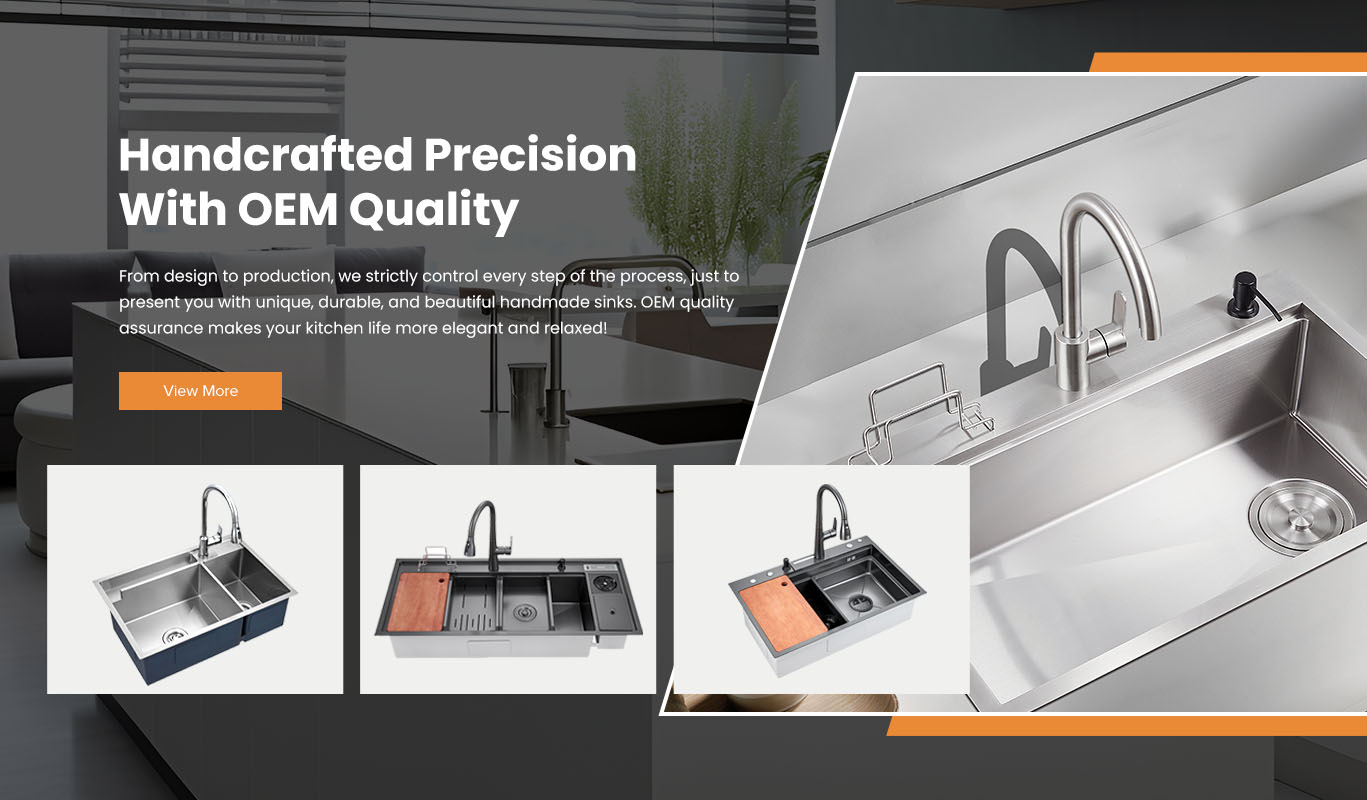
A noise reduction sink provides higher value for premium projects through improved comfort, reduced vibration, and enhanced user experience, while a traditional sink focuses on reliable functionality and cost efficiency. The better choice depends on project positioning and customer expectations.
The main difference between a noise reduction sink and a traditional sink is the additional acoustic design used to improve the user experience.
A noise reduction sink includes features such as sound-absorbing pads, anti-vibration coatings, and optimized structural designs to reduce operating noise.
A traditional sink relies mainly on stainless steel construction and standard manufacturing processes to provide basic kitchen functionality.
From a manufacturer’s perspective, premium projects require more than appearance. Performance features, comfort, durability, and user experience all influence product value.
Premium kitchen projects increasingly focus on overall living quality rather than only basic functionality.
Noise reduction features provide benefits such as:
Quieter kitchen operation
Reduced vibration during use
Improved comfort in open spaces
Higher perceived product quality
Modern kitchens are often connected with:
Dining areas
Living rooms
Entertainment spaces
In these environments, reducing operational noise becomes an important factor in creating a comfortable living experience.
A traditional sink remains valuable because of its simple and reliable design.
Its main advantages include:
Proven durability
Easy maintenance
Wide application compatibility
Cost-effective performance
Traditional sinks are commonly used in:
Standard residential kitchens
Commercial applications
Large-scale housing projects
General kitchen installations
For projects where basic functionality is the main priority, traditional sinks can provide dependable performance.
Premium projects usually evaluate multiple product features rather than a single specification.
Important features include:
Noise control performance
Stainless steel quality
Material thickness
Surface finishing
Design consistency
Long-term durability
A noise reduction system can improve daily comfort, while material and manufacturing quality ensure long-term reliability.
The combination of these factors creates higher overall product value.
Noise reduction sinks use different technologies to control sound transmission.
Common solutions include:
Sound-absorbing pads
Anti-vibration coatings
Reinforced sink structures
Optimized basin designs
These features help reduce sounds caused by:
Running water
Dishwashing activities
Contact with cookware
Sink vibration
For premium residential projects, these improvements can significantly enhance the daily kitchen experience.
Material thickness plays an important role in sink stability.
| Feature | Impact on Performance |
|---|---|
| Thicker stainless steel | Reduces vibration and improves stability |
| Soundproof materials | Absorbs operating noise |
| Structural design | Influences overall acoustic performance |
A well-designed noise reduction sink combines proper material selection with additional acoustic features.
Traditional sinks can also achieve good performance when manufactured with suitable thickness and quality standards.
Perceived value in premium projects comes from both visible and invisible features.
A noise reduction sink creates value through:
Better user comfort
Premium product experience
Advanced functional features
Differentiated product positioning
A traditional sink creates value through:
Reliable performance
Practical design
Competitive pricing
For premium customers, comfort-related features can become an important reason for product selection.
Noise reduction performance requires careful production control.
Important quality factors include:
| Quality Factor | Performance Impact |
|---|---|
| Stainless steel grade | Determines durability |
| Material thickness | Influences stability |
| Soundproof material quality | Controls noise reduction |
| Installation structure | Affects actual performance |
| Quality inspection | Ensures consistency |
Professional manufacturers evaluate both product structure and acoustic performance to deliver stable results.
OEM projects require products that match market positioning.
Noise reduction sinks are suitable for OEM projects requiring:
Premium kitchen solutions
Enhanced user experience
Product differentiation
Higher perceived value
Traditional sinks are suitable for OEM projects requiring:
Standard product lines
Cost control
Large-scale supply
Reliable basic performance
Manufacturers can develop different sink solutions according to customer markets and application requirements.
Both appearance and performance are important in premium projects.
Appearance influences:
First impression
Kitchen design integration
Brand positioning
Noise reduction influences:
Daily comfort
User satisfaction
Long-term experience
A successful premium sink combines visual design with practical features to create complete product value.
The correct choice depends on project goals and customer expectations.
A noise reduction sink is recommended when:
Premium user experience is important
Kitchen comfort is a priority
Open-plan layouts are used
Product differentiation is needed
A traditional sink is recommended when:
Reliable functionality is sufficient
Cost efficiency matters
Standard applications are targeted
Additional features are not required
Selecting the right sink features helps achieve the desired balance between performance, comfort, and project value.
A noise reduction sink provides greater value for premium projects because it improves comfort, reduces operating noise, and enhances the overall kitchen experience. A traditional sink remains a reliable option for projects focused on practicality and cost efficiency.
The ideal choice depends on project positioning, customer expectations, kitchen design, and required performance standards.