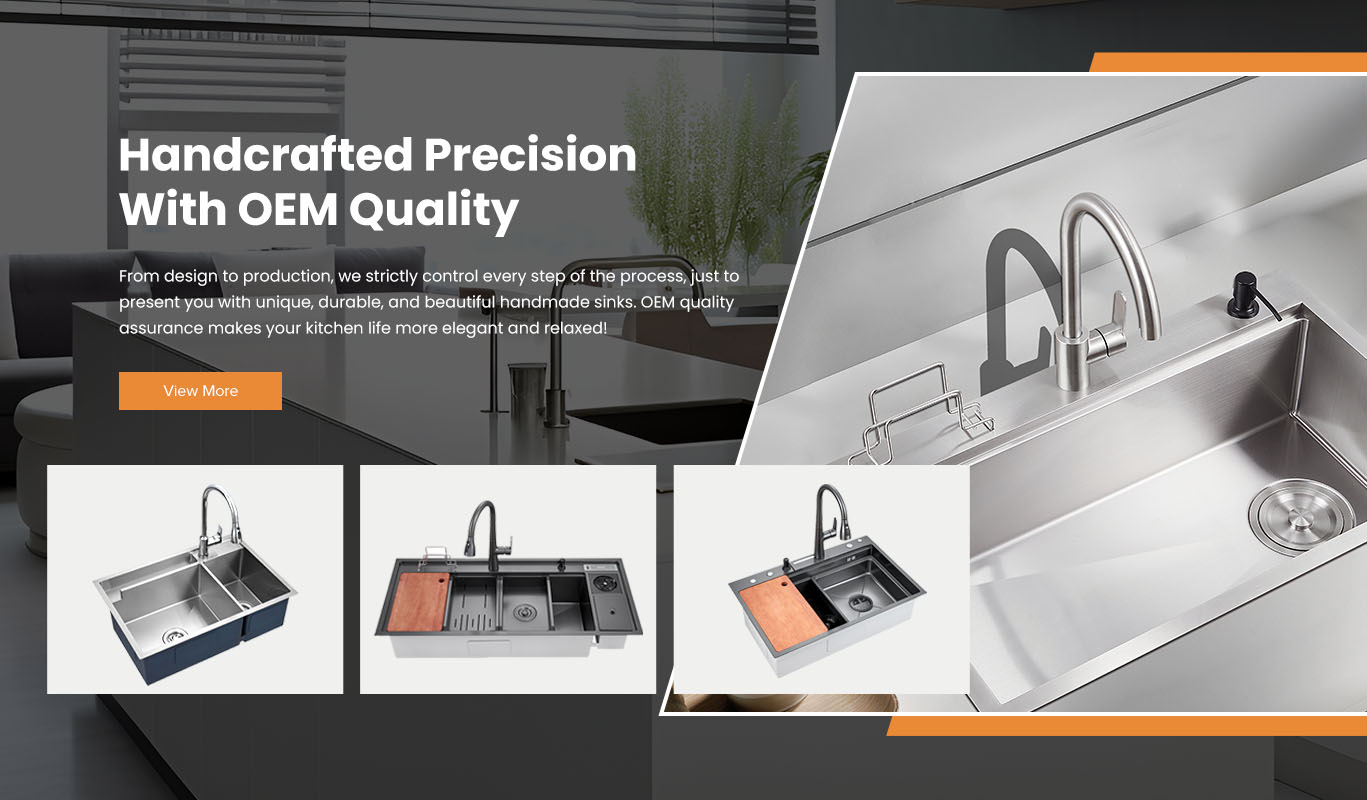
An R10 radius sink provides better overall functionality through easier cleaning and improved daily usability, while a zero radius sink offers sharper modern aesthetics and maximum geometric design. The better choice depends on design priorities and application needs.
The main difference between a zero radius sink and an R10 radius sink is the internal corner curvature of the sink basin.
A zero radius sink features sharp 90-degree internal corners with almost no curve transition. This design creates a strong modern appearance and maximizes usable basin space.
An R10 radius sink features slightly rounded corners with approximately a 10mm corner radius. This creates smoother transitions while maintaining a contemporary rectangular appearance.
From a manufacturer’s perspective, corner radius design affects more than appearance. It influences cleaning convenience, water flow, production complexity, and the overall user experience.
An R10 radius sink balances modern design with practical usability.
Key advantages include:
Easier corner cleaning
Better water movement
Reduced residue buildup
More comfortable daily maintenance
The slightly curved corners help prevent food particles and cleaning residue from collecting in sharp edges.
This makes R10 radius sinks suitable for:
Residential kitchens
Busy household environments
Modern kitchen projects
Customers seeking both style and convenience
A zero radius sink focuses on geometric design and maximum internal space utilization.
Its main advantages include:
Sharp contemporary appearance
Maximum square basin capacity
Strong architectural style
Efficient use of countertop space
Zero radius sinks are commonly selected for:
Minimalist kitchens
Luxury interior projects
Modern architectural designs
Premium kitchen collections
The straight internal corners create a clean visual effect that appeals to customers who prioritize design.
Cleaning convenience is one of the biggest differences between these two designs.
An R10 radius sink provides advantages because:
Corners are easier to reach
Water and residue move more smoothly
Less manual scrubbing is required
A zero radius sink may require more attention because:
Sharp corners can collect small particles
Cleaning tools may not reach corners as easily
Residue removal requires more detailed maintenance
However, proper surface finishing and regular cleaning can help maintain both designs.
Corner design influences how water moves inside the basin.
An R10 radius sink helps improve:
Water movement toward the drain
Removal of small residues
Overall basin cleanliness
A zero radius sink can also achieve good drainage when designed with:
Accurate basin slope
Proper drain positioning
High manufacturing precision
Drainage performance depends on the complete sink structure, not only the corner radius.
Both designs provide strong space efficiency but in different ways.
| Corner Design | Space Advantage |
|---|---|
| Zero Radius Sink | Maximizes square internal space |
| R10 Radius Sink | Balances space and usability |
A zero radius sink creates the maximum available basin area because the corners remain fully square.
An R10 radius sink sacrifices a small amount of corner space but improves practical usability.
Corner design requires precise production control.
Important manufacturing factors include:
| Quality Factor | Performance Impact |
|---|---|
| Forming accuracy | Maintains corner consistency |
| Welding quality | Supports structural strength |
| Surface finishing | Improves cleaning performance |
| Basin slope | Supports drainage |
| Inspection standards | Ensures product reliability |
Zero radius sinks typically require higher precision because sharp corners are more demanding to manufacture.
R10 radius sinks provide more flexibility during production while maintaining a modern appearance.
Premium kitchen projects often require a balance between appearance and functionality.
Zero radius sinks provide value through:
Strong visual impact
Minimalist design language
Premium geometric appearance
R10 radius sinks provide value through:
Better daily usability
Easier maintenance
Modern but practical appearance
The preferred option depends on whether the project prioritizes design expression or everyday convenience.
OEM requirements vary based on target markets.
Zero radius sinks are suitable for OEM projects requiring:
Modern premium positioning
Unique design features
Architectural kitchen styles
Strong visual differentiation
R10 radius sinks are suitable for OEM projects requiring:
Wider market acceptance
Easier maintenance features
Practical premium solutions
Residential applications
Manufacturers can adjust corner radius, basin structure, and finishes according to product strategy.
A zero radius sink is not always better.
It provides advantages when:
Modern appearance is the main priority
Maximum basin space is required
Sharp design lines are preferred
An R10 radius sink is better when:
Cleaning convenience matters
Daily usability is important
Long-term maintenance should be easier
The best design depends on the intended application.
The correct choice depends on design goals, cleaning expectations, and usage environment.
A zero radius sink is recommended when:
Premium modern design is required
Visual impact is important
Maximum internal space is needed
Architectural styling is preferred
An R10 radius sink is recommended when:
Practical functionality is important
Easy maintenance is expected
Daily kitchen use is frequent
Balanced design is preferred
Selecting the right corner design helps achieve the best combination of appearance, usability, and long-term value.
An R10 radius sink generally provides better overall functionality because it offers easier cleaning, smoother water flow, and better daily usability. A zero radius sink provides stronger modern aesthetics and maximum geometric space efficiency.
The ideal choice depends on kitchen design goals, maintenance expectations, application requirements, and customer preferences.