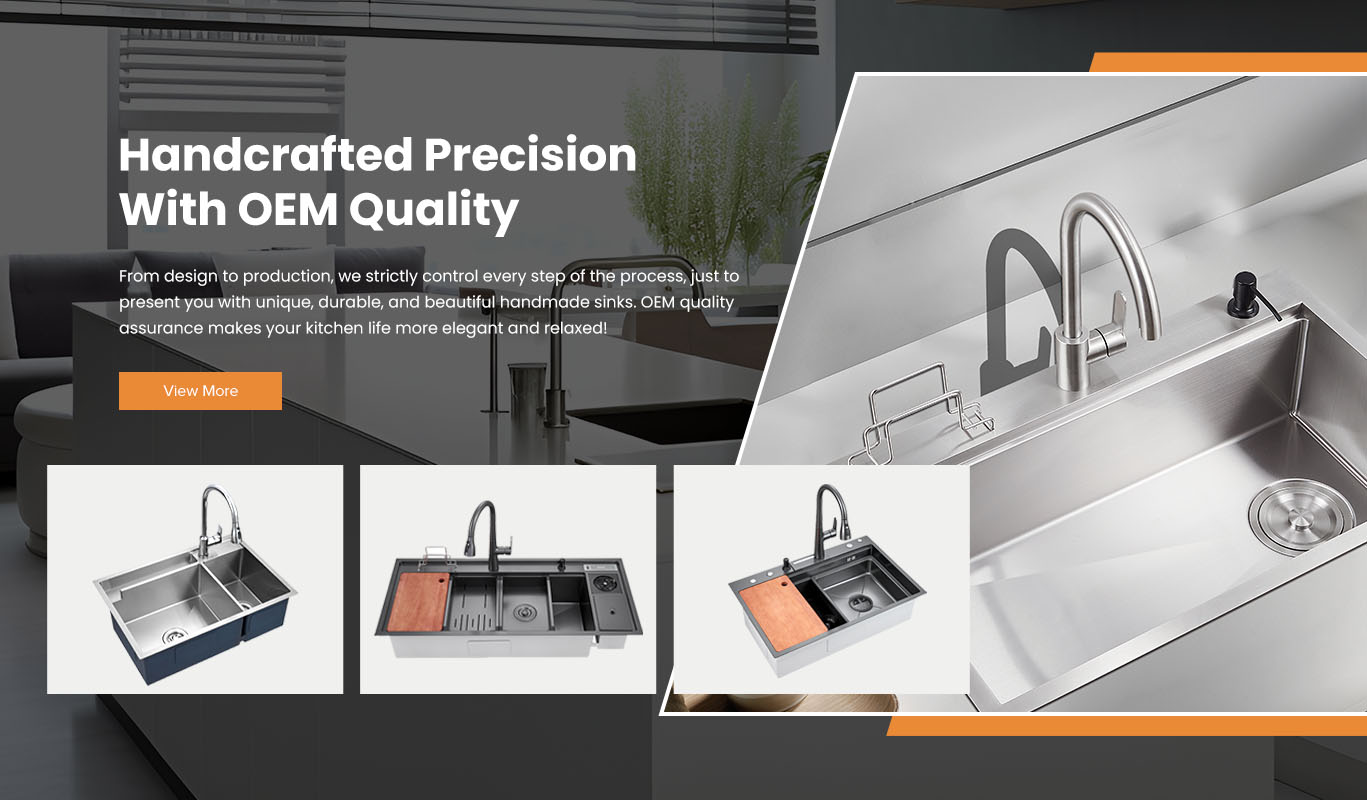
A built-in sink provides stronger design integration, while a drop-in sink offers wider installation compatibility. The better option depends on kitchen layout, countertop conditions, and project requirements.
The main difference between a built-in sink and a drop-in sink is how the sink integrates with the kitchen countertop and surrounding structure.
A built-in sink is designed as part of the overall kitchen system, creating a more integrated connection between the sink, countertop, and workspace. This design often focuses on seamless appearance and coordinated kitchen planning.
A drop-in sink is installed from above the countertop, with the sink rim sitting on the surface. This installation method provides flexibility and works with a wide range of countertop materials.
From a manufacturing perspective, kitchen compatibility depends on more than installation style. Sink structure, dimensions, material quality, countertop requirements, and application environment all influence the final result.
A built-in sink is designed to create a more unified kitchen appearance and functional layout.
Its main advantages include:
Better visual connection with countertops and cabinets
More coordinated kitchen design
Cleaner overall appearance
Improved suitability for customized projects
This design approach is often used in modern kitchens where the sink is considered part of the complete workspace rather than a separate component.
Built-in sinks are commonly suitable for:
Premium residential kitchens
Customized kitchen projects
Modern interior designs
High-end housing developments
For manufacturers, producing built-in sink solutions requires accurate dimensions, consistent finishing, and careful coordination with different kitchen layouts.
A drop-in sink is widely used because of its installation flexibility.
Its main advantages include:
Compatible with various countertop materials
Easier installation process
Convenient replacement options
Suitable for renovation projects
The visible sink rim supports the basin and simplifies installation requirements.
Drop-in sinks are commonly selected for:
Standard residential kitchens
Apartment projects
Large-scale housing developments
Renovation applications
For many projects, installation compatibility is a major factor, making drop-in sinks a practical choice.
Countertop compatibility is an important consideration when selecting sink designs.
Built-in sinks usually require more precise planning because the sink must match the overall kitchen structure.
They are often paired with:
Custom-designed countertops
Integrated kitchen systems
Premium surface materials
Drop-in sinks provide broader compatibility because the visible rim can cover minor differences around the countertop opening.
They are suitable for:
Laminate countertops
Stone surfaces
Various residential countertop materials
The better option depends on whether the project prioritizes design integration or installation flexibility.
Modern kitchen designs often focus on clean lines, efficient space use, and visual consistency.
Built-in sinks support these goals by providing:
A more unified appearance
Better coordination with cabinets and countertops
A customized design approach
A premium kitchen experience
They are often selected for projects where aesthetics and overall interior style are important.
However, a well-designed drop-in sink can also fit modern kitchens when the product finish, countertop selection, and installation details are properly coordinated.
Drop-in sinks remain popular because they provide practical advantages during installation and maintenance.
They are especially suitable when:
Fast installation is required
Existing countertops are used
Replacement flexibility is important
Project budgets need better control
For contractors and large-scale housing projects, simpler installation can reduce project complexity and improve efficiency.
Sink compatibility depends heavily on manufacturing precision.
Important quality factors include:
| Manufacturing Factor | Influence on Compatibility |
|---|---|
| Dimension accuracy | Ensures proper fitting |
| Stainless steel grade | Improves durability |
| Edge design | Supports installation requirements |
| Surface finishing | Enhances appearance |
| Structural strength | Maintains long-term performance |
Professional sink manufacturers develop different structures and sizes to meet various kitchen installation requirements.
Maintenance performance depends on product design and installation quality.
Built-in sinks often provide easier visual maintenance because of their integrated appearance and smooth connection with surrounding surfaces.
Drop-in sinks offer easier access during replacement and repair because the installation structure is simpler.
Both designs can provide reliable long-term performance when manufactured with quality stainless steel, proper sealing, and effective drainage systems.
Professional sink manufacturers evaluate multiple project factors before recommending suitable designs.
Important considerations include:
| Project Requirement | Impact on Sink Selection |
|---|---|
| Kitchen style | Determines design preference |
| Countertop type | Affects installation method |
| Usage frequency | Influences structure requirements |
| Project scale | Determines production approach |
| Market demand | Guides product development |
For OEM and customized sink projects, manufacturers adjust product dimensions, finishes, and structures according to specific application needs.
The right choice depends on kitchen compatibility requirements.
A built-in sink is recommended when:
Integrated design is important
Premium appearance is required
Customized kitchen solutions are needed
Long-term design consistency matters
A drop-in sink is recommended when:
Installation flexibility is important
Existing countertops are involved
Replacement convenience is required
Practical compatibility is the priority
The best sink option should match the kitchen environment, installation conditions, and expected user experience.
A built-in sink offers better design integration, while a drop-in sink provides broader installation compatibility. Neither option is universally better because kitchen requirements vary between projects.
The ideal choice depends on countertop conditions, design goals, installation requirements, and the intended application environment.