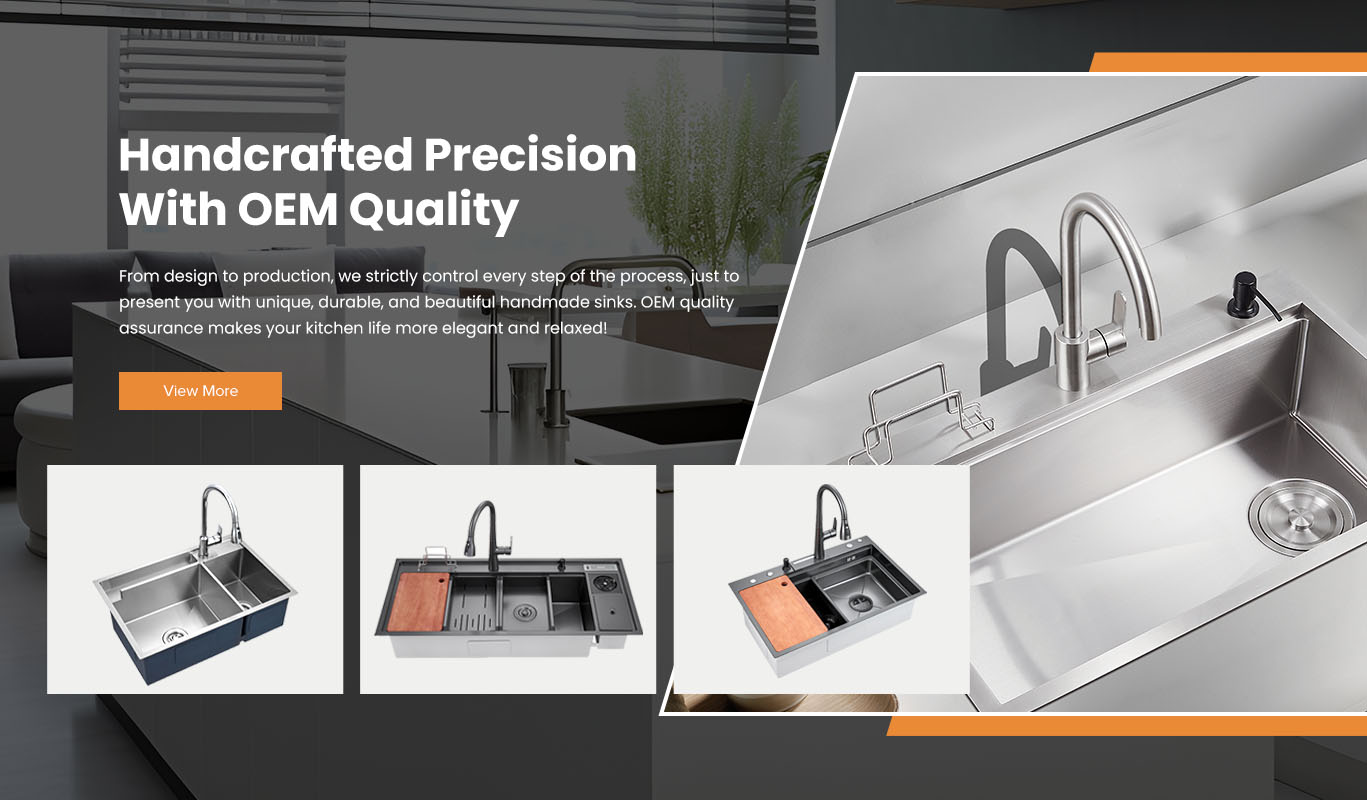
An Undermount Stainless Steel Sink creates a cleaner and more seamless premium appearance, while a drop-in sink provides easier installation and wider compatibility. The better choice depends on design goals and project requirements.
The main difference between an undermount stainless steel sink and a drop-in sink is the installation position and visual integration with the countertop.
An undermount stainless steel sink is installed beneath the countertop surface, allowing the countertop edge to extend directly to the sink opening. This creates a smooth transition and a more integrated kitchen appearance.
A drop-in sink, also known as a topmount sink, is installed from above the countertop. The sink rim remains visible on the countertop surface and supports the basin structure.
From a manufacturing perspective, these two designs represent different approaches to kitchen functionality and aesthetics. Installation method affects product structure, countertop requirements, manufacturing precision, and the final appearance of the kitchen.
An undermount stainless steel sink is widely associated with high-end kitchen designs because of its seamless visual effect.
Key design advantages include:
Creates a clean countertop transition
Reduces visible edges around the sink
Enhances minimalist kitchen aesthetics
Allows easier wiping of countertop debris into the basin
The hidden installation style helps the sink blend naturally with stone, quartz, granite, and other premium countertop materials.
For modern residential projects, luxury apartments, and designer kitchens, undermount sinks are often selected because they support a refined and integrated appearance.
Manufacturers focus on precise dimensions, strong mounting structures, surface finishing, and edge accuracy to ensure reliable performance after installation.
A drop-in sink provides practical flexibility while maintaining attractive kitchen functionality.
Its main advantages include:
Easier installation process
Compatibility with more countertop types
Convenient replacement options
Strong support from the countertop surface
Because the sink edge sits above the countertop, installation requirements are generally simpler compared with undermount models.
Drop-in sinks remain popular in residential projects where practicality, installation efficiency, and cost control are important considerations.
Modern kitchen design often emphasizes clean lines and visual simplicity.
An undermount stainless steel sink usually creates a more contemporary appearance because:
The sink edge is hidden
The countertop surface looks uninterrupted
The overall kitchen design appears more integrated
This makes undermount sinks suitable for:
Modern minimalist kitchens
Luxury residential projects
Premium interior designs
High-end remodeling projects
A drop-in sink can still provide an attractive appearance, especially when the sink design, finish, and countertop combination are carefully selected.
Installation complexity is an important difference between these two sink types.
An undermount stainless steel sink requires:
Precise countertop cutting
Strong mounting support
Professional sealing
Accurate alignment
Because the sink is supported from underneath, installation quality directly affects long-term stability.
A drop-in sink is generally easier to install because:
The countertop opening is simpler
The visible rim supports the sink weight
Replacement is more convenient
For large-scale projects where installation speed is important, drop-in sinks may provide practical advantages.
Countertop integration is one of the biggest advantages of undermount sinks.
With an undermount stainless steel sink:
Water and food particles can be swept directly into the basin
The countertop remains visually continuous
Cleaning around the sink area becomes easier
Drop-in sinks have a raised edge that separates the sink from the countertop surface. While this design remains functional, it creates a more traditional appearance.
For premium kitchen designs focused on seamless surfaces, undermount installation often provides greater design value.
Premium appearance depends not only on installation style but also on manufacturing quality.
Important quality factors include:
| Manufacturing Factor | Influence on Kitchen Design |
|---|---|
| Stainless steel grade | Ensures long-term appearance and durability |
| Surface finishing | Creates consistent visual quality |
| Welding precision | Improves structural reliability |
| Edge accuracy | Supports proper installation |
| Material thickness | Maintains product stability |
For undermount stainless steel sinks, manufacturing precision is especially important because installation requires exact fitting between the sink and countertop.
Different projects have different priorities.
An undermount stainless steel sink is commonly suitable for:
Luxury residential kitchens
Modern apartment developments
Premium renovation projects
Designer kitchen applications
A drop-in sink is commonly suitable for:
Standard residential kitchens
Large housing projects
Renovation projects requiring easier installation
Applications with varied countertop materials
Manufacturers often provide both options because market preferences and project requirements differ significantly.
The right choice depends on the balance between appearance, installation requirements, and long-term usage.
An undermount stainless steel sink is recommended when:
Premium kitchen appearance is the priority
Seamless countertop design is required
Modern aesthetics are important
Professional installation is available
A drop-in sink is recommended when:
Installation flexibility is needed
Replacement convenience matters
Budget and practicality are key considerations
Multiple countertop options are involved
For OEM and customized sink projects, manufacturers evaluate target markets, installation conditions, and design expectations before selecting the appropriate sink structure.
An undermount stainless steel sink generally creates a more premium kitchen design because it provides seamless countertop integration and a cleaner visual appearance. A drop-in sink offers greater installation flexibility and practical advantages.
The best choice depends on the project’s design objectives, countertop requirements, installation conditions, and expected user experience.