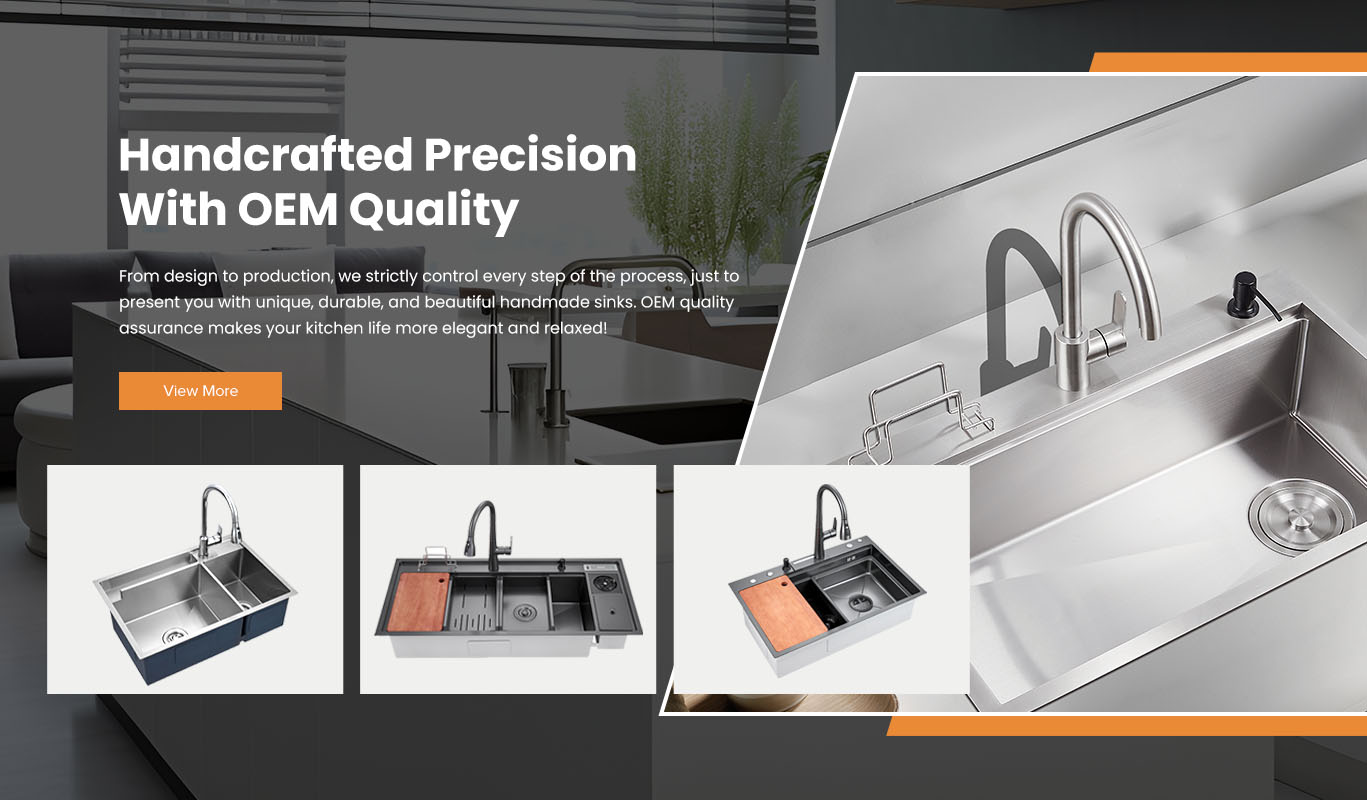
A stainless steel sink is designed for daily exposure to water, food residue, grease, and cleaning products. However, maintaining its original shine requires the right cleaning methods. Using unsuitable chemicals or abrasive tools may damage the surface finish, while proper care can help preserve the appearance and durability of the sink for years.
For manufacturers, surface quality is not only related to appearance but also reflects material selection, polishing technology, and production control. SHUNHAN focuses on stainless steel sink manufacturing with 304 stainless steel materials, OEM and ODM customization, and factory-based quality management to provide durable kitchen sink solutions. (SHUNHAN)
The best way to clean a stainless steel sink is usually the simplest method:
Warm water
Mild dish detergent
Soft sponge
Microfiber cloth
Daily cleaning helps remove:
Food particles
Oil residue
Soap deposits
Water marks
A stainless steel surface naturally forms a passive protective layer because stainless steel contains at least 10.5% chromium. This layer helps improve corrosion resistance when the surface is properly maintained. (SHUNHAN)
Avoid using:
| Cleaning Method | Why Avoid It |
|---|---|
| Steel wool | Creates scratches |
| Strong acids | May damage surface finish |
| Chlorine bleach | Can affect stainless steel surface |
| Hard abrasive powder | Removes brushed texture |
For premium sinks, maintaining the original surface finish is more effective than aggressive cleaning.
For stains that cannot be removed by normal washing, baking soda is a commonly used solution.
Cleaning steps:
Rinse the sink with warm water.
Sprinkle baking soda over the surface.
Use a soft sponge to clean along the grain direction.
Rinse completely.
Dry with a microfiber cloth.
This method works well for:
Water stains
Light mineral deposits
Food residue
Surface dullness
The brushing direction is important because stainless steel sinks usually have a controlled grain pattern. Cleaning in the same direction helps maintain the original appearance.
Hard water can leave white marks on stainless steel sinks after repeated use.
Common causes include:
| Problem | Cause |
|---|---|
| White spots | Mineral deposits |
| Dull surface | Water residue |
| Uneven shine | Incorrect cleaning direction |
| Surface marks | Abrasive cleaning |
A mild vinegar solution can help dissolve mineral deposits, but it should not remain on the surface for long periods.
After cleaning:
Rinse thoroughly
Remove chemical residue
Dry the sink completely
A dry surface helps prevent repeated water marks.
Different finishes require different care methods.
| Surface Finish | Recommended Cleaning |
|---|---|
| Brushed finish | Clean with grain direction |
| Mirror finish | Use soft microfiber cloth |
| Nano coated finish | Avoid abrasive cleaners |
| Gunmetal finish | Use mild detergent |
SHUNHAN provides stainless steel sinks with different surface treatments, including brushed finishes, nano coatings, gunmetal finishes, and other customized options to meet different design requirements. (SHUNHAN)
Cleaning performance starts from the manufacturing stage.
A high-quality stainless steel sink typically uses:
Suitable stainless steel grade
Consistent thickness
Smooth surface processing
Professional polishing technology
304 stainless steel is widely used in kitchen sink manufacturing because it provides corrosion resistance, durability, and hygienic surface properties. It typically contains chromium and nickel elements that help create a protective surface layer. (SHUNHAN)
SHUNHAN uses 304 stainless steel materials for sink production, focusing on corrosion resistance, durability, and long-term performance. (SHUNHAN)
A sink that is easy to maintain depends on precise manufacturing processes.
The production process usually includes:
Stainless steel material selection
Cutting and forming
Welding
Grinding
Surface polishing
Quality inspection
Packaging
Each step affects the final cleaning experience.
| Manufacturing Stage | Quality Focus |
|---|---|
| Material selection | Corrosion resistance |
| Forming process | Structural strength |
| Welding | Seam quality |
| Polishing | Surface smoothness |
| Inspection | Appearance consistency |
SHUNHAN provides OEM and ODM stainless steel sink production, supporting customized designs, appearance requirements, and performance specifications. (SHUNHAN)
Different sink structures affect daily cleaning efficiency.
Popular designs include:
Advantages:
Smooth countertop transition
Easier water cleanup
Modern appearance
Advantages:
Easy installation
Suitable for various countertops
Practical maintenance
Advantages:
Additional drying area
Better kitchen organization
Reduced countertop water accumulation
SHUNHAN offers different stainless steel sink categories including top mount sinks, undermount sinks, drainboard sinks, and custom sink solutions. (SHUNHAN)
For customized sink projects, cleaning performance depends on more than the final product appearance.
Important customization factors include:
| Requirement | Purpose |
|---|---|
| Stainless steel grade | Ensure durability |
| Surface finish | Match design needs |
| Sink thickness | Improve rigidity |
| Bowl structure | Improve usability |
| Drainage design | Improve cleaning efficiency |
A professional OEM process includes:
Product design evaluation
Material confirmation
Prototype development
Production testing
Quality inspection
SHUNHAN provides one-stop customization solutions, supporting product development from design to manufacturing. (SHUNHAN)
Factory quality control directly affects how easily a sink can be cleaned and maintained.
Key inspections include:
| Inspection | Purpose |
|---|---|
| Material testing | Confirm stainless steel quality |
| Surface inspection | Check polishing consistency |
| Water leakage test | Verify welding quality |
| Dimension inspection | Ensure installation accuracy |
| Packaging inspection | Protect products during shipping |
A well-controlled production process helps ensure stable quality for repeated supply.
Before selecting stainless steel sinks for a project, consider:
| Item | Key Question |
|---|---|
| Material | Is 304 stainless steel required? |
| Surface | Which finish matches the application? |
| Structure | Single bowl or double bowl? |
| Installation | Top mount or undermount? |
| Customization | Are OEM requirements needed? |
| Quality standard | What inspections are required? |
For export projects, manufacturers should also consider:
Material standards
Packaging requirements
Production consistency
Delivery capability
Regional market requirements