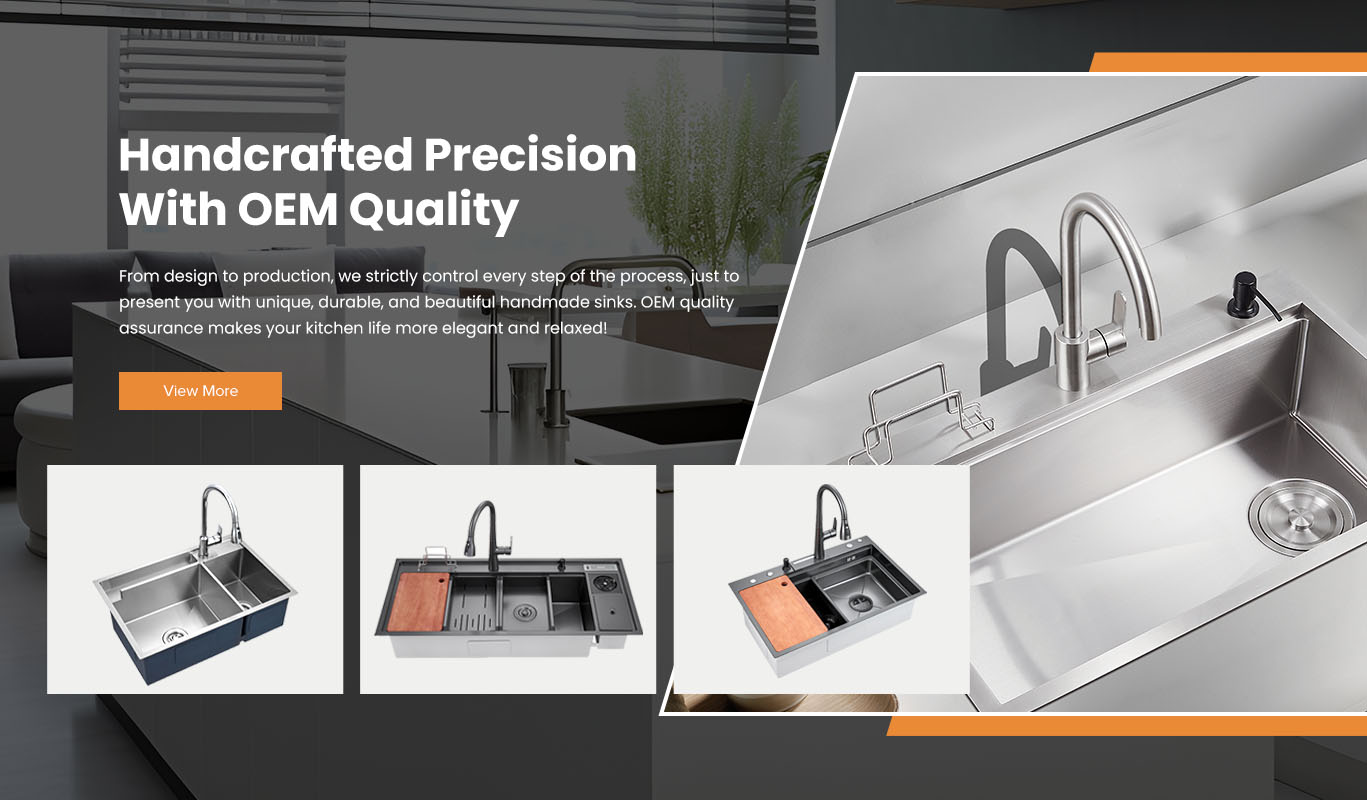
Scratches on a stainless steel sink should be checked before any polishing starts. Light hairline marks usually come from cookware, knives, trays, hard cleaning pads, or small particles left in the bowl. Deeper scratches may appear during installation, countertop work, or transport handling. Cleaning the sink first helps you judge whether the mark can be improved with simple polishing or needs professional refinishing.
304 stainless steel is widely used for quality kitchen sinks. According to ASTM A240 stainless steel composition references, 304 stainless steel usually contains about 18% chromium and 8% nickel. Chromium helps form a protective surface layer, while nickel improves corrosion resistance and forming stability. Scratch removal should improve the appearance without damaging the brushed stainless steel finish.
For a brushed stainless steel sink, always polish along the original grain direction. Apply a small amount of stainless steel polishing cream to a soft cloth or fine polishing pad, then move in straight lines with gentle pressure. Avoid circular rubbing, because swirl marks can become more visible under kitchen lighting.
After polishing, rinse the sink thoroughly and dry it with a microfiber cloth. Do not use steel wool, coarse sandpaper, chlorine cleaner, or strong acid cleaner. Stainless steel care guidance from material maintenance references recommends mild cleaning, full rinsing, and drying after washing to reduce water spots, stains, and surface damage.
| Scratch Condition | Suggested Method | Handling Advice |
|---|---|---|
| Light hairline scratches | Soft cloth with polishing cream | Follow the brushed grain |
| Visible surface marks | Fine stainless steel polishing pad | Use gentle pressure |
| Water stains with scratches | Mild cleaner before polishing | Remove residue first |
| Deep scratches | Professional refinishing review | Avoid aggressive sanding |
Scratch repair is easier when the sink surface is well finished from the beginning. As a stainless steel sink manufacturer, SHUNHAN focuses on 304 material selection, handmade sink forming, welding, grinding, polishing, edge finishing, cleaning, and final inspection. A stable surface needs even grain direction, smooth corners, neat weld treatment, and protective packaging before shipment.
For wholesale sink orders and project supply, our team can support top mount sinks, undermount sinks, drainboard sinks, Custom Stainless Steel Sinks, and OEM/ODM customization. We can also help review thickness, bowl depth, installation type, surface finish, packaging method, and application scenario before production.
Share your sink size, finish requirement, target market, and order plan with our team. We can recommend a practical stainless steel sink solution for kitchens, apartments, hotels, restaurants, and commercial preparation spaces.