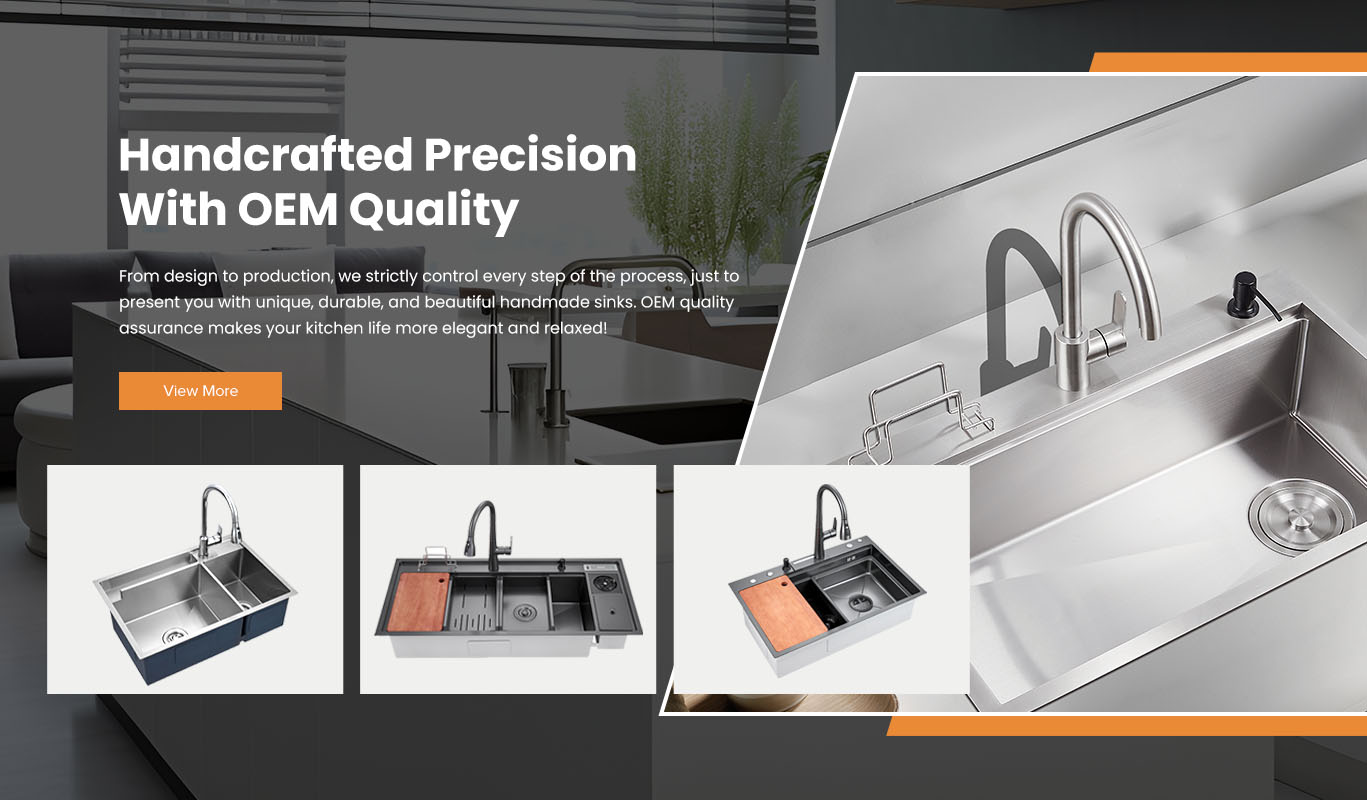
Choosing between a stainless steel sink and a porcelain sink depends on the application, target market, and long term maintenance expectations. For most high frequency kitchen use, stainless steel is usually the better commercial choice because it combines lighter weight, stronger impact resistance, easier handling, and broader design flexibility. Porcelain still has value in style driven projects, especially where a traditional visual effect matters more than heavy daily use. The better option is not only about appearance. It is about material performance, manufacturing control, and supply consistency.
A quality stainless steel sink should be evaluated by both thickness and material grade. SHUNHAN states that its sink products use 304 stainless steel and that the company focuses on OEM and ODM sink products with customized production support. Industry references describe ASTM A240 grade 304 as the standard 18-8 stainless steel, containing about 18 percent chromium and 8 percent nickel, with strong corrosion resistance, good forming performance, and good weldability. Those properties are a major reason stainless steel remains a leading material for kitchen sink manufacturing.
In practical kitchen use, stainless steel usually performs better where dent resistance, hygiene, shipping efficiency, and easy cleaning are important. Porcelain offers a classic look, but its finished surface can chip or wear over time, and that can make maintenance more sensitive. Stainless steel is generally more forgiving in cleaning and daily handling, while porcelain tends to demand more care to preserve surface appearance. For projects that value durability and faster turnover in supply, stainless steel normally has the stronger advantage.
This is where a manufacturer has a clear advantage over a trader. A trader may only compare appearance and price, but a real factory can explain material grade, sink structure, finish direction, welding method, packaging logic, and long term replacement considerations. SHUNHAN presents itself as a stainless steel sink manufacturer with deep experience in sink production, customized development, and OEM and ODM service. That means buyers can evaluate stainless steel not only as a material, but as part of a full supply solution.
The difference between stainless steel and porcelain is also clear at the manufacturing level. stainless steel sink production usually involves sheet selection, cutting, forming, welding, grinding, brushing, inspection, and packing. This gives manufacturers more flexibility in bowl size, finish style, and customization. Porcelain sink production follows a different route and is often less flexible once tooling and finish decisions are set. For OEM and ODM programs, stainless steel usually allows faster adaptation in dimensions, accessories, surface finishes, and packing details. SHUNHAN highlights customized production and varied styles, which makes stainless steel especially suitable for tailored projects.
For project sourcing, stainless steel is often easier to control through measurable quality checkpoints. Buyers can verify raw material grade, sheet thickness, weld quality, brushed finish consistency, flatness, sink depth, and final surface condition before shipment. Surface quality inspection is especially important in stainless steel sink supply, because finish consistency directly affects both perceived quality and cleanability. These are practical control points that help reduce after sales risk in bulk orders.
In an OEM / ODM process, stainless steel usually offers greater flexibility than porcelain. It is easier to adjust cutout size, bowl depth, color finish, accessories, logo method, and export packaging within a stainless steel program. That matters in bulk supply because a small change in market demand may require fast design response. SHUNHAN specifically states that it provides OEM service for big orders and serves wholesale dealers and contractors, which supports large volume stainless steel sink supply more effectively. Stainless steel also tends to be lighter than porcelain, which can help improve shipment efficiency and handling convenience in container loading and installation.
Export market compliance should also be part of the comparison. NSF states that NSF/ANSI 51 establishes minimum public health and sanitation requirements for materials and finishes used in commercial food equipment. While not every residential sink program falls directly under that standard, cleanability, finish stability, and material suitability remain important signals of manufacturing discipline. Stainless steel, especially food grade 304, is often better aligned with hygiene sensitive applications and compliance aware sourcing.
| Checkpoint | Stainless Steel Sink | Porcelain Sink |
|---|---|---|
| Material standard | 304 stainless steel can be clearly specified | Material and coating system vary by product |
| Impact resistance | Better for high frequency use | More vulnerable to chipping |
| Cleaning tolerance | Easier routine cleaning | Finish needs gentler care |
| OEM / ODM flexibility | Stronger customization potential | Usually less flexible |
| Bulk supply handling | Lighter and easier to ship | Heavier and more fragile |
| Quality control checkpoints | Thickness, welds, finish, flatness | Surface finish and chip control are critical |
| Export market compliance | Strong fit for hygiene focused supply | More dependent on finish durability |
For most kitchen sink sourcing decisions, stainless steel is better when the priority is durability, manufacturing flexibility, easier maintenance, and repeatable bulk supply. Porcelain is still attractive where design style leads the decision, but for OEM and ODM development, project sourcing, and export focused supply, stainless steel usually offers the stronger all around advantage. SHUNHAN’s positioning around 304 stainless steel, customized production, OEM and ODM capability, and bulk order support makes that advantage more practical from product development to shipment delivery.