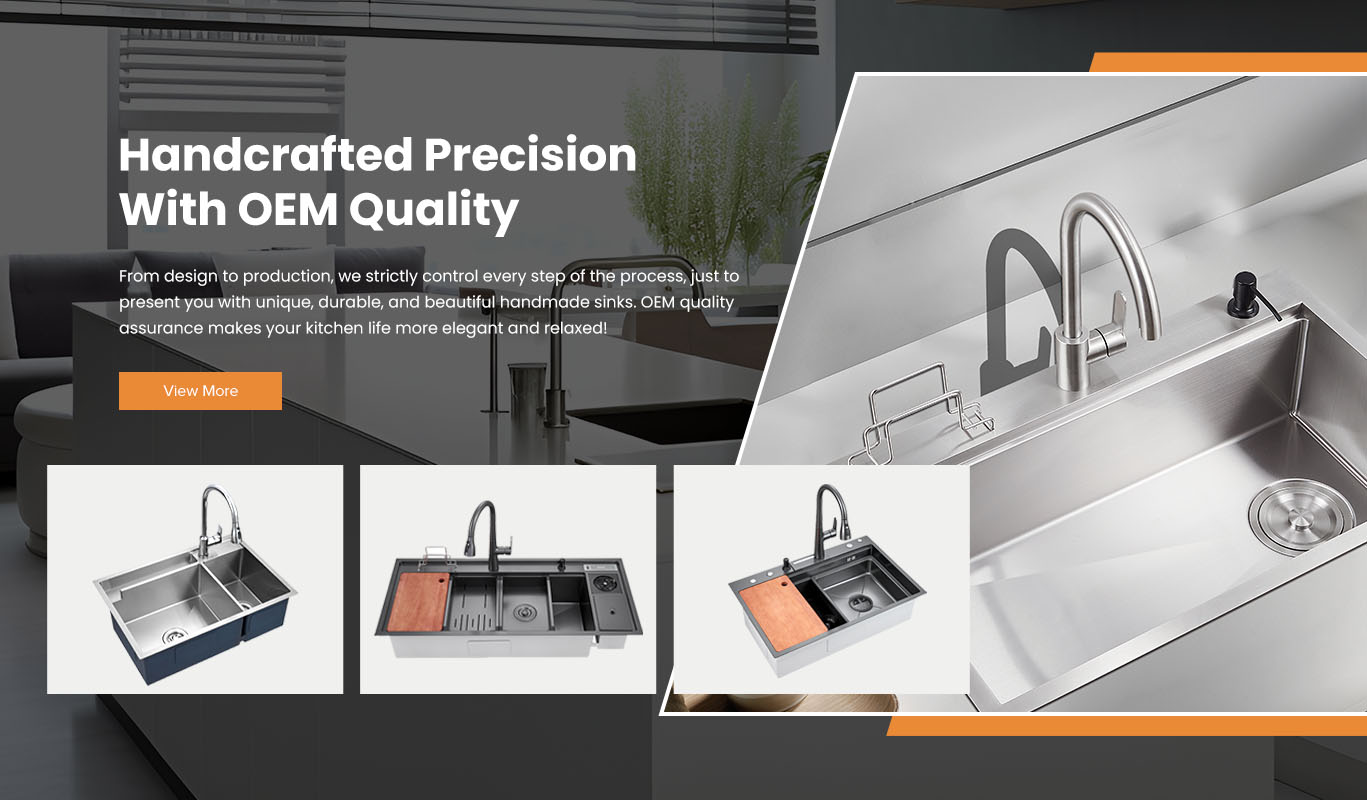
Refurbishing a stainless steel sink starts with restoring the surface step by step rather than trying to hide wear with aggressive treatment. In most cases, the right process includes deep cleaning, removing water scale and grease, treating light scratches, polishing in the grain direction, and protecting the final finish. Stainless steel care guidance recommends regular cleaning with mild detergent, rinsing, and drying, while also warning against harsh abrasive tools that can damage the brushed surface.
A sink is easier to refurbish when the base material is stable. SHUNHAN states that its products use 304 stainless steel and that the company focuses on OEM and ODM sink manufacturing with customized production support. In stainless steel applications, 304 under ASTM A240 is widely known as a standard 18-8 material valued for corrosion resistance, forming performance, and weldability. That is why refurbishment results are usually better on a well-made 304 stainless steel sink than on lower-grade material with inconsistent surface treatment.
The first step is to remove grease, soap film, and mineral deposits with mild detergent and a soft cloth. After the sink is fully clean, the surface can be evaluated for scratches, dull areas, and finish inconsistency. For brushed stainless steel, polishing and wiping should follow the grain rather than move across it. Some stainless steel sink care guidance also recommends periodic polishing with a suitable stainless polishing product, especially when the goal is to refresh appearance instead of only removing dirt.
This is where a manufacturer brings more value than a trader. A trader may only suggest a general refurbishment method, but a real factory can explain the actual finish structure, grain direction, steel grade, protective film behavior, and the production method behind the sink. SHUNHAN presents itself as a sink manufacturer with deep experience in customized production and OEM and ODM service, which is useful when refurbishment questions are linked to finish consistency, replacement planning, or repeat project supply.
A good refurbishment result depends heavily on how the sink was manufactured in the first place. In sink production, the key stages include material selection, forming, welding, grinding, brushing, cleaning, and packing. If welding transitions are rough or brushing is uneven, refurbishment becomes more difficult and visual consistency is harder to recover. SHUNHAN emphasizes detail control, high quality, and new process development, which supports more reliable appearance recovery after long-term use.
For project orders and bulk supply, refurbishment should not be treated only as an after-sales topic. It should also be connected to quality control checkpoints before shipment. These checkpoints should include raw material verification, weld seam inspection, brushed finish consistency, residue check after protective film removal, and final appearance inspection. When these controls are weak, visible surface issues become harder to correct later and can spread across large-volume deliveries.
In an OEM / ODM process, refurbishment performance is linked to more than the sink body. It is also influenced by finish selection, logo method, label adhesive, packaging material, and protective film. SHUNHAN states that it provides OEM service for big orders and customized production, which is valuable because these details can be aligned during sampling instead of becoming problems after mass production. For bulk supply considerations, this reduces the risk of surface complaints during warehousing, transport, and installation.
For commercial or hygiene-sensitive applications, finish quality and cleanability are also part of export market compliance awareness. NSF states that NSF/ANSI 51 establishes minimum sanitation requirements for materials and finishes used in commercial food equipment. Even when a residential sink is sold outside foodservice channels, a supplier that understands cleanability, finish stability, and documentation requirements usually offers stronger manufacturing discipline.
| Checkpoint | What to confirm |
|---|---|
| Material standard | 304 stainless steel |
| Refurbishment method | Mild detergent, non-abrasive polishing, wipe with the grain |
| Manufacturing process | Forming, welding, brushing, final cleaning |
| Quality control checkpoints | Finish inspection, residue check, final appearance review |
| OEM / ODM process | Finish, logo, packaging, protective film |
| Bulk supply considerations | Carton protection, surface consistency, storage control |
| Export market compliance | Hygiene and finish suitability awareness |
A stainless steel sink can be refurbished effectively, but the lasting result depends on material quality and factory control from the beginning. SHUNHAN’s strengths in 304 stainless steel selection, OEM and ODM support, customized production, and detail-focused sink manufacturing make refurbishment easier because the original surface standard is stronger from day one.
Previous:
Next: What Is The Best Product To Clean Stainless Steel Sink