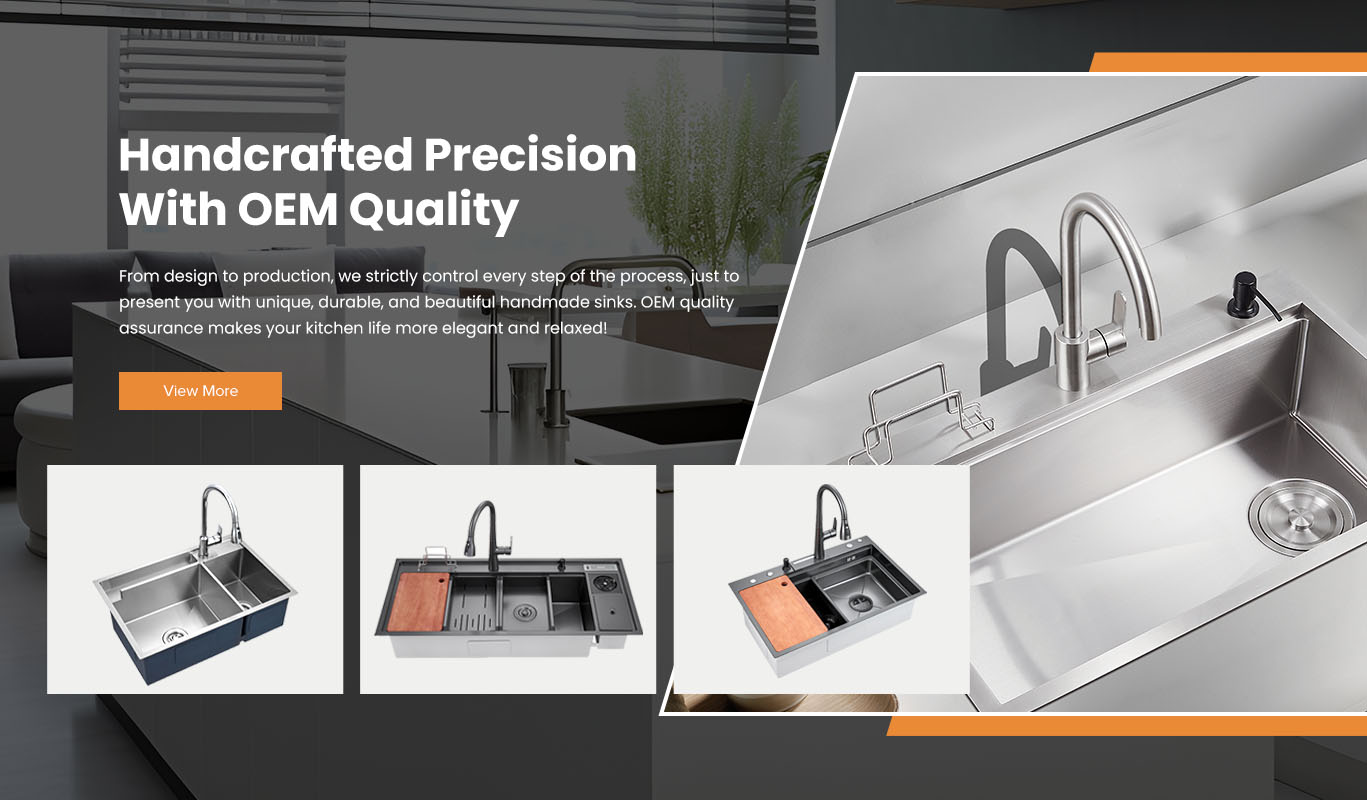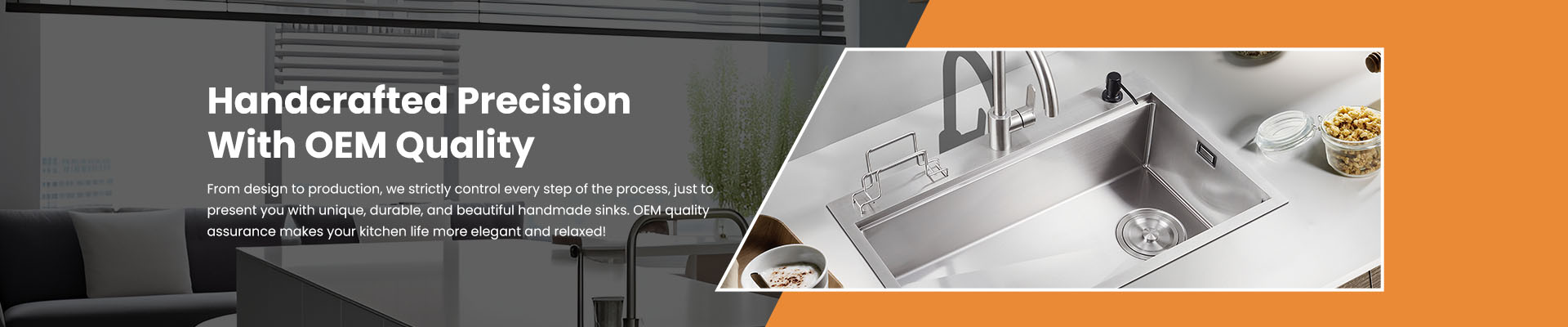
Marks on a stainless steel sink usually come from water scale, metal rubbing, adhesive residue, or improper cleaning tools. A safe removal method starts with warm water, mild detergent, and a soft microfiber cloth. For stubborn marks, use a non-abrasive cleaner and wipe in the same direction as the sink grain. Euro Inox cleaning guidance notes that directional stainless finishes should be cleaned along the grain, and steel wool or carbon steel brushes should not be used because they can damage the surface and leave contamination behind.
The sink material itself affects how easily marks can be cleaned. In sink manufacturing, 304 stainless steel is widely used because it offers good corrosion resistance, strong forming performance, and good weldability under ASTM A240 sheet standards. SHUNHAN also highlights 304 stainless steel across its sink range, which supports better long-term appearance and easier maintenance during daily use and project delivery.
This is where a manufacturer offers more value than a trader. A trader may only give general care advice, but a real factory can explain surface finish direction, sheet grade, polishing process, and protective film behavior. SHUNHAN presents itself as a sink manufacturer with OEM and ODM capability, customized production, and detail-focused processing. That factory-side control is important when buyers need stable finish quality across repeated orders rather than a one-time sample result.
A good quality stainless steel sink is easier to keep clean because the manufacturing process is more controlled. The key stages usually include raw material selection, cutting, forming, welding, grinding, brushing, cleaning, inspection, and packing. If brushing is uneven or film protection is poorly handled, visible marks are more likely to appear after shipment or installation. SHUNHAN emphasizes high-quality details and ongoing product innovation, which matters in this stage.
For bulk supply, mark prevention should begin before shipment. Practical quality control checkpoints include raw material verification, brushed finish consistency, weld area inspection, protective film adhesion, final surface cleaning, and carton condition. This is especially important for project sourcing, where small finish problems can multiply across a full container order. A strong project sourcing checklist should also include cleaning instructions for installers and warehouse teams. This lowers claim risk and protects the final presentation.
In OEM and ODM sink projects, mark control is not only a cleaning issue. It also depends on finish choice, label position, packaging design, and storage conditions during export. SHUNHAN states that it provides OEM service for big orders and customized production, which helps align finish, logo, packaging, and shipment requirements in one process. That is especially useful when export market compliance requires stable labeling, clean presentation, and consistent product appearance on arrival.
| Checkpoint | What to confirm |
|---|---|
| Cleaning method | Soft cloth and non-abrasive cleaner |
| Wiping direction | Follow the grain |
| Material standard | 304 stainless steel |
| OEM and ODM process | Finish, logo, label, packaging |
| Bulk supply considerations | Film protection and carton stability |
| Quality control checkpoints | Final surface inspection before shipment |
Removing marks from a stainless steel sink is important, but preventing them is even more valuable. SHUNHAN’s strengths in 304 material selection, factory-controlled production, OEM and ODM support, and bulk order management make finish stability more reliable from manufacturing to export delivery.