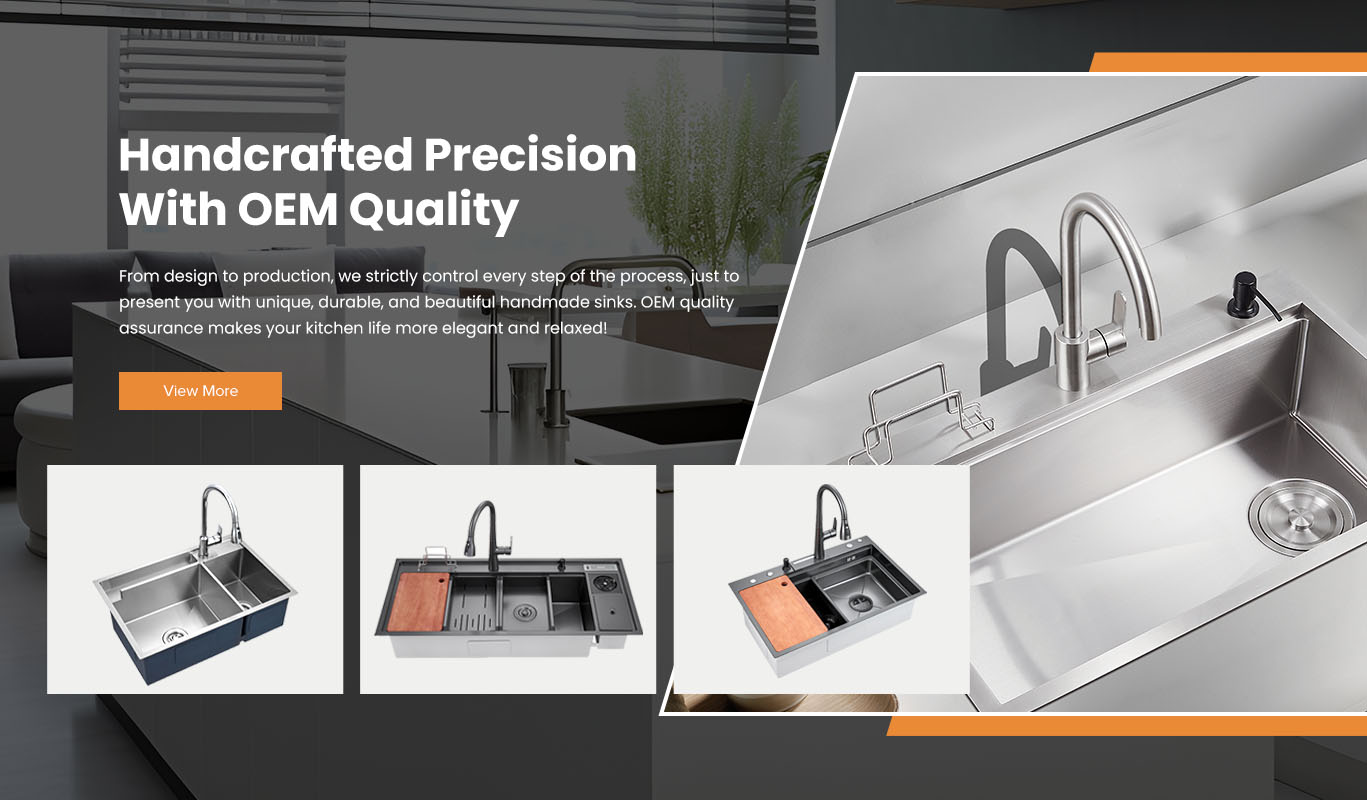
A good quality stainless steel sink is not judged by appearance alone. Real quality starts with the steel grade, continues through forming and welding, and is confirmed by inspection before shipment. For kitchen use, 304 stainless steel remains the most trusted option because it is widely recognized as an 18/8 grade with about 18 percent chromium and 8 percent nickel, a combination valued for corrosion resistance, weldability, and cleanability. Nickel Institute materials and stainless industry references both point to 304 as the mainstream choice for kitchen and food-contact applications.
When buyers compare a manufacturer with a trader, the first advantage of a real factory is control over raw material standards. A reliable sink supplier should be able to explain whether the sheet follows recognized material specifications such as ASTM A240 for stainless plate and sheet, and whether the sink body uses 304 stainless steel rather than lower-cost substitutes. Good quality also involves the right gauge. In sink production, thicker material usually means better rigidity, lower noise, and stronger resistance to deformation, while overly thin steel may reduce long-term performance. SHUNHAN states that it focuses on 304 material and OEM and ODM sink production, which is exactly where factory-side material control matters most.
A trader may offer many models, but a manufacturer can usually answer deeper project questions. That includes steel grade certificates, gauge options, welding method, surface finish consistency, bowl depth tolerance, and packaging plans for bulk supply. SHUNHAN presents itself as a sink manufacturer with OEM and ODM capability, not only a catalog seller. That matters in project sourcing because quality sinks often require stable repeat production, not just one successful sample. Factory control improves response speed when a buyer needs drawing revision, logo customization, carton updates, or replacement planning across multiple shipments.
For a stainless steel kitchen sink, quality is built step by step. The process normally begins with stainless steel sheet selection, then cutting, forming, bowl pressing or handmade fabrication, welding, grinding, polishing, surface finishing, cleaning, and final assembly. In higher-quality OEM sink production, each stage affects the next one. Poor welding can cause weak corners. Poor polishing can leave uneven grain. Poor edge finishing can reduce installation accuracy. A dependable sink factory should treat production as a controlled sequence rather than a simple metalworking job. SHUNHAN highlights customization and detail-focused manufacturing, which is important for private label sink programs and custom sink projects.
Good quality control should not wait until the end. It should begin with incoming raw material checks and continue through forming, welding, dimensional inspection, finish inspection, drainage testing, and packaging review. For project orders and wholesale sink supply, the most useful checkpoints often include steel grade verification, gauge confirmation, weld seam inspection, surface scratch control, flatness, drainage slope consistency, accessory fit, and carton drop safety. This is especially important in bulk supply because even a small deviation can become a large after-sales issue when repeated across hundreds of units.
In OEM and ODM sink manufacturing, a good quality supplier should be able to move from concept to shipment in a clear process. That usually includes requirement review, drawing or sample confirmation, material selection, finish approval, mold or tooling assessment if needed, pre-production sample, production planning, inspection, and export packing. This process helps reduce mistakes in bulk orders and keeps the product aligned with target markets. SHUNHAN emphasizes customized production and OEM and ODM service, which makes it better positioned for customers that need tailored bowl size, mounting type, surface finish, logo marking, or package structure.
Export market compliance is another sign of a good quality stainless steel sink. For food-contact and commercial kitchen related applications, NSF notes that NSF ANSI 51 sets sanitation requirements for materials and finishes used in food equipment. Even when a kitchen sink is not sold as restaurant equipment, buyers still benefit from understanding hygiene, cleanability, and material suitability expectations in destination markets. Compliance awareness also includes carton labeling, barcode handling, product documentation, and market-specific test expectations. A factory that understands export compliance reduces sourcing risk far more effectively than a seller who only quotes price.
| Checkpoint | What to confirm |
|---|---|
| Steel grade | 304 stainless steel with traceable material records |
| Thickness | Gauge suitable for target market and installation type |
| Finish | Brushed or other finish with stable surface consistency |
| Structure | Bowl depth, corners, drainage slope, edge flatness |
| Process | Welding, polishing, noise reduction, accessory matching |
| QC | In-process inspection and final random inspection |
| OEM / ODM | Drawing revision, logo, packaging, label support |
| Export readiness | Packing strength, documentation, compliance awareness |
A good quality stainless steel sink combines the right material, a controlled manufacturing process, strict quality checkpoints, and export-ready execution. SHUNHAN’s positioning around 304 stainless steel, OEM and ODM service, customized production, and detail-focused sink manufacturing makes it relevant for buyers who value consistency over simple trading convenience. In a market where stainless steel production reached about 64.2 million tonnes in 2025, steady factory capability and clear quality standards remain the real difference between a sink that only looks good and a sink that performs well over time.