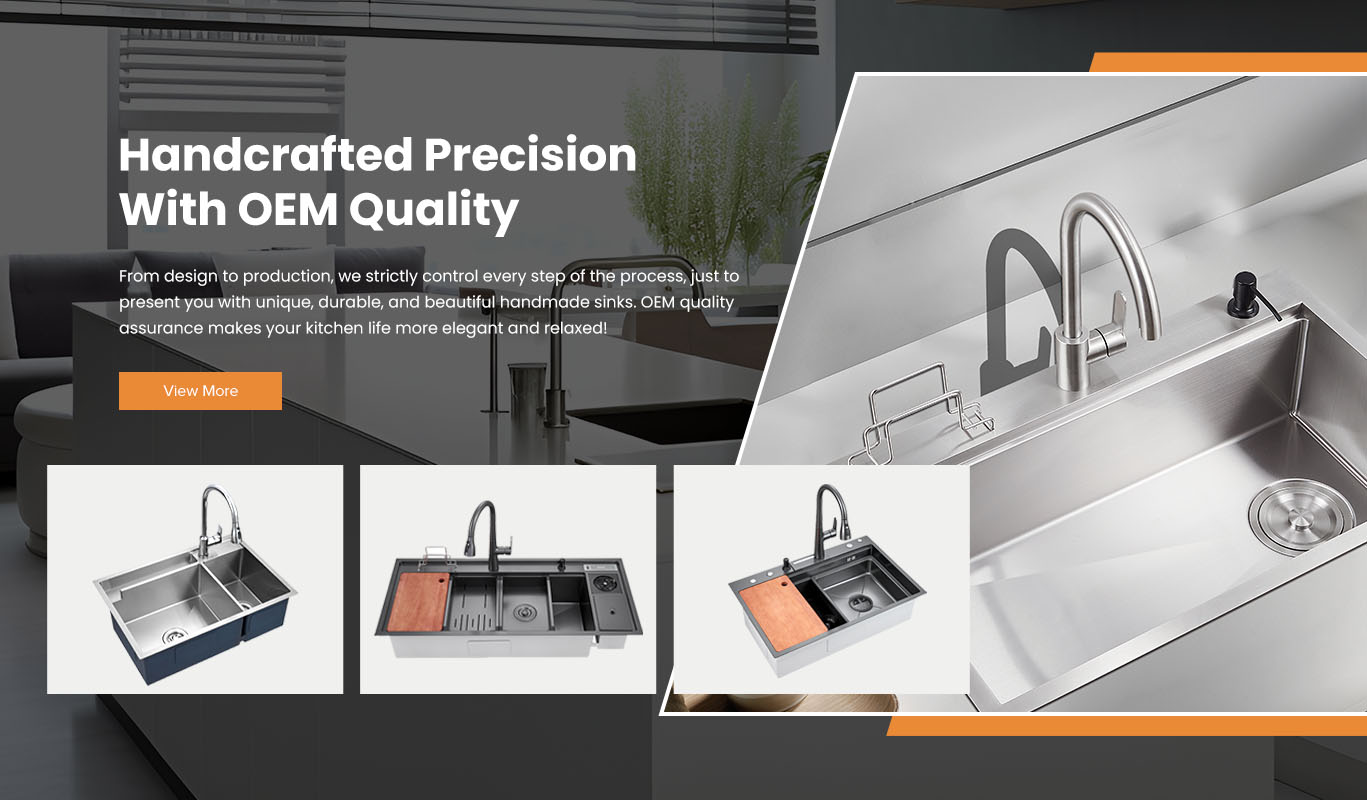
A stainless steel sink is not always better than a granite sink, but it is often the more practical choice for many kitchens. Granite sinks are usually stronger against scratches and offer a more decorative appearance, while stainless steel sinks are easier to maintain, more affordable, and more resistant to impact.
Choosing between the two depends on factors such as durability needs, maintenance preferences, kitchen style, and budget.
Granite sinks are extremely hard and resistant to scratches, dents, and heat. Their stone-based composition allows them to handle heavy daily use without showing wear easily.
However, stainless steel sinks are more flexible and resistant to cracking. If heavy cookware is dropped into the sink, stainless steel is less likely to break, while granite sinks can sometimes chip or crack under strong impact.
Typical durability differences:
Material | Strength | Potential Weakness
Granite | Scratch resistant, heat resistant | May chip or crack from impact
Stainless steel | Impact resistant, flexible | May show scratches over time
Stainless steel sinks are generally much easier to clean and maintain. Their smooth surface prevents dirt and stains from sticking easily, and they can usually be cleaned quickly with soap and water.
Granite sinks require more careful maintenance. Because the surface may contain microscopic pores, dirt or mineral deposits can accumulate if the sink is not cleaned regularly.
For busy kitchens, stainless steel tends to be the more convenient option.
Granite sinks are known for their luxury appearance and natural stone texture, which can enhance the overall design of modern kitchens. They also come in multiple colors, allowing them to match countertops or cabinets.
Stainless steel sinks have a clean, modern look that fits almost any kitchen style. However, they usually come only in metallic finishes and have fewer color options.
Granite sinks are quieter during use because the dense material absorbs sound from running water and dishes.
Stainless steel sinks can be louder due to the metal surface, although many modern sinks include sound-absorbing pads underneath to reduce noise.
Stainless steel sinks are usually more affordable and easier to install. Their lighter weight makes them suitable for most cabinet structures and installation styles.
Granite sinks are heavier and often cost more due to their material and manufacturing process. They may also require stronger cabinet support.
Choose a stainless steel sink if you want:
Easy cleaning and low maintenance
Affordable pricing
High resistance to impact and daily use
Flexible installation options
Choose a granite sink if you want:
A more decorative or premium kitchen appearance
Strong scratch resistance
Quieter operation
Stainless steel sinks are often considered the more practical choice because they are durable, easy to maintain, and affordable. Granite sinks offer advantages in appearance, scratch resistance, and noise reduction, but they can be heavier and require more maintenance.
Previous: