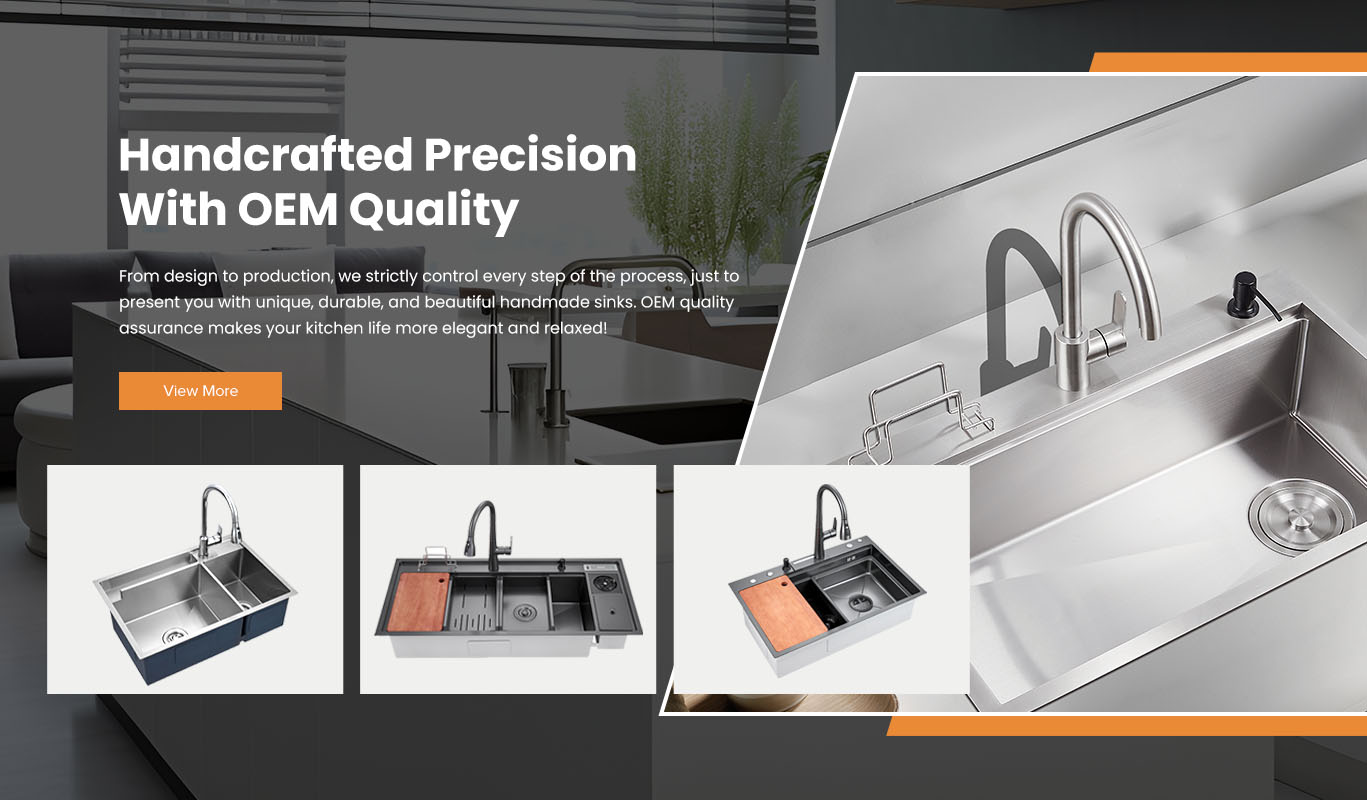
Stainless steel sinks are known for their durability and corrosion resistance, but rust stains may still appear under certain conditions. These stains are often caused by iron particles from cookware, prolonged moisture exposure, or chemical residue left on the sink surface. Although stainless steel contains chromium that forms a protective layer against corrosion, external contaminants can still create surface rust if not cleaned properly.
High-quality sinks made from SUS304 stainless steel, widely used in modern kitchens, provide strong resistance to stains, rust, and household chemicals, making them suitable for both residential and commercial environments.
Before removing rust, it is important to determine what caused it. In most cases, rust does not originate from the sink itself but from external metal objects such as steel wool, iron cookware, or metallic residues left on the surface. Hard water deposits and cleaning chemicals may also react with metal particles and form rust stains.
Understanding the source helps prevent the problem from recurring after cleaning.
Light rust stains can often be removed using mild household cleaning solutions. A mixture of baking soda and water can be applied to the affected area and gently scrubbed with a soft sponge. This method removes rust particles without damaging the stainless steel surface.
Vinegar or specialized stainless steel cleaners may also be used to dissolve rust stains. After cleaning, the sink should be rinsed thoroughly and dried with a soft cloth to prevent moisture buildup.
Although stainless steel is durable, harsh cleaning tools such as steel wool or metal brushes should not be used. These tools may scratch the surface and weaken the protective chromium layer that prevents corrosion.
Instead, use soft cloths or non-abrasive pads to maintain the smooth surface finish. Stainless steel sinks with brushed finishes can better conceal minor scratches while maintaining a clean appearance.
Regular maintenance helps prevent rust from forming again. After washing dishes, the sink should be rinsed and dried to remove water spots and mineral residue. Avoid leaving metal objects such as cans or utensils in the sink for long periods, especially in humid environments.
Proper cleaning routines keep the surface free from contaminants that may cause corrosion.
The material grade of stainless steel plays a significant role in corrosion resistance. Premium kitchen sinks are commonly made from SUS304 stainless steel, which contains approximately 18% chromium and 10% nickel. This composition improves resistance to rust and chemical damage while ensuring long service life.
Manufacturers also apply surface treatments and structural reinforcement during production to enhance durability. Multi-layer sound-deadening pads and anti-condensation coatings are often integrated into sink construction to improve performance and reduce noise during use.
Professional sink manufacturers control multiple stages of production to ensure corrosion resistance and structural strength. The manufacturing process typically includes stainless steel sheet forming, precision welding, surface brushing or nano coating, and structural reinforcement.
Advanced processes may also include anti-condensation treatments, sound insulation pads, and precision edge finishing. These steps help ensure that the sink remains durable and resistant to rust even under heavy kitchen use.
Companies such as Jiangmen Shunhan Kitchen & Bath Technology focus on stainless steel sink manufacturing and provide OEM and ODM production services for global buyers.
When sourcing stainless steel kitchen sinks, it is important to distinguish between manufacturers and trading companies. Manufacturers control the production process, material selection, and quality inspection stages, which allows them to maintain consistent product standards.
Direct manufacturers are also able to support product customization, design adjustments, and technical improvements during production. This is particularly valuable for distributors, project contractors, and brand owners who require customized sink designs.
OEM and ODM services allow buyers to customize sink dimensions, surface finishes, accessories, and branding. In many cases, manufacturers can develop new sink designs based on specific market requirements or project specifications.
This process typically involves design confirmation, prototype development, material selection, sample testing, and mass production approval. Customization ensures that the final product matches the functional and aesthetic requirements of the target market.
Large-scale kitchen equipment procurement often requires stable manufacturing capacity and consistent product quality. Bulk buyers such as distributors, wholesalers, and construction contractors typically evaluate production capability, lead times, and packaging standards before placing large orders.
Reliable sink manufacturers usually provide standardized production schedules and export packaging solutions to support international shipments.
Quality control is essential in stainless steel sink production. Key inspection stages often include raw material verification, dimensional accuracy checks, welding inspection, surface finish evaluation, and corrosion resistance testing.
These checkpoints ensure that the finished sink meets durability standards and performs reliably in real kitchen environments.
Kitchen sinks supplied to international markets must meet material and manufacturing standards required by different regions. Stainless steel composition, surface finishing, and product durability must comply with export regulations and customer specifications.
Manufacturers experienced in global supply chains often design sinks to meet the requirements of overseas distributors, commercial kitchen projects, and home improvement retailers.
Removing rust from a stainless steel kitchen sink is usually simple when the correct cleaning methods are used. Regular maintenance, proper cleaning tools, and avoiding metal contamination help keep the sink surface in excellent condition.
Behind every durable stainless steel sink is a carefully controlled manufacturing process, high-grade materials, and strict quality inspection. Manufacturers with strong production capabilities and OEM or ODM services can provide reliable sink solutions for distributors, contractors, and project buyers seeking long-term kitchen performance.