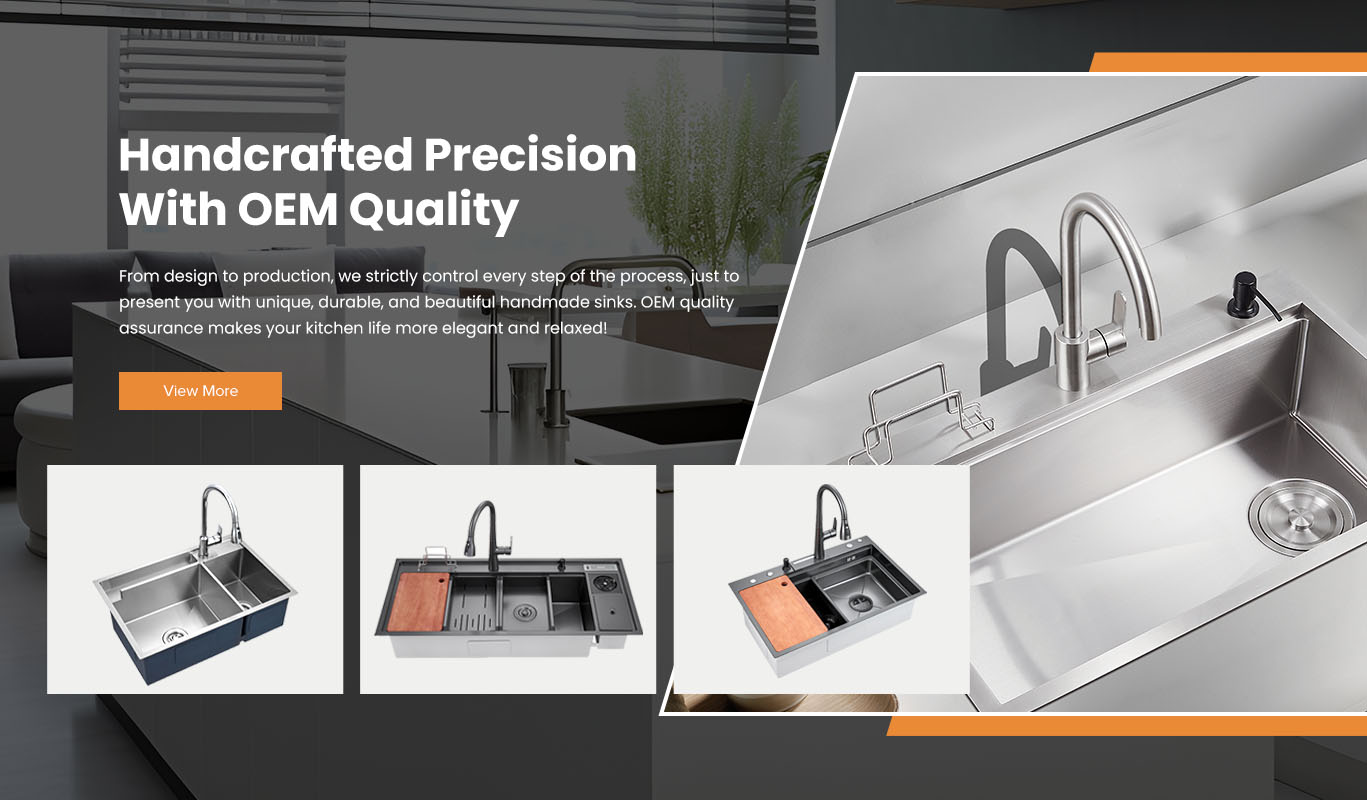
Removing a stainless steel kitchen sink is a common task during renovation, replacement, or countertop upgrades. While the physical removal process is straightforward, improper disassembly can damage cabinets, plumbing connections, or countertop edges. More importantly, recurring removal due to leakage, corrosion, or structural instability often reflects deeper issues related to material grade and manufacturing quality.
For contractors, distributors, and project developers, understanding both the removal procedure and the production factors behind long-term durability is essential.
Prior to removal:
Turn off water supply valves
Disconnect electrical power if garbage disposal is installed
Place bucket under drain trap
Protect countertop edges with masking tape
Wear safety gloves
Proper preparation reduces risk of cabinet damage or plumbing stress.
Loosen and remove P-trap
Disconnect water supply lines
Remove garbage disposal if applicable
Detach drain assembly
High-quality drain systems designed with standardized fittings simplify this step.
Most stainless steel sinks are secured using mounting clips underneath the countertop.
Locate and loosen each clip
Support sink weight during release
Ensure all fasteners are removed
Precision-engineered flange edges and consistent clip placement—controlled during manufacturing—facilitate easier installation and removal.
Use plastic scraper or utility knife
Cut carefully along the sink rim
Avoid damaging countertop surface
Uniform edge finishing reduces sealant adhesion irregularities and allows smoother separation.
Push sink upward from below
Lift evenly to prevent countertop stress
Clean remaining sealant from cutout
Properly manufactured sinks maintain structural rigidity during handling due to stable steel thickness and controlled forming processes.
Easier access to flange
Silicone removal from top surface
Generally faster removal
Often secured with adhesive and brackets
Requires careful support during detachment
More sensitive to structural stress
Manufacturing precision in flange flatness and edge alignment directly impacts installation stability and long-term sealing.
If a sink requires removal due to:
Corrosion or pitting
Structural cracks
Drain seam leakage
Warping or deformation
The underlying cause often relates to material grade or production inconsistencies.
A professional stainless steel sink manufacturer:
Uses certified 304 stainless steel
Controls sheet thickness specifications
Operates in-house hydraulic forming lines
Implements precision welding procedures
Maintains standardized surface finishing
Provides OEM engineering support
A trading company typically sources from multiple factories and may not ensure consistent thickness or forming control.
Direct factory production ensures dimensional stability, making installation and removal predictable.
High-quality sink production includes:
Raw Material Verification
Confirming chemical composition and thickness stability.
Controlled Deep Drawing
Preventing overstretching that weakens structural integrity.
Seam Welding Management
Ensuring smooth transitions without stress concentration.
Automated Surface Brushing
Producing consistent grain texture.
Bottom Reinforcement and Soundproofing
Enhancing vibration resistance and moisture protection.
Each stage contributes to long-term installation reliability.
Professional factories implement inspections such as:
Thickness measurement verification
Forming stress analysis
Weld seam integrity inspection
Dimensional tolerance confirmation
Leak testing
Final visual surface evaluation
These checkpoints reduce post-installation failure risk.
Sinks manufactured for global markets typically feature:
Certified 304 stainless steel
Controlled thickness specifications
Food-contact safe materials
Lead-free drainage components
Corrosion resistance validation
Material certification ensures structural stability and long-term durability.
For project-based procurement, customization options may include:
Custom cutout dimensions
Reinforced flange design
Increased steel thickness
Enhanced bowl depth
Private labeling and customized packaging
An integrated OEM workflow includes design validation, sample approval, tooling inspection, pilot production, and batch verification.
When sourcing sinks in volume, buyers should confirm:
Monthly production capacity
Stable lead times
Surface and dimensional consistency across batches
Protective packaging standards
Spare component availability
Factory-integrated production ensures predictable supply and installation compatibility.
Before confirming procurement, verify:
304 stainless steel certification
Thickness compliance documentation
Forming process validation
Weld seam inspection reports
Dimensional tolerance confirmation
Export documentation readiness
Compliance with destination market regulations
Structured sourcing reduces replacement frequency and long-term maintenance costs.
Reliable manufacturers provide:
Material test certificates
Quality inspection documentation
Export packing lists
HS classification support
Regulatory compliance assistance
Export experience ensures smooth customs clearance and international distribution.
To minimize future removal needs:
Ensure proper cabinet support
Avoid overtightening mounting clips
Use high-quality silicone sealant
Maintain proper drainage alignment
Select certified 304 stainless steel sinks
Installation durability begins with proper material selection and factory-controlled production standards.
Removing a stainless steel kitchen sink requires careful plumbing disconnection, sealant cutting, and structural support during lifting. However, frequent removal due to leakage, corrosion, or deformation often indicates deeper manufacturing quality concerns.
Premium 304 stainless steel, controlled deep drawing, precision welding, and strict quality inspections significantly enhance installation stability and long-term performance.
For distributors, contractors, and project developers, partnering directly with a professional stainless steel sink manufacturer ensures OEM flexibility, bulk supply reliability, export compliance, and durable structural integrity across residential and commercial applications.