
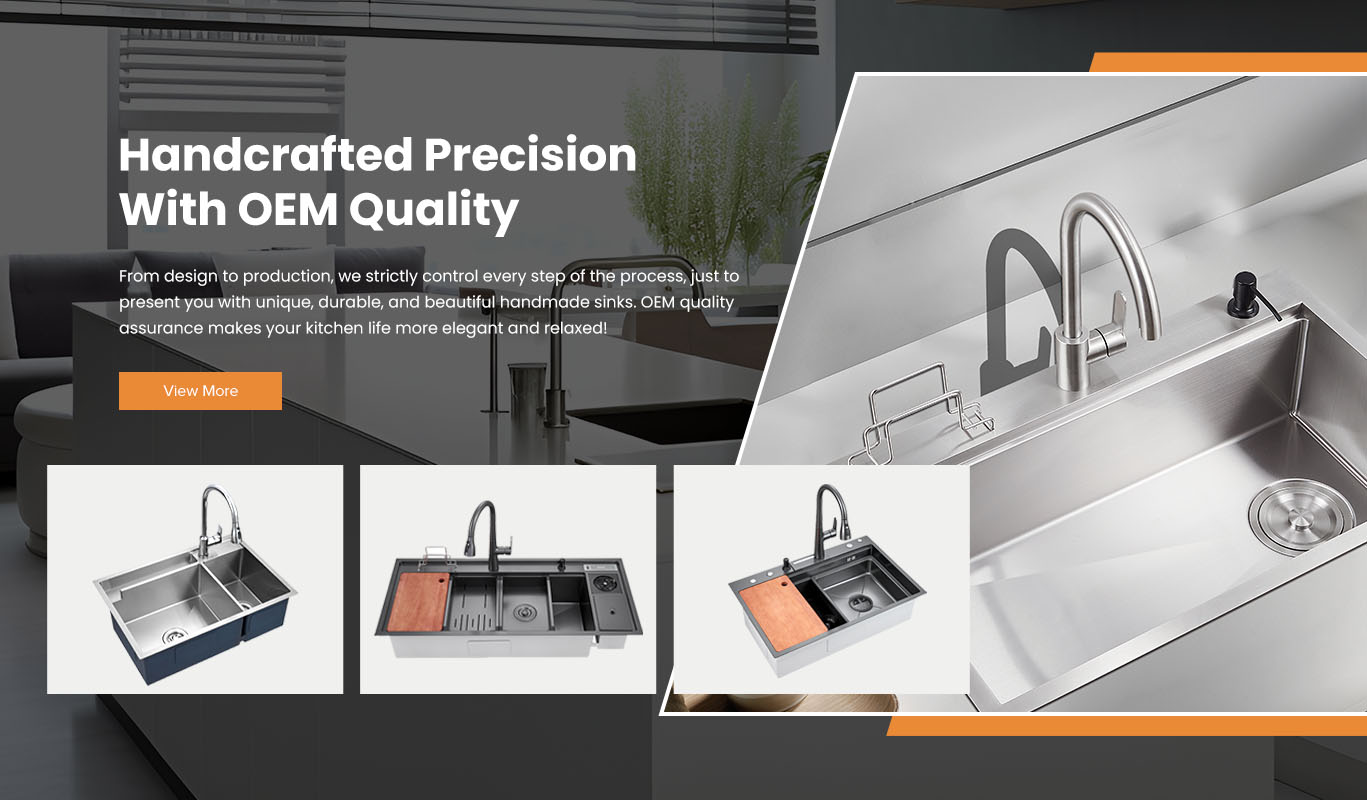
Professional Surface Care Guidance and What Polishing Performance Reveals About Manufacturing Standards
Polishing a stainless steel kitchen sink restores its original luster, enhances corrosion resistance, and extends service life. While routine polishing is straightforward, the long-term visual performance of a sink depends heavily on material grade, surface finishing precision, and manufacturing control.
For distributors, contractors, and project developers, understanding how to polish stainless steel is important. However, recognizing why some sinks polish evenly while others show patchiness or discoloration is even more critical when sourcing products for large-scale projects.
Understanding Stainless Steel Surface Structure
Most high-quality kitchen sinks use brushed stainless steel with a directional grain pattern. This finish serves two important purposes:
Reduces visible fingerprints and water marks
Minimizes the appearance of minor scratches
Premium 304 stainless steel offers superior corrosion resistance due to balanced chromium and nickel content. When the surface brushing process is uniform and controlled during production, polishing becomes predictable and consistent.
Step-by-Step Guide to Polishing Stainless Steel Kitchen Sink
1. Deep Cleaning Before Polishing
Wash the sink using mild detergent
Remove grease, mineral deposits, and residue
Rinse thoroughly
Dry completely with a microfiber cloth
Surface contaminants interfere with polishing consistency.
2. Identify the Grain Direction
Examine the brushed pattern carefully:
The grain typically runs horizontally or vertically
Always polish along the grain
Avoid circular motion
Uniform grain alignment, achieved through automated brushing lines during manufacturing, allows even surface blending.
3. Apply Stainless Steel Polishing Compound
Use a stainless steel-specific polish
Apply a small amount to microfiber cloth
Rub gently along the grain
Work in sections
High-grade 304 stainless steel resists staining and reacts evenly to polishing compounds.
4. Buff and Remove Excess Polish
Use a clean dry microfiber cloth
Continue wiping along the grain
Ensure no residue remains
Even finishing results indicate consistent surface roughness from factory brushing processes.
5. Optional Protective Conditioning
For enhanced shine and water resistance:
Apply a small amount of mineral oil
Spread evenly along the grain
Buff lightly
This adds temporary water repellency and improves visual clarity.
Why Polishing Results Reflect Manufacturing Quality
If polishing produces uneven shine, patchiness, or discoloration, potential causes include:
Inconsistent surface brushing
Variable steel thickness
Mixed steel grades
Poor welding heat control
Inadequate surface finishing inspection
These factors are directly controlled by manufacturers, not trading companies that source from multiple factories.
Manufacturer vs Trader: Surface Control Matters
A professional stainless steel sink manufacturer:
Verifies raw material composition
Ensures certified 304 stainless steel usage
Controls hydraulic forming parameters
Operates automated brushing and polishing systems
Implements structured quality control inspections
Provides engineering support for OEM customization
A trading company typically lacks direct control over surface finishing consistency.
Direct factory sourcing ensures batch-to-batch surface uniformity, which improves polishing outcomes and long-term appearance retention.
Manufacturing Process Overview and Surface Durability
High-performance stainless steel sink production includes:
Raw Material Inspection
Confirming chemical composition and thickness consistency.Controlled Deep Drawing
Preventing excessive thinning during bowl forming.Precision Welding
Ensuring smooth seam transitions without surface distortion.Automated Brushing
Producing consistent directional grain patterns.Protective Underside Coating
Adding anti-condensation and sound-dampening layers.
Each stage directly influences how evenly a sink can be polished throughout its service life.
Quality Control Checkpoints
Professional factories implement inspection stages including:
Thickness measurement verification
Surface roughness testing
Grain direction consistency checks
Weld seam evaluation
Dimensional tolerance confirmation
Final visual inspection under controlled lighting
These checkpoints ensure predictable polishing performance across large production batches.
Material Standards Used in Export-Grade Stainless Steel Sinks
Sinks designed for international markets commonly feature:
Certified 304 stainless steel
Defined thickness specifications
Food-contact safe materials
Lead-free drainage components
Corrosion resistance validation
Material certification supports long-term shine retention and chemical stability during polishing.
OEM / ODM Customization for Surface Finishing
For project-based procurement, customization options may include:
Custom brushed texture depth
Nano-coating surface treatment
Enhanced steel thickness
Reinforced bowl design
Private labeling and specialized packaging
An integrated OEM/ODM workflow includes design validation, sampling, tooling confirmation, pilot production, and final batch inspection.
Bulk Supply Considerations for Large Projects
When sourcing stainless steel kitchen sinks in volume, buyers should evaluate:
Monthly production capacity
Surface consistency across batches
Lead time stability
Protective packaging standards
Spare accessory availability
Factory-integrated production ensures consistent surface finish and reliable delivery timelines.
Project Sourcing Checklist
Before confirming procurement, verify:
304 stainless steel certification
Steel thickness compliance
Surface brushing uniformity
Weld seam inspection documentation
Corrosion resistance testing results
Export documentation readiness
Compliance with destination market regulations
Structured evaluation reduces long-term maintenance concerns and aesthetic inconsistencies.
Export Market Compliance
Experienced manufacturers provide:
Material test certificates
Quality inspection reports
Export packing lists
HS classification support
Regulatory compliance assistance
Export expertise ensures smooth customs clearance and international distribution.
Preventive Maintenance Tips
To maintain polished appearance:
Clean regularly with mild detergent
Avoid abrasive pads
Use sink grids for heavy cookware
Dry after use to prevent water spots
Follow grain direction during cleaning
Long-term shine retention begins with proper material selection and factory-controlled surface finishing.
Conclusion
Polishing a stainless steel kitchen sink is a straightforward process when proper techniques are applied. However, consistent shine, scratch blending, and corrosion resistance ultimately depend on the quality of material, surface finishing precision, and manufacturing standards.
Premium 304 stainless steel, controlled deep drawing, automated brushing consistency, and strict quality inspections ensure durable surface performance and predictable polishing results.
For distributors, contractors, and project developers, partnering directly with a professional stainless steel sink manufacturer ensures OEM flexibility, bulk supply stability, export compliance, and long-term aesthetic durability under demanding usage conditions.