
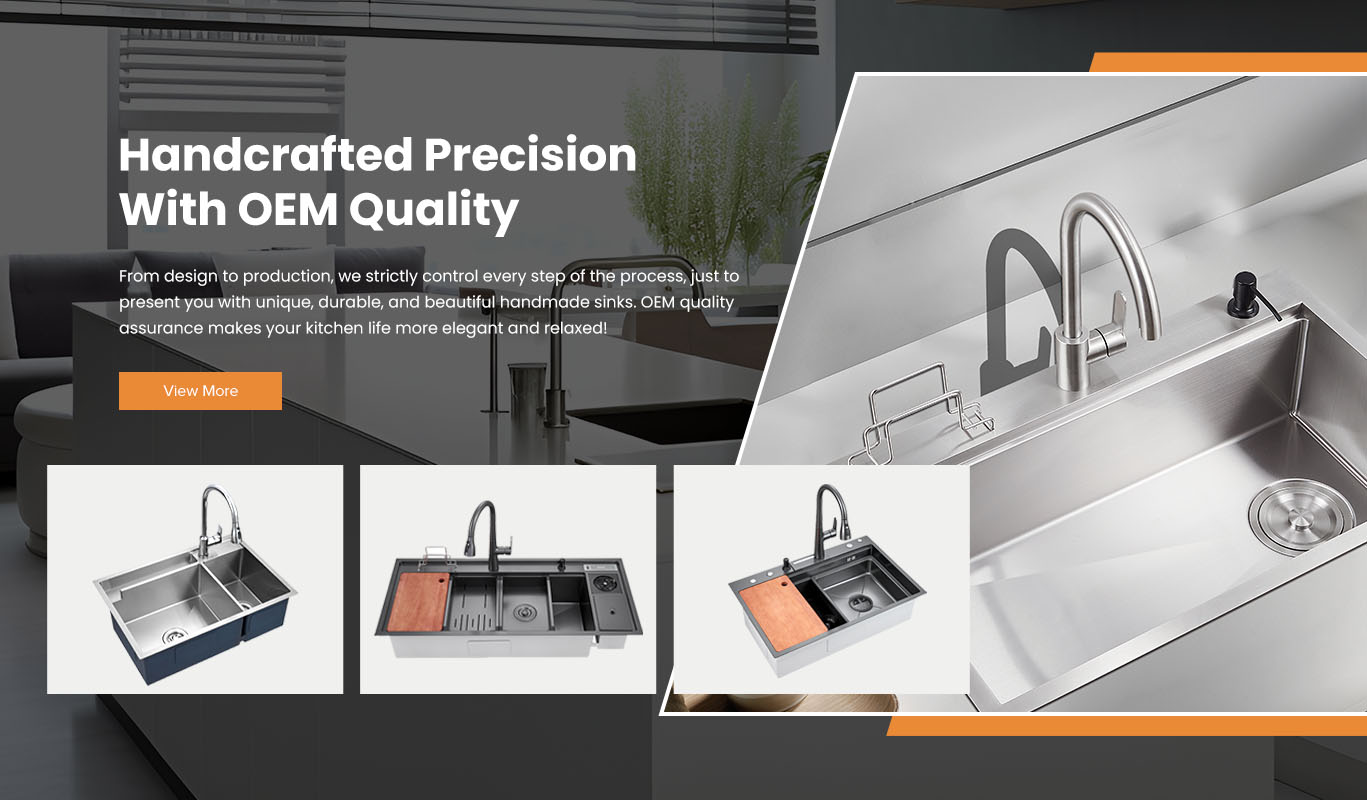
Technical Removal Guidance and What It Reveals About Sink Manufacturing Standards
Silicone caulk is commonly used around stainless steel sinks to create waterproof seals between the sink edge, countertop, and backsplash. During renovation or replacement, removing old silicone can be challenging—especially if the material has fully cured and bonded tightly to the steel surface.
While correct removal techniques are essential, the ease of cleaning and surface recovery often reflects the underlying manufacturing quality of the sink itself. Steel grade, surface finishing consistency, and welding precision directly influence how resistant the sink is to scratching and chemical exposure during maintenance.
Understanding Silicone Adhesion on Stainless Steel
Silicone adheres to:
Smooth metal surfaces
Slight surface irregularities
Edges and seam transitions
high-quality stainless steel sinks manufactured from certified 304 stainless steel with uniform brushed finishing reduce micro-surface inconsistencies that can trap excess sealant. Precision edge finishing and consistent grain alignment make residue removal safer and more controlled.
Safe Methods To Remove Silicone Caulk From Stainless Steel Sink
1. Manual Cutting and Peeling
Begin by:
Using a plastic scraper or nylon blade
Gently cutting along the caulk line
Pulling away loosened silicone
Avoid metal scrapers or razor blades, which can scratch the brushed surface. Work along the grain direction to minimize visible marks.
Uniform surface brushing produced under automated polishing lines improves resistance to surface distortion during this step.
2. Silicone Softening Agents
For stubborn residue:
Apply a silicone remover gel
Allow proper dwell time as instructed
Gently scrape softened material
Test in a small inconspicuous area before full application. High-grade 304 stainless steel tolerates mild chemical exposure better than lower-grade alloys.
3. Isopropyl Alcohol or Acetone Cleaning
After removing bulk silicone:
Apply alcohol or acetone using microfiber cloth
Wipe in the direction of the grain
Rinse and dry immediately
Properly manufactured stainless steel sinks with consistent polishing respond better to solvent cleaning without discoloration.
4. Final Surface Restoration
After removal:
Clean with mild detergent
Dry thoroughly
Lightly polish along grain direction
Premium brushed surfaces maintain visual uniformity even after sealant replacement.
Why Manufacturing Quality Matters During Maintenance
Maintenance performance often reveals the difference between sourcing from a factory manufacturer versus a trading company.
Manufacturer vs Trader
A professional stainless steel sink manufacturer:
Controls raw material procurement
Verifies chemical composition of 304 stainless steel
Operates in-house pressing and welding lines
Maintains automated brushing consistency
Implements strict multi-stage quality control
A trading company generally sources finished goods from multiple factories and has limited control over steel grade consistency or finishing quality.
Direct factory production ensures uniform surface durability and predictable performance during maintenance procedures like silicone removal.
Manufacturing Process Overview
high-quality stainless steel sink production typically includes:
Raw Material Verification
Inspection of stainless steel sheets to confirm thickness and composition.Hydraulic Forming
Precision pressing to maintain bowl symmetry and structural stability.Seam Welding
Controlled welding parameters to avoid rough joints or heat distortion.Automated Surface Brushing
Directional finishing ensures consistent grain texture.Sound-Deadening and Anti-Condensation Treatment
Protective coatings applied under controlled conditions.
Each stage directly affects how easily surface residues can be removed without damage.
Quality Control Checkpoints
Professional factories implement structured inspection procedures including:
Thickness measurement testing
Surface roughness evaluation
Weld seam integrity inspection
Dimensional tolerance verification
Visual surface examination under standardized lighting
These checkpoints reduce surface imperfections that could complicate silicone removal.
Material Standards Used in Export-Grade Stainless Steel Sinks
Sinks manufactured for international markets commonly utilize:
304 stainless steel with balanced chromium and nickel content
Food-contact safe materials
Lead-free drain accessories
Corrosion resistance validation
Material certification ensures resilience during exposure to cleaning solvents and environmental moisture.
OEM / ODM Capabilities for Custom Installations
For project-based procurement, customization may include:
Custom cutout dimensions
Edge radius adjustments
Surface finish variations such as brushed or nano coating
Integrated accessory compatibility
Private labeling and packaging customization
An integrated OEM/ODM workflow includes design confirmation, sampling, tooling validation, pilot production, and batch inspection.
Bulk Supply Considerations
When sourcing for large-scale residential or commercial projects, buyers should evaluate:
Monthly production capacity
Lead time stability
Packaging protection standards
Container loading optimization
Spare component consistency
Integrated manufacturing facilities provide stable volume output and predictable delivery schedules.
Project Sourcing Checklist
Before confirming stainless steel sink procurement, verify:
304 stainless steel certification
Steel thickness specification
Surface brushing uniformity
Weld strength and seam smoothness
Drain outlet precision
Export documentation readiness
Compliance with destination regulations
This structured checklist minimizes long-term installation and maintenance challenges.
Export Market Compliance
Reliable manufacturers provide:
Material test certificates
Quality inspection documentation
Export packing lists
HS classification support
Regulatory compliance assistance
Export experience ensures smoother customs procedures and regulatory alignment.
Conclusion
Removing silicone caulk from a stainless steel sink requires controlled mechanical removal and appropriate cleaning agents. However, the ease and safety of this process depend heavily on the sink’s manufacturing quality.
Premium 304 stainless steel, standardized surface brushing, precise welding, and structured quality inspections result in sinks that maintain structural integrity and aesthetic consistency—even during renovation or sealant replacement.
For global buyers and project developers, partnering directly with a professional stainless steel sink manufacturer ensures OEM flexibility, bulk supply reliability, export compliance, and long-term performance in real-world installation environments.