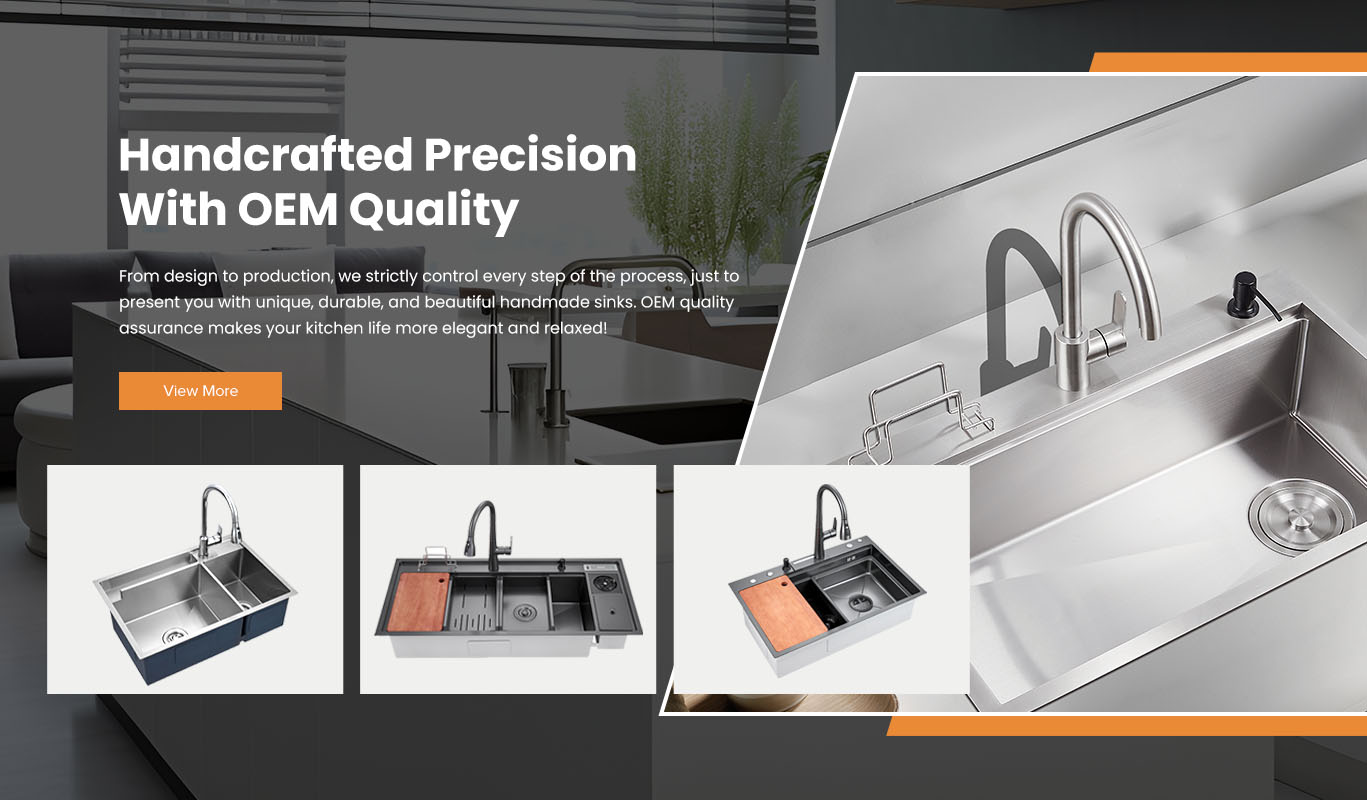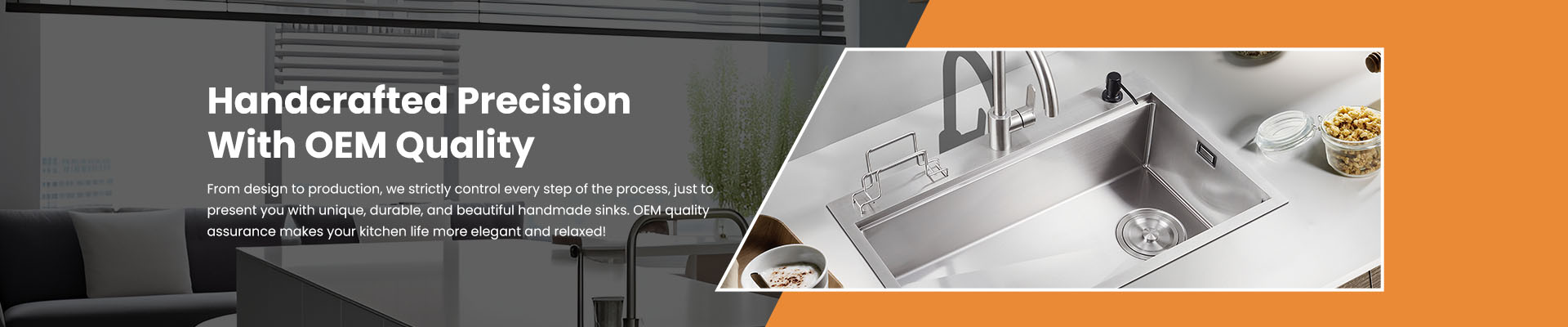
Grout splashes commonly occur during countertop installation, backsplash tiling, or renovation projects. If not cleaned immediately, cement-based grout can harden on stainless steel sink surfaces and become difficult to remove. While correct cleaning techniques are important, the ease of grout removal often reflects the quality of the sink’s material, surface finish, and manufacturing standards.
For developers, distributors, and project buyers sourcing stainless steel sinks, understanding both maintenance practices and production quality factors is essential for long-term performance.
Most grout products are cement-based and contain:
Portland cement
Silica sand
Polymer additives
Pigments
Once cured, grout becomes alkaline and abrasive. Improper removal methods—especially acidic cleaners or metal scraping—can permanently scratch or discolor stainless steel.
The ability of a sink to resist surface damage during cleaning depends heavily on:
Stainless steel grade
Surface brushing uniformity
Thickness of material
Protective surface treatment
These characteristics are directly controlled at the manufacturing level.
If grout is still semi-cured:
Wipe gently with a damp microfiber cloth
Use warm water with mild detergent
Avoid aggressive scrubbing
High-quality brushed surfaces produced under controlled polishing processes are less likely to trap grout residue in micro-scratches.
If grout has hardened:
Use a plastic scraper or nylon blade
Work along the direction of the steel grain
Avoid steel wool or metal putty knives
Uniform grain finishing—achieved through automated brushing lines in professional factories—reduces visible surface damage during this step.
Instead of acidic cleaners:
Use pH-neutral stone or tile residue remover
Test on a small area first
Rinse thoroughly and dry immediately
Acid-based products can damage inferior stainless steel grades. Premium 304 stainless steel demonstrates higher corrosion resistance when exposed to alkaline or mildly acidic substances.
After grout removal:
Clean with stainless steel cleaner
Dry to prevent water spotting
Polish lightly following grain direction
Properly manufactured sinks maintain visual consistency even after corrective cleaning.
Grout removal often highlights the difference between sourcing from a manufacturer versus a trading company.
A true stainless steel sink manufacturer:
Controls raw material procurement
Verifies steel chemical composition
Operates in-house pressing and polishing lines
Implements standardized quality inspections
Offers OEM and engineering customization
A trading company typically sources from multiple factories, resulting in inconsistent steel grades and surface finishes.
Partnering directly with a factory such as SHUNHAN ensures traceable raw material sourcing and stable surface finishing standards, which directly influence cleanability and corrosion resistance.
The performance of a stainless steel sink during cleaning is determined by its production process:
Raw Material Selection
Certified 304 stainless steel sheets are inspected for thickness and composition.
Precision Pressing
Hydraulic forming ensures structural consistency and bowl depth accuracy.
Seam Welding
Controlled welding avoids excessive heat discoloration and structural weakness.
Automated Surface Brushing
Directional polishing ensures uniform grain alignment.
Anti-Condensation and Soundproof Coating
Protective coatings applied under controlled conditions improve durability.
Each step contributes to the sink’s resistance to surface damage during grout removal.
Professional factories implement multiple inspection stages:
Material thickness measurement
Surface roughness inspection
Grain direction consistency check
Weld integrity testing
Dimensional tolerance verification
Final visual inspection under standardized lighting
These quality checkpoints ensure uniform surface texture, minimizing grout adhesion in microscopic irregularities.
High-performance sinks intended for international markets commonly use:
304 stainless steel with balanced chromium and nickel content
Food-contact safe materials
Lead-free drain components
Certified corrosion resistance standards
Material certification ensures long-term resistance against alkaline grout residue and cleaning agents.
Customization plays a key role in large-scale projects. Factory-based OEM and ODM services may include:
Custom bowl configurations
Varying steel thickness options
Surface finish variations such as brushed, satin, or nano coating
Private label stamping
Tailored packaging solutions
An integrated OEM process includes sampling, tooling confirmation, pilot production, and batch validation.
For large residential or commercial developments, buyers should evaluate:
Monthly production capacity
Lead time reliability
Container loading optimization
Packaging strength and drop resistance
Spare part consistency
Manufacturers with integrated production lines offer stable volume output and predictable delivery schedules.
Before confirming procurement, verify:
304 stainless steel certification
Steel thickness specification
Surface brushing uniformity
Weld strength integrity
Drain outlet compatibility
Packaging protection design
Export documentation readiness
A structured sourcing checklist reduces future maintenance complaints, including grout-related surface damage.
Reliable manufacturers provide:
Material test reports
Quality inspection documentation
Export packing lists
Compliance support for destination markets
Standardized labeling and HS classification
Export experience ensures smoother customs clearance and regulatory conformity.
Removing grout from a stainless steel sink requires careful technique and appropriate cleaning materials. However, the ease and safety of the process largely depend on the underlying manufacturing quality of the sink.
Premium 304 stainless steel, controlled surface brushing, standardized welding, and rigorous quality inspections ensure that stainless steel sinks remain durable and maintain their aesthetic integrity—even when exposed to construction materials such as grout.
For global buyers and project developers, choosing a professional manufacturer ensures not only OEM customization and bulk supply stability, but also long-term performance, easier maintenance, and consistent export-grade compliance.