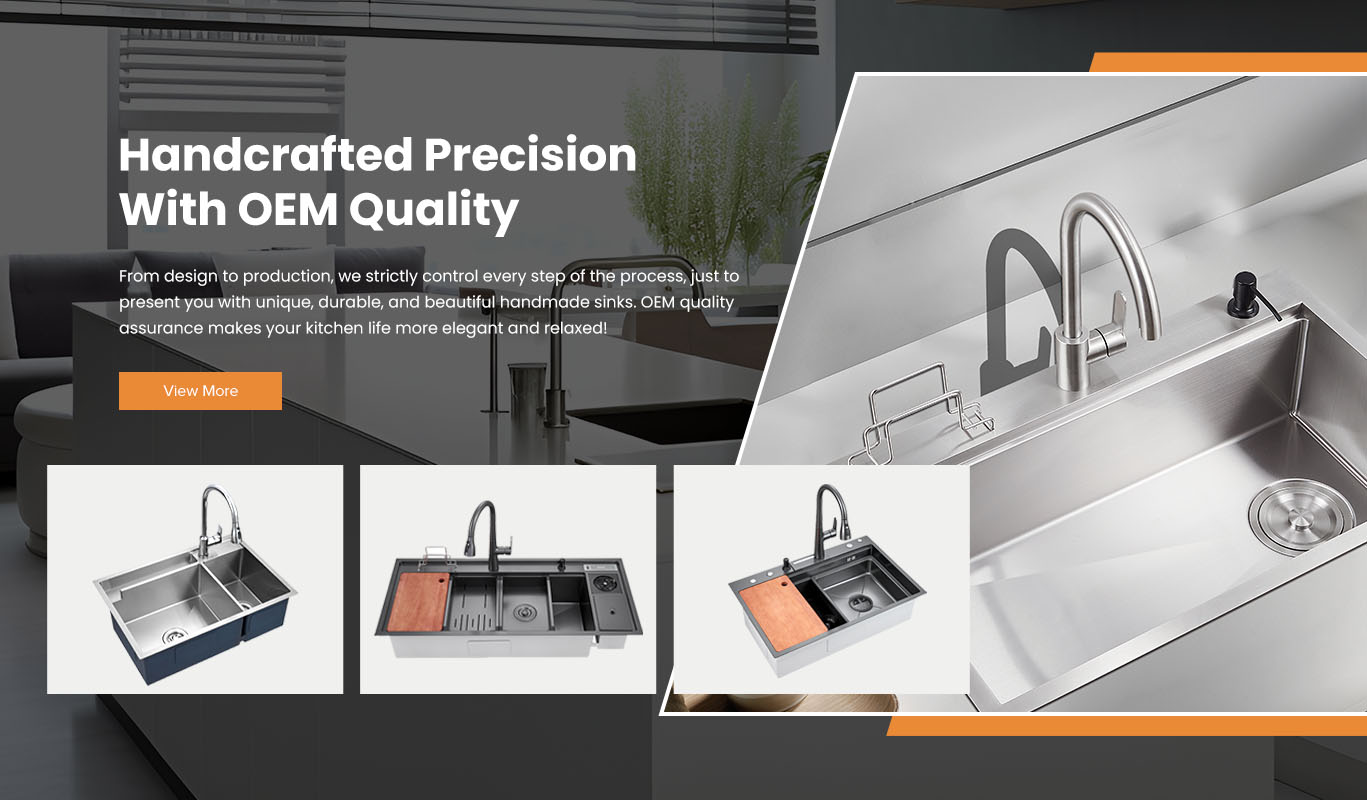
Calcium deposits on a stainless steel sink are a common result of hard water. They appear as white, chalky buildup or cloudy film, especially around the faucet base, drain area, and flat bottom surfaces where water tends to sit. While these deposits do not damage the stainless steel structure, they can dull the surface, trap dirt, and make the sink look worn if not removed correctly.
From a manufacturing and surface-treatment perspective, stainless steel sinks are finished to resist corrosion and daily wear, but mineral deposits must be managed through proper cleaning methods. Shunhan Sink, as a manufacturer specializing in stainless steel kitchen sinks, produces sinks with controlled surface finishing that allow calcium buildup to be removed effectively when correct, surface-safe techniques are applied.
Calcium deposits are left behind when hard water evaporates.
They form when:
Water containing calcium and magnesium dries on the sink surface
Standing water is left after use
Soap residue mixes with minerals
The sink is frequently air-dried instead of wiped
Over time, repeated evaporation creates visible buildup that adheres to the surface texture.
Before cleaning, observe the affected areas carefully.
Light deposits appear as thin white film or cloudy patches
Moderate deposits form visible chalky rings or streaks
Heavy buildup feels rough and uneven to the touch
Understanding buildup severity helps determine how gentle or repeated the cleaning process should be.
Always begin by removing loose residue.
Rinse the sink thoroughly with warm water
Flush faucet and drain areas
Dry the surface with a soft cloth
A clean, dry surface allows calcium deposits to be treated more evenly.
Calcium deposits respond best to mild acidic treatment.
Apply a stainless-steel-safe descaling solution to the affected area
Allow it to sit briefly to soften mineral buildup
Do not let the solution dry on the surface
This step loosens deposits without damaging the stainless steel finish.
Once deposits soften:
Use a soft cloth or non-abrasive sponge
Wipe gently along the grain direction
Focus on one area at a time
Rinse thoroughly with clean water
Cleaning along the grain preserves surface texture and avoids streaking.
For heavier deposits:
Reapply the cleaning solution in short intervals
Avoid aggressive scrubbing
Gradually lift buildup layer by layer
Patience prevents surface damage and uneven appearance.
After calcium removal:
Apply a stainless-steel-safe polishing compound
Polish lightly along the grain
Blend the cleaned area into surrounding surfaces
Polishing helps restore shine and eliminate dull patches caused by mineral film.
Final drying is essential.
Wipe the sink with a clean microfiber cloth
Buff along the grain direction
Ensure no moisture remains
Drying prevents new calcium deposits from forming immediately.
Using steel wool or metal scrubbers
Scrubbing against the grain
Allowing descaling solutions to dry on the surface
Using harsh abrasives
Ignoring early mineral buildup
These mistakes can permanently damage the sink finish.
Simple daily habits significantly reduce buildup.
Wipe the sink dry after each use
Rinse away soap and food residue promptly
Pay attention to faucet bases and drain edges
Increase drying frequency in hard water regions
Consistent prevention is more effective than repeated deep cleaning.
From a manufacturing standpoint, calcium removal is easier on well-finished surfaces.
high-quality stainless steel sinks offer:
Uniform grain structure
Smooth surface transitions
Reduced mineral adhesion
Easier maintenance and restoration
Shunhan Sink manufactures stainless steel sinks with controlled forming and precision surface finishing to support effective calcium deposit removal and long-term appearance preservation when correct care practices are followed.
Removing calcium deposits from a stainless steel sink involves gentle mineral dissolution, careful wiping along the grain, light polishing, and thorough drying. When handled correctly, calcium buildup can be eliminated without damaging the sink’s surface.
Stainless steel sinks engineered with consistent materials and refined surface finishes—such as those produced by Shunhan Sink—maintain their durability and clean appearance best when calcium removal and daily maintenance follow proper, surface-safe procedures.