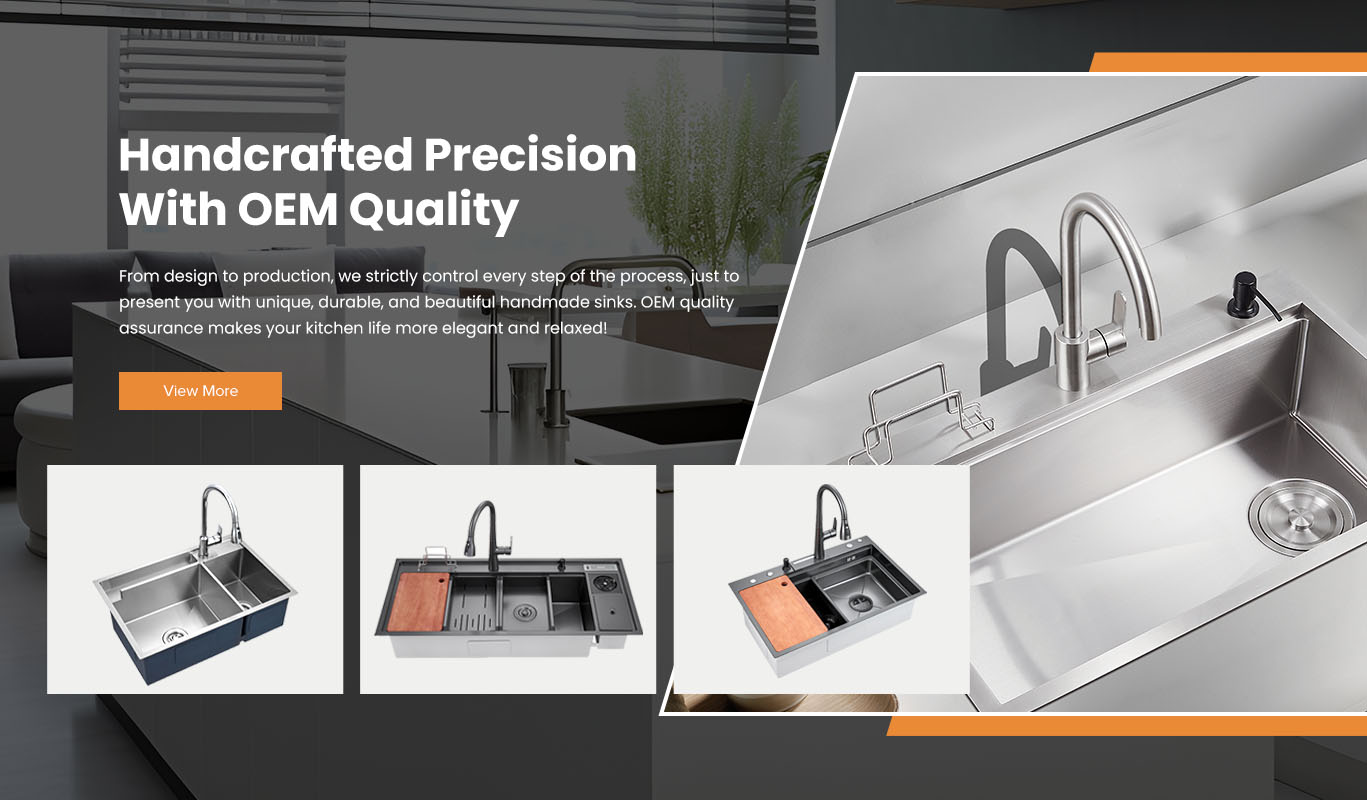
Water spots are one of the most common appearance issues on stainless steel sinks. They are usually caused by minerals left behind when water evaporates, especially in areas with hard water. Over time, repeated spotting can make the sink look dull, cloudy, or uneven, even though the stainless steel itself remains structurally sound. Protecting the sink from water spots is mainly about daily habits and correct surface care rather than heavy cleaning.
From a manufacturing and surface-treatment perspective, stainless steel sinks are designed with specific finishes to balance durability and ease of maintenance. Shunhan Sink, as a manufacturer specializing in stainless steel kitchen sinks, produces sinks with controlled surface finishing that respond well to proper water-spot prevention routines.
Water spots are not stains from dirt but mineral residue.
They form when:
Water containing calcium and magnesium dries on the surface
Standing water is left in the sink
Soap or detergent residue mixes with minerals
The sink is air-dried instead of wiped
These minerals interrupt light reflection on the stainless steel surface, making spots more visible.
Most stainless steel sinks have a brushed or satin grain created during manufacturing.
The grain helps disguise small scratches
Minerals can settle along the grain lines
Wiping against the grain can spread residue unevenly
All cleaning and drying actions should be done along the grain direction to maintain a uniform appearance.
The most effective way to prevent water spots is simple drying.
Wipe the sink with a soft cloth after use
Remove standing water from the bottom
Pay attention to corners and around the drain
If water does not evaporate on the surface, minerals cannot remain behind.
Water spots form faster when residue is present.
Rinse the sink thoroughly after washing dishes
Remove soap film and food particles
Flush areas around the drain and faucet base
Clean water leaves fewer visible deposits than water mixed with residue.
Light, frequent cleaning prevents invisible mineral film from building up.
Use a mild detergent suitable for stainless steel
Wipe gently along the grain
Rinse thoroughly and dry immediately
This routine keeps the surface smooth and reflective.
A thin protective layer helps water bead instead of spreading.
Apply a small amount of food-safe oil or stainless steel conditioner
Spread evenly along the grain
Remove excess completely
This creates a temporary moisture barrier and reduces spotting between cleanings.
Some areas are more prone to water spots than others.
These include:
Around the faucet base
Near the drain opening
Flat bottom surfaces
Welded corners
Drying and wiping these zones regularly prevents early spot buildup.
Certain habits make water spots worse.
Letting water air-dry naturally
Leaving standing water overnight
Using harsh cleaners that damage surface texture
Ignoring early mineral film
Changing these habits significantly reduces long-term spotting.
In regions with hard water:
Increase frequency of drying
Use filtered water for final rinsing when possible
Inspect the sink surface regularly under good lighting
Consistent attention prevents mineral layers from becoming visible stains.
From a manufacturing standpoint, surface consistency plays a major role.
high-quality stainless steel sinks offer:
Uniform grain structure
Smooth surface transitions
Reduced mineral adhesion
Easier daily maintenance
Shunhan Sink manufactures stainless steel sinks with precision forming and controlled surface finishing to support better resistance to water spotting when correct care practices are applied.
Protecting a stainless steel sink from water spots depends on consistent drying, prompt rinsing, gentle cleaning along the grain, and occasional surface protection. These simple steps prevent mineral deposits from forming and preserve a clean, bright appearance.
Stainless steel sinks engineered with refined materials and consistent surface finishes—such as those produced by Shunhan Sink—maintain their visual quality and durability best when daily use is combined with proper water spot prevention habits.