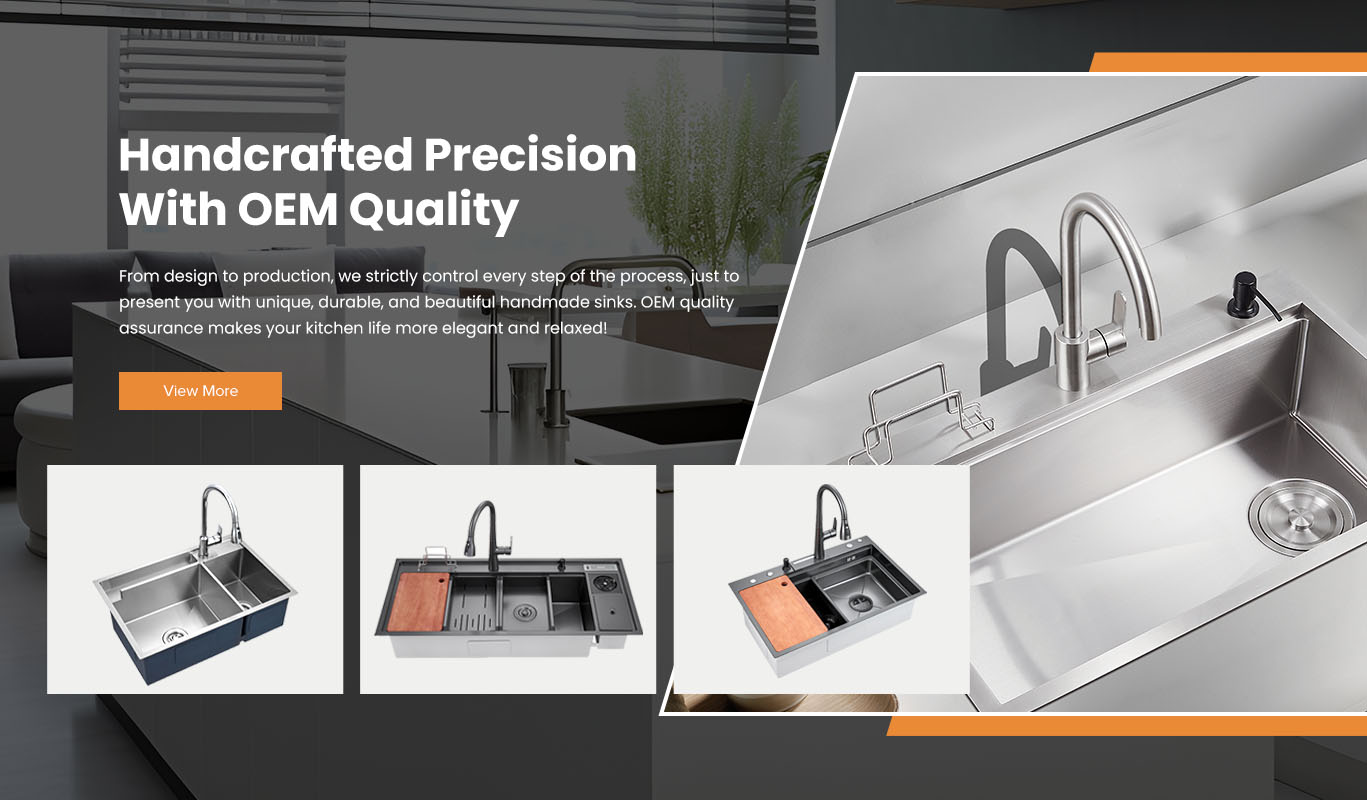
Scratches on a stainless steel sink are a common result of daily kitchen use. Pots, utensils, abrasive pads, and heavy cookware can gradually mark the surface, making the sink look dull or worn. While stainless steel is highly durable, its appearance depends on maintaining a uniform surface grain. Polishing scratches correctly can restore visual consistency and improve overall brightness without damaging the material.
From a manufacturing and surface-engineering perspective, stainless steel sinks are finished with controlled grain patterns to balance scratch resistance and ease of maintenance. Shunhan Sink, as a manufacturer specializing in stainless steel kitchen sinks, produces sinks with consistent surface finishing that allows light scratches to be blended and polished effectively when proper methods are used.
Not all scratches affect stainless steel in the same way. Most sink scratches are cosmetic and limited to the surface finish rather than structural damage.
Common scratch types include:
Fine hairline scratches from daily use
Light surface scuffs from cookware movement
Localized dull areas caused by abrasive cleaning tools
Deep gouges are less common and may not be fully removable, but their appearance can often be reduced.
Stainless steel sinks are finished with a visible grain direction created during manufacturing.
The grain helps mask minor wear
Polishing must follow the grain to avoid swirl marks
Working against the grain can make scratches more visible
Correct grain alignment is the most important factor in successful scratch polishing.
Proper preparation ensures effective and even results.
Clean the sink thoroughly with mild detergent
Remove grease, food residue, and mineral buildup
Rinse and dry the surface completely
Inspect scratches under good lighting
A clean surface allows accurate assessment of scratch depth.
For fine scratches and surface scuffs:
Use a non-abrasive stainless steel polishing compound
Apply a small amount to a soft cloth
Polish gently along the grain direction
Use even pressure and short strokes
Light polishing blends scratches into the surrounding finish without thinning the metal surface.
For more noticeable scratches:
Use a fine polishing pad suitable for stainless steel
Work only in the direction of the grain
Focus on the scratched area, then blend outward
Avoid excessive pressure
Gradual blending helps maintain uniform surface texture.
After scratch reduction:
Polish a slightly larger area around the scratch
Maintain consistent grain alignment
Ensure the transition between polished and unpolished areas is smooth
Blending prevents visible patches and uneven reflection.
Once polishing is complete:
Wipe away residue with a clean cloth
Rinse lightly and dry thoroughly
Buff along the grain with a microfiber cloth
Buffing enhances brightness and restores surface uniformity.
Applying a light protective layer helps maintain results.
Apply a thin layer of stainless steel conditioner or food-safe oil
Spread evenly along the grain
Remove excess completely
This reduces water spotting and highlights surface clarity.
Using coarse abrasives or sanding aggressively
Polishing in circular motions
Working across the grain
Concentrating too long on a single spot
Using metal scrubbers
These mistakes can permanently damage the sink’s finish.
Simple usage habits reduce surface wear over time.
Avoid dragging heavy cookware across the sink
Use soft cleaning tools
Rinse and wipe after use
Dry the sink to prevent residue buildup
Consistent care reduces the need for frequent polishing.
From a manufacturing standpoint, polishing effectiveness depends on surface consistency.
high-quality stainless steel sinks offer:
Uniform grain structure
Even thickness at the bowl surface
Better scratch blending capability
Easier restoration of appearance
Shunhan Sink manufactures stainless steel sinks with controlled finishing processes to support long-term maintenance and effective scratch polishing when proper techniques are applied.
Polishing a scratched stainless steel sink involves understanding the grain direction, using gentle polishing methods, and blending scratches gradually into the surrounding surface. When done correctly, most surface scratches can be minimized, restoring a clean and uniform appearance.
Stainless steel sinks engineered with consistent materials and refined surface finishes—such as those produced by Shunhan Sink—maintain their appearance and durability best when scratch polishing and daily care follow correct, surface-safe practices.