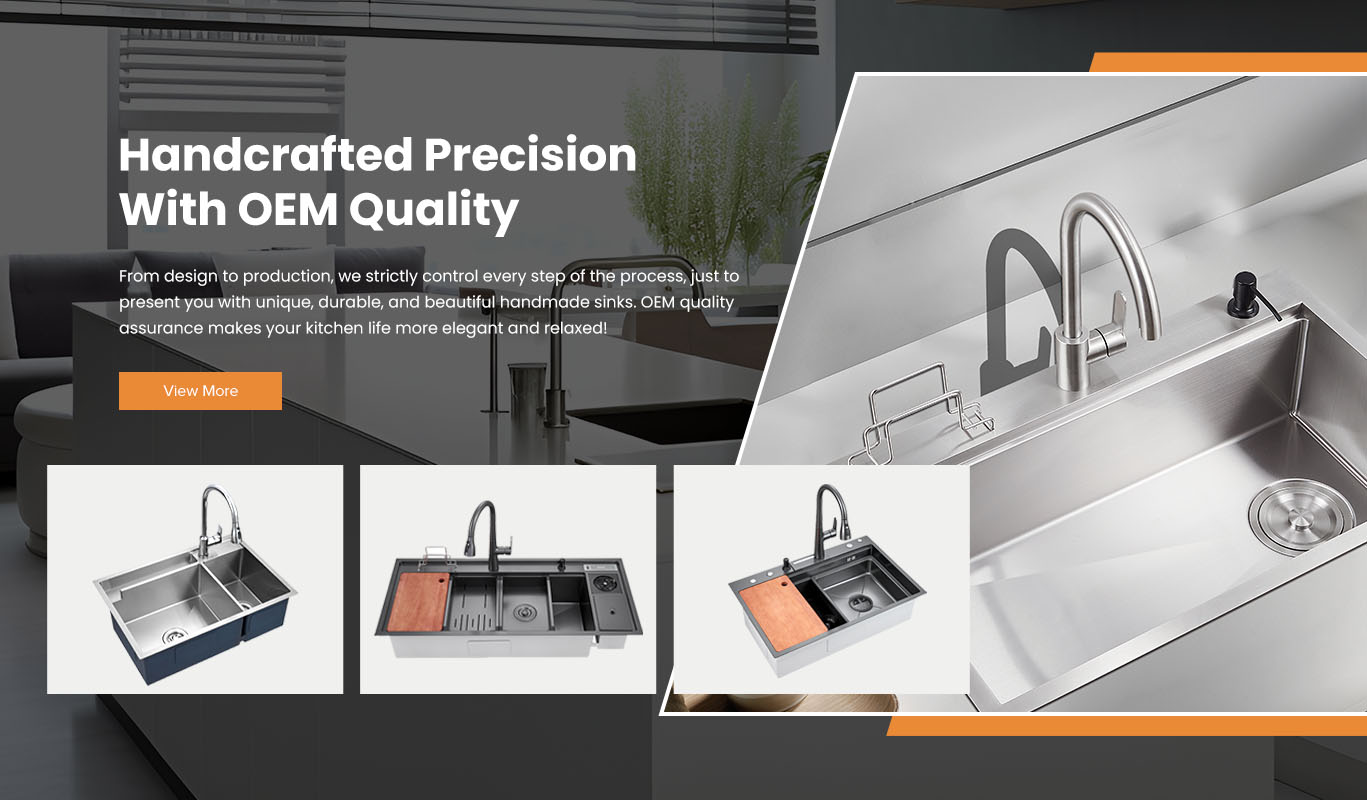
Installing a stainless steel undermount sink to a granite countertop is a precise installation process that directly affects load stability, sealing reliability, and long-term usability. Unlike drop-in sinks, undermount sinks rely entirely on mechanical support and adhesive bonding beneath the stone surface. Improper installation can lead to sink detachment, water seepage, or stress cracks around the granite cutout. A correct method ensures structural safety and a clean, seamless countertop appearance.
From a manufacturing and application perspective, stainless steel undermount sinks are designed to work in combination with stone countertops such as granite. Shunhan Sink, as a manufacturer specializing in stainless steel kitchen sinks, designs undermount sink structures with reinforced edges, consistent thickness, and controlled welding quality to support secure installation under heavy stone surfaces.
Granite is a rigid, heavy material with very limited flexibility. When installing an undermount sink, the granite does not support the sink weight directly. Instead, the sink is supported by mounting hardware and adhesive bonding to the underside of the stone.
A proper undermount installation depends on:
Flat and clean granite bonding surfaces
Accurate sink positioning relative to the cutout
Strong mechanical supports
Waterproof sealing between sink rim and stone
Both the sink structure and the installation method play a role in long-term performance.
Before installation, the granite cutout must be properly prepared.
Ensure the cutout edge is smooth and free of chips
Clean dust, stone residue, and moisture from the underside
Dry the surface completely before bonding
A clean bonding surface improves adhesive strength and sealing effectiveness.
Before mounting the sink:
Inspect the sink rim for flatness
Confirm uniform thickness along the mounting edge
Check welded corners and bowl transitions
Verify drain hole alignment
Stainless steel undermount sinks manufactured with controlled forming and welding processes provide better contact with stone surfaces, improving installation stability.
Dry fitting ensures accurate alignment before permanent installation.
Position the sink under the granite cutout
Center the bowl relative to the opening
Check reveal type such as zero reveal or negative reveal
Confirm faucet and drain alignment
Dry fitting reduces adjustment errors once adhesive is applied.
Granite undermount sinks rely on mechanical supports rather than countertop weight.
Common mounting methods include:
Undermount sink clips anchored into the granite
Support rails or sink brackets
Adjustable support systems for fine alignment
Mounting hardware must be evenly distributed to prevent point loading and deformation.
Adhesive bonding is essential for waterproofing and vibration control.
Apply a continuous bead of stone-compatible adhesive to the sink rim
Avoid gaps or uneven application
Do not apply excessive material that may squeeze into the bowl
The adhesive creates a watertight seal while assisting with load distribution.
After adhesive application:
Lift the sink into position beneath the granite
Engage mounting clips or brackets gradually
Tighten evenly to pull the sink flush against the stone
Maintain alignment during tightening
Uneven tightening can cause sink distortion or compromise sealing.
Once the sink is secured:
Leave the installation undisturbed for the full curing period
Avoid installing plumbing or applying load during curing
Follow adhesive manufacturer curing recommendations
Proper curing ensures long-term bond strength and leak prevention.
After curing:
Install the drain assembly with proper sealing
Connect plumbing without stressing the sink body
Check alignment to avoid side load on the drain
Plumbing connections should not bear sink weight.
Before placing the countertop into full use:
Inspect the seal line for continuity
Check sink stability by applying light downward pressure
Fill the sink partially to test drainage and sealing
Inspect for leaks under the countertop
Testing confirms the success of the installation.
Relying on adhesive without mechanical supports
Installing on dusty or damp granite surfaces
Uneven tightening of mounting hardware
Skipping curing time before plumbing installation
Misalignment between sink and cutout
These errors often lead to premature failure or water damage.
From a manufacturing standpoint, correct undermount installation:
Maintains structural stability under daily load
Preserves granite cutout integrity
Prevents moisture infiltration
Extends sink service life
Shunhan Sink designs stainless steel undermount sinks with reinforced rims and precise geometry to support secure granite installations when professional installation methods are followed.
Installing a stainless steel undermount sink to granite requires accurate preparation, reliable mounting hardware, controlled adhesive application, and proper curing. When executed correctly, the result is a stable, watertight installation with a clean, modern countertop appearance.
Stainless steel undermount sinks engineered with structural reinforcement and precision finishing—such as those produced by Shunhan Sink—deliver optimal long-term performance when installed using correct, methodical procedures suitable for granite countertops.