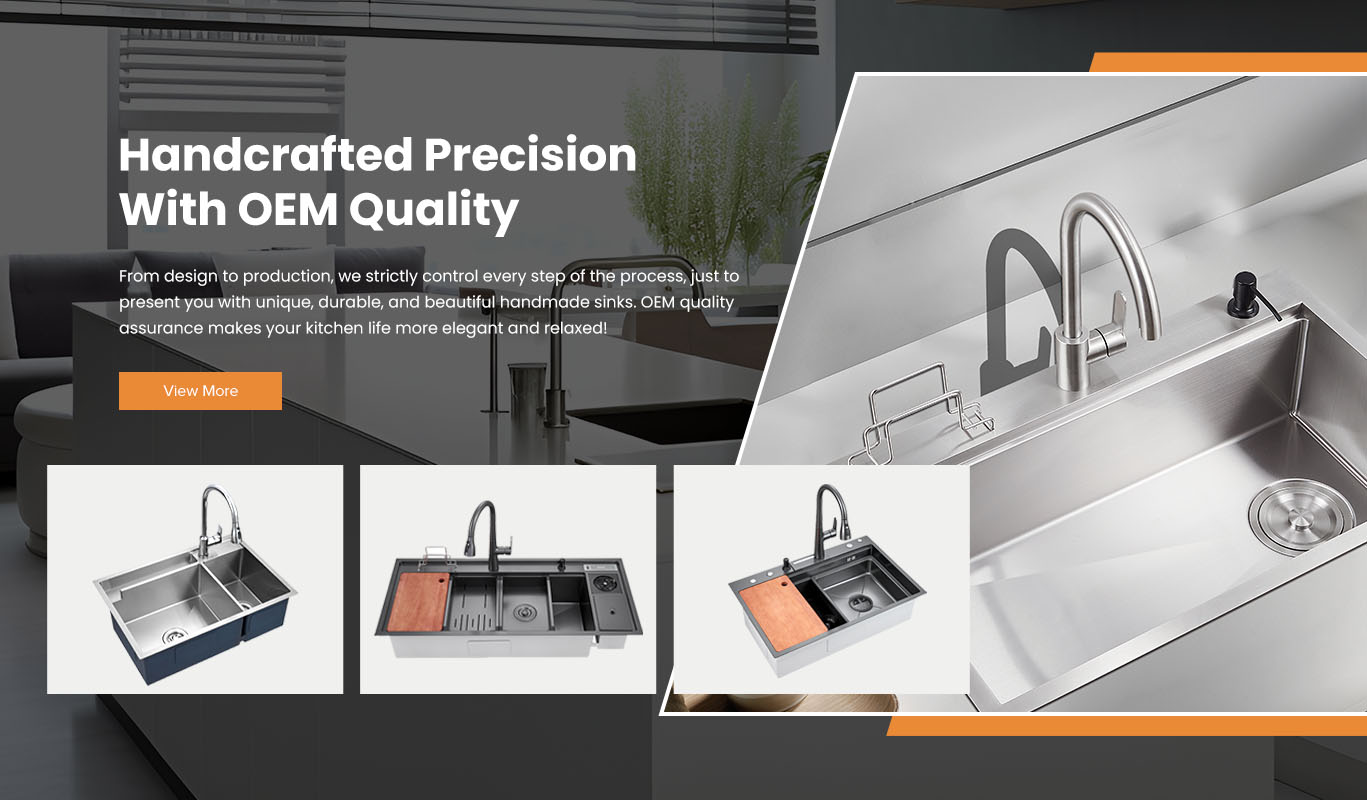
Stainless steel sinks are generally made from solid stainless steel sheets and do not rely on surface coatings to deliver performance. Their corrosion resistance, durability, and clean appearance come from the natural composition of stainless steel rather than from any applied surface layer. However, certain treatments and finishes are sometimes used to improve sound absorption, enhance appearance, or reduce water spots.
Stainless steel contains chromium, which forms a protective surface layer when exposed to oxygen. This natural film prevents rust and corrosion without requiring additional chemical coatings. This built-in protection makes stainless steel highly suitable for kitchen environments.
Stainless steel sinks are not painted or color-coated in the way composite or enamel sinks are. The metal’s natural silver appearance is its permanent finish. Since there is no coating to wear off, the sink maintains its surface integrity even after long-term use.
While not considered coatings, stainless steel can receive finishing treatments such as:
Brushed or satin finish
Polished finish
Matte finish
These finishes adjust the appearance but do not add a separate coating layer. They are part of the metal surface itself.
Most stainless steel sinks include sound-dampening pads attached to the underside. These pads reduce noise and vibration when washing dishes or running water. This material is not a coating; it is an added layer installed under the sink.
Some models include an undercoating applied beneath the sink to reduce condensation and minimize noise. This is not a decorative coating but a functional layer designed to improve user experience and durability.
Certain sinks include surface treatments that help reduce fingerprints, water spots, or smudges. These are temporary treatments or manufacturing processes, not paint-like coatings. They do not alter the fundamental properties of stainless steel.
Since stainless steel naturally resists corrosion, it does not need rust-proof paint or protective varnish.
Unlike quartz composite or enamel sinks, stainless steel does not use colored surface layers. Any attempt to paint stainless steel typically leads to peeling or chipping under kitchen use.
Stainless steel remains functional without additional sealing. Its natural passive film constantly renews itself when exposed to air, maintaining resistance to corrosion.
Because the metal is solid and uncoated, it does not chip, peel, or crack over time.
Cleaning does not risk damaging a surface layer. Mild detergents and soft cloths are sufficient for daily care.
The smooth metal surface resists bacteria and does not react with household cleaners or food residues.
Without coatings, the sink tolerates hot water, high temperatures, and heavy cookware without surface damage.
Stainless steel sinks are not coated in the traditional sense. Their corrosion resistance and durability come from the metal itself, not from applied paint or sealant. While certain functional treatments such as sound pads, undercoating, or anti-spot processes may be applied, the working surface of the sink remains pure stainless steel. This natural, uncoated construction is what makes stainless steel sinks long-lasting, hygienic, and highly suitable for daily kitchen use.