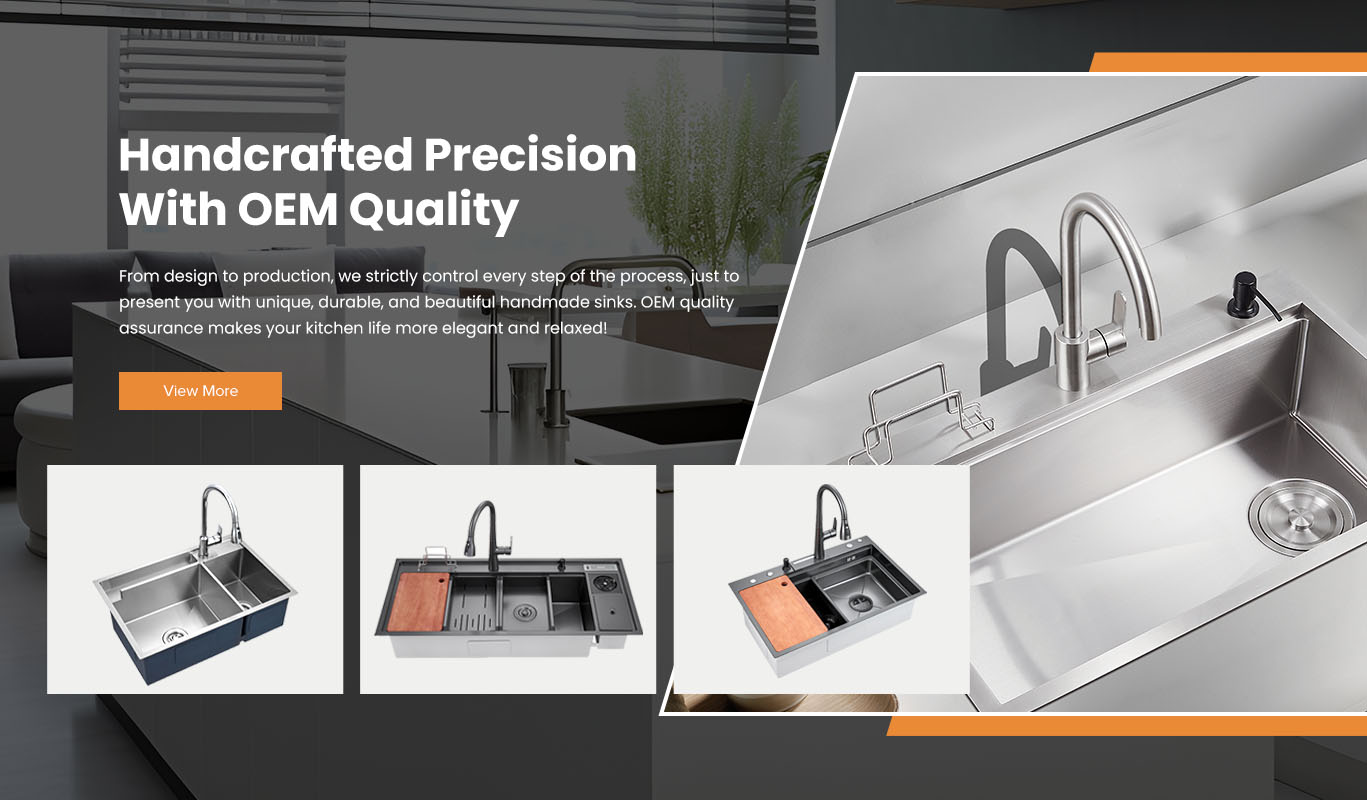
Kitchen sinks are typically made from stainless steel rather than aluminum. Although both are metal materials, they differ greatly in durability, corrosion resistance, weight, and long-term performance. Stainless steel has become the most widely used sink material in residential and commercial kitchens due to its superior strength, hygiene properties, and long service life. Aluminum, while lightweight, does not provide the same structural stability required for daily kitchen use.
Stainless steel contains chromium, which forms a protective layer on the surface. This layer prevents rust and corrosion even under constant exposure to water, cleaning chemicals, and food acids. Aluminum is more prone to oxidation and surface staining, especially when used for high-moisture applications.
Stainless steel sinks offer excellent impact resistance. They can withstand heavy cookware, sharp utensils, and frequent washing without denting easily. Aluminum is softer, making it more susceptible to dents, scratches, and deformation from daily use.
Kitchen sinks often experience high-temperature fluctuations from boiling water, hot cookware, and cold rinsing. Stainless steel handles extreme temperature changes without damage. Aluminum expands more rapidly under heat, which can weaken structural stability over time.
Stainless steel sinks can be manufactured in various thicknesses. Thicker models provide improved noise reduction and vibration control. Aluminum sinks, being thin and lightweight, transmit more sound and feel less solid during use.
Stainless steel has a smooth, non-porous surface that resists bacteria and buildup. It is easy to clean and maintain, supporting safe food preparation. Aluminum can show discoloration and may require special cleaning to avoid surface dullness.
Aluminum lacks the required strength for heavy-duty kitchen applications. Repeated impacts or dropped utensils can deform the sink surface.
Aluminum oxidizes when exposed to air and moisture, forming a dull surface that is difficult to maintain in a polished appearance.
Kitchen sinks often require deep drawing, welding, and precise shaping. Stainless steel performs exceptionally well in these processes, while aluminum has more limitations.
Aluminum sinks do not provide the lifespan, resilience, or aesthetic appeal demanded in modern kitchens.
Stainless steel sinks maintain their structural integrity for many years, even in high-use environments.
Stainless steel complements a wide range of countertop materials, cabinet finishes, and appliance styles.
Restaurants, hotels, food-processing spaces, and home kitchens rely on stainless steel sinks due to their performance and reliability.
Stainless steel is widely available, easy to process, and efficient to manufacture in large volumes, making it the preferred material for global sink suppliers.
Kitchen sinks are overwhelmingly made from stainless steel rather than aluminum. Stainless steel offers the durability, corrosion resistance, heat stability, and hygiene required for everyday kitchen use. Aluminum, while lightweight and suitable for certain household products, does not meet the performance standards needed for long-lasting, high-quality kitchen sinks. For buyers seeking a reliable and professional kitchen sink solution, stainless steel remains the most dependable and widely accepted material choice.